
In this guide
- What Makes a Classic Pasta e Fagioli
- How to Make Pasta e Fagioli Step by Step
- Cannellini vs Borlotti: Choosing the Beans
- The Pasta: Ditalini and How to Cook It
- Variations: Vegetarian, Venetian-Style and Spicy
- Make-Ahead, Storage and Reheating
- Troubleshooting Pasta e Fagioli
- Approximate Nutrition
- Pasta e Fagioli FAQs
- Printable Recipe
Pasta e fagioli is the Italian answer to a cold evening: a thick soup of beans and small pasta, built on a slow soffritto, a little tomato and a Parmesan rind that melts its flavor into the broth. The name simply means pasta and beans. It began as a peasant dish, and the best versions still taste of just a handful of good ingredients cooked with patience.
This guide gives you the classic method in six stages, a comparison of cannellini and borlotti beans, the right way to cook ditalini so the soup does not turn to paste, four variations, storage rules and a troubleshooting table. The printable recipe at the end makes six servings in about an hour.
| Question | Short answer |
|---|---|
| Which beans? | Cannellini for a creamy white soup, borlotti for the Venetian original. Two 15-ounce cans serve six. |
| Which pasta? | Ditalini, 8 ounces, cooked in the soup for the last 9 to 11 minutes. |
| Where does the depth come from? | Rendered pancetta, a slow soffritto, toasted tomato paste and a Parmesan rind simmered in the broth. |
| How does it get thick without cream? | Mash 1 cup of the beans into the broth, then let the pasta starch do the rest. |
| Total time? | About 60 minutes: 15 minutes of chopping and 45 minutes on the stove. |
What Makes a Classic Pasta e Fagioli
A soup, a stew, or something in between
Ask ten Italian cooks and you will get ten bowls of pasta e fagioli. In the Veneto it is thick and almost spoonable, made with borlotti beans and often finished with a drizzle of raw olive oil. In Naples it is looser and more tomato-forward, sometimes made with a mix of broken pasta shapes. The Roman version leans on pancetta and rosemary. This recipe sits in the middle: thick enough to coat a spoon, brothy enough to call a soup, with tomato in a supporting role rather than the lead.
The soffritto is the foundation
Onion, carrot and celery cooked slowly in olive oil and pancetta fat give the soup its sweetness. The key word is slowly. Eight to ten minutes over medium-low heat turns the vegetables soft and sweet without browning them. Rushing this step over high heat gives a soup that tastes thin no matter how long it simmers afterward. The same patient base starts our pasta Bolognese, and it does the same job here.
The Parmesan rind trick
A rind of Parmigiano Reggiano dropped into the broth is the single most useful habit in Italian soup cooking. The rind softens, releases savory flavor and a little fat, and thickens the broth slightly, all without the cheese clumping. Keep rinds in a bag in the freezer whenever you finish a wedge. If you have none, stir an extra 1/4 cup of grated Parmesan into the finished soup instead.
How to Make Pasta e Fagioli Step by Step
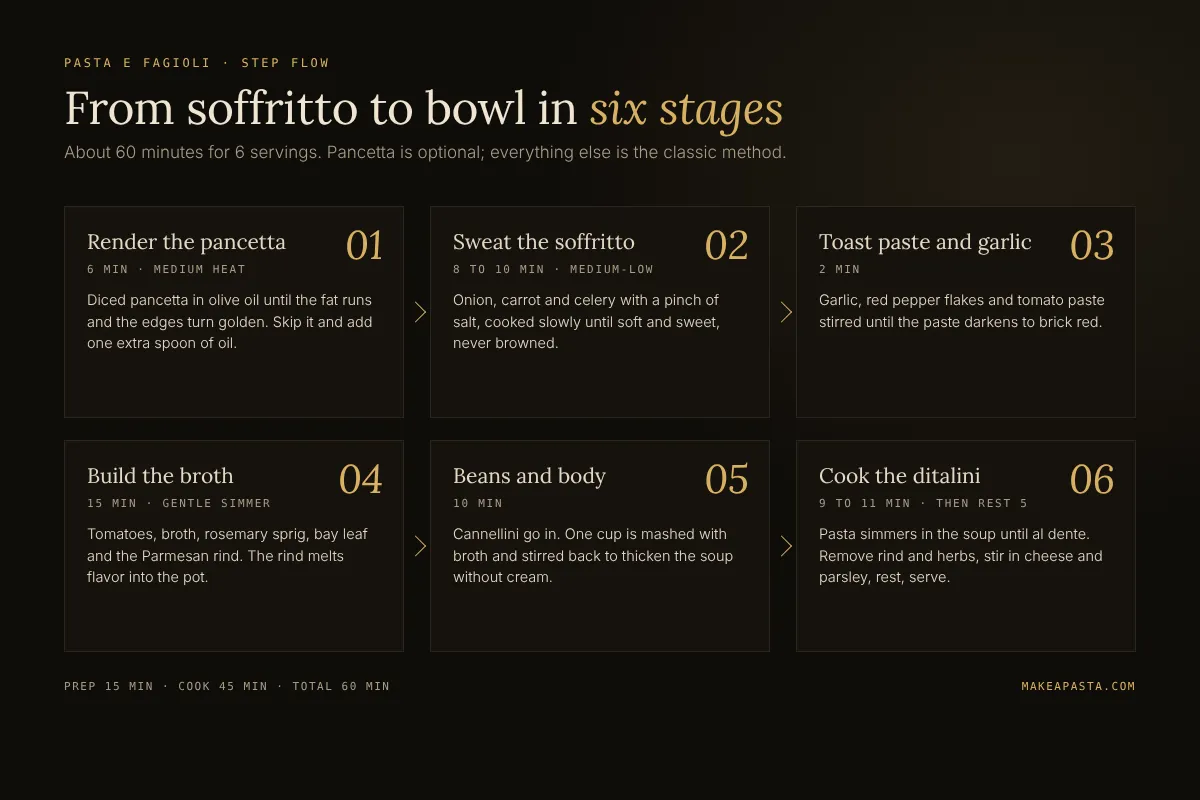
These stages make six generous servings in a heavy 5 to 6 quart pot. Chop everything before you start, because once the pancetta goes in, the soup moves quickly from stage to stage.
- 01
Stage 1: Render the pancetta
Warm 2 tablespoons of olive oil in the pot over medium heat and add the diced pancetta. Cook for 5 to 6 minutes, stirring now and then, until the fat has rendered and the edges are golden but not crisp. That rendered fat flavors everything that follows. If you are leaving the pancetta out, use 3 tablespoons of oil and move straight to the vegetables.
- 02
Stage 2: Sweat the soffritto
Add the onion, carrot and celery with a pinch of salt and lower the heat to medium-low. Cook for 8 to 10 minutes, stirring often, until the vegetables have collapsed and smell sweet. There should be no color on them. If the pot starts to brown, add a tablespoon of water and keep stirring.
- 03
Stage 3: Toast the garlic and tomato paste
Stir in the garlic and red pepper flakes and cook for 1 minute until fragrant. Add 2 tablespoons of tomato paste and stir constantly for 1 to 2 minutes, until it darkens from bright red to brick red and smells sweet rather than raw. This is the same step that makes our tomato paste pasta sauce taste slow-cooked, and it gives the soup its deep color.
- 04
Stage 4: Build the broth
Pour in the crushed tomatoes and 5 cups of broth, then add the rosemary sprig, bay leaf, Parmesan rind, 1 teaspoon of salt and 1/2 teaspoon of pepper. Bring to a boil, lower to a gentle simmer and cook uncovered for 15 minutes. The broth will reduce slightly and take on the flavor of the rind and herbs.
- 05
Stage 5: Add the beans and build body
Add the drained beans. Scoop out about 1 cup of beans with a little broth, mash them with a fork or blend them smooth, and stir the puree back into the pot. Simmer for 10 minutes. That mashed cup of beans is what gives pasta e fagioli its creamy body without a drop of cream. Taste the broth now and adjust the salt before the pasta goes in.
- 06
Stage 6: Cook the ditalini and finish
Raise the heat to a steady simmer and add the ditalini. Cook for 9 to 11 minutes, stirring often so the pasta does not stick to the bottom, until al dente. Add a splash of broth if the soup tightens. Fish out the rind, rosemary sprig and bay leaf, take the pot off the heat and stir in the grated Parmesan, chopped rosemary and parsley. Rest for 5 minutes, then serve with olive oil and black pepper.
Cannellini vs Borlotti: Choosing the Beans
Pasta e fagioli works with any medium white or cranberry bean, but the two classic choices behave differently in the pot. The table compares them with the common substitutes.
| Bean | Flavor and texture | Color of the soup | Best for |
|---|---|---|---|
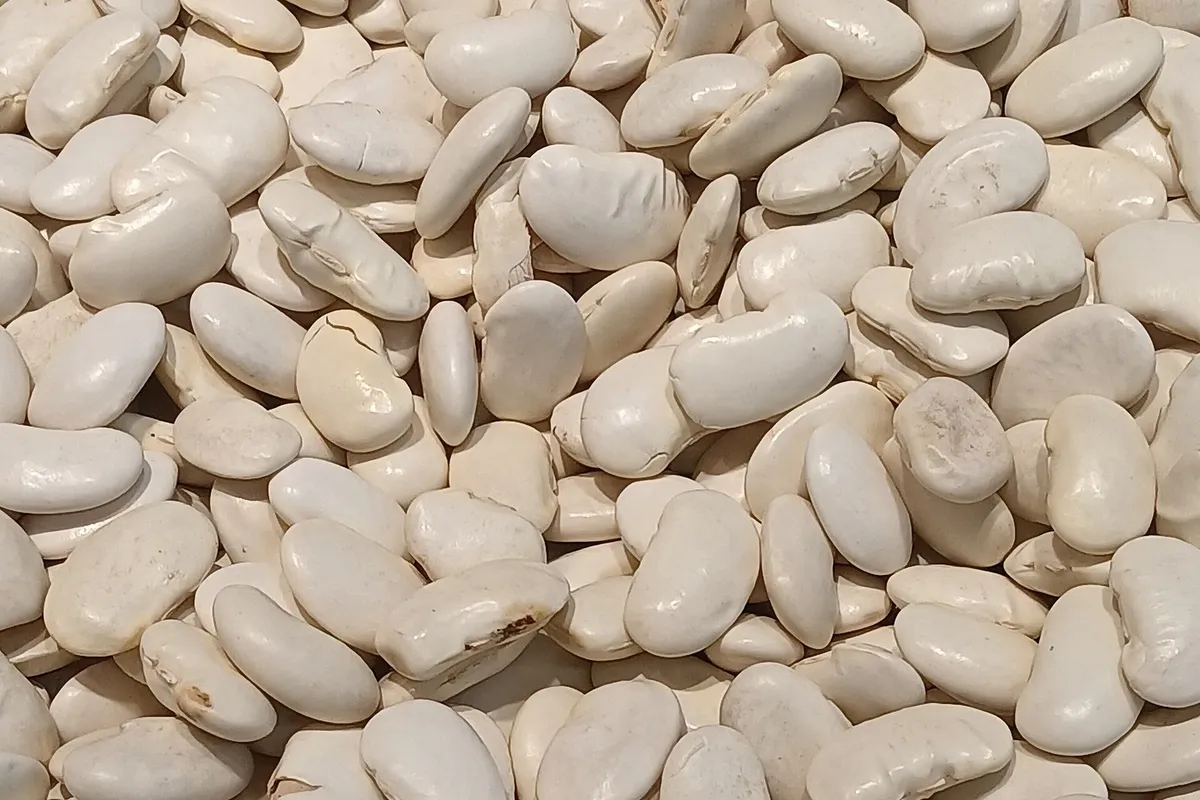
| Cannellini (white kidney) | Mild, creamy, holds its shape well | Pale, with the tomato showing through | The all-purpose choice; what this recipe uses |
| Borlotti (cranberry) | Nutty, chestnut-like, very creamy when mashed | Pinkish brown, more rustic | The Venetian original; best from dried |
| Great Northern | Mild, slightly grainy, a little smaller | Pale | Easy substitute for cannellini |
| Navy (haricot) | Small, soft, breaks down readily | Pale and thick | A thicker, more porridge-like soup |
| Chickpeas | Firm, nutty | Golden | Technically a different dish (pasta e ceci) but the method is identical |
Canned or dried
Canned beans make this a one-hour soup and the result is very good, especially once a cup of them is mashed into the broth. Rinse them well to wash off the metallic canning liquid. Dried beans take planning but give a deeper flavor and a silkier texture, and their cooking liquid is worth saving. For six servings, 1 cup (200 g) of dried beans replaces one 15-ounce can once cooked; use 2 cups dried to replace both cans.
Cooking dried beans for the soup
Soak the beans overnight in plenty of cold water, drain, then simmer in fresh water with a bay leaf and a garlic clove for 60 to 90 minutes until tender. Salt them only in the last 15 minutes. Use the beans plus 1 to 2 cups of their cooking liquid in place of an equal amount of broth. Many Italian cooks also puree a larger share of the beans when working from dried, because the texture is so creamy.
The Pasta: Ditalini and How to Cook It
Why ditalini
Ditalini means little thimbles: short tubes about the size of a bean. That matters because every spoonful should carry pasta and beans together. Small shells, tubetti, elbows and broken spaghetti all work. Anything larger than a bean makes the soup awkward to eat. Our guide to how to cook orzo covers another small shape that works well in soups, though orzo softens faster than ditalini.

In the pot or on the side
Cooking the pasta directly in the soup is the traditional method, and for good reason. The pasta releases starch into the broth and thickens it, and the pasta itself absorbs the flavor of the soup instead of plain water. The one drawback is leftovers: pasta keeps absorbing liquid as it sits, so yesterday’s soup becomes today’s stew. If you want the soup to last several days, cook the ditalini separately, store it with a little olive oil, and add it to each bowl when you reheat the base.
How much pasta
Eight ounces of ditalini for six servings sounds modest, but ditalini swells to nearly three times its dry volume in the soup. Add more than that and the beans disappear under the pasta. If you prefer a thicker, more stew-like bowl, increase it to 10 ounces and keep a cup of extra broth ready.
Variations: Vegetarian, Venetian-Style and Spicy
Vegetarian
Leave out the pancetta, start the soffritto in 3 tablespoons of olive oil and use vegetable broth. The Parmesan rind still provides the savory backbone. Add a 1/2 teaspoon of smoked paprika with the tomato paste if you miss the smoky edge of the pancetta. For a vegan pot, omit the rind and cheese and finish with a spoonful of white miso dissolved in a ladle of broth.
Venetian-style with borlotti
Use dried borlotti cooked as described above, puree about half of them into the broth, and leave out the crushed tomatoes entirely, keeping only the tomato paste. The result is thicker, browner and nuttier. Finish each bowl with a generous drizzle of the best olive oil you own and plenty of black pepper, and serve it warm rather than hot. In the Veneto it is often eaten at room temperature the next day.
Spicy and smoky
Raise the red pepper flakes to 1 teaspoon and add 1 to 2 tablespoons of Calabrian chili paste with the tomato paste. For a smokier version, swap the pancetta for 4 ounces of diced guanciale, the cured pork jowl that makes our pasta carbonara taste the way it does, or use a smoked ham hock simmered in the broth and shredded at the end.
Greens and sausage
Stir two large handfuls of chopped kale, escarole or spinach into the pot during the last 5 minutes of the pasta cooking time. For a heartier meal, brown 8 ounces of crumbled Italian sausage with the pancetta and reduce the salt by half, since sausage brings its own.

Make-Ahead, Storage and Reheating
Make the base ahead
The soup through Stage 5, before the pasta goes in, keeps for 4 days in the refrigerator and 3 months in the freezer. Cool it quickly in a shallow container, then refrigerate or freeze. On the day, bring it back to a simmer, add a splash of broth, and cook the ditalini in it as written. This is the best route for weeknight cooking and for feeding a crowd in stages.
Leftovers with pasta in them
Finished pasta e fagioli keeps for 3 days in the refrigerator. It will set into a thick stew once cold, which is normal. Reheat it in a pot over low heat with 1/4 to 1/2 cup of broth or water per serving, stirring until it loosens and turns glossy. The microwave works at medium power in 1-minute bursts with a splash of liquid. Do not boil it hard, or the pasta falls apart.
Freezing the finished soup
You can freeze the soup with pasta in it, but expect soft pasta and a broth that has lost some body. If you must, undercook the ditalini by 2 minutes before freezing. The far better option is to freeze the base only and cook fresh pasta when you reheat it.
Troubleshooting Pasta e Fagioli
Most problems with pasta e fagioli come down to liquid balance or a rushed soffritto. The table matches each symptom to its cause and fix.
| Problem | Likely cause | Fix |
|---|---|---|
| Too thick, almost solid | Pasta absorbed the broth, or too much pasta | Stir in hot broth or water a ladle at a time over low heat; next time use 8 ounces of pasta and keep extra broth ready |
| Too thin and watery | Beans not mashed, or too much broth | Mash another cup of beans into the pot and simmer 5 minutes uncovered |
| Tastes flat | Under-salted, or soffritto rushed | Add salt, a squeeze of lemon, more Parmesan and a drizzle of good olive oil |
| Pasta mushy | Cooked too long, or sat in the pot | Pull the pasta at al dente; for leftovers, cook it separately |
| Pasta stuck to the bottom | Not stirred during the first minutes | Stir every minute or two after adding the pasta; keep the heat at a simmer, not a boil |
| Beans falling apart | Canned beans simmered too long, or old dried beans | Add canned beans at Stage 5 rather than earlier; buy dried beans from a shop with high turnover |
| Too acidic | Sharp canned tomatoes | Simmer 5 minutes longer, add a pinch of sugar, or use less crushed tomato next time |
The rescue for a thick pot
Pasta e fagioli thickens faster than almost any other soup because both the beans and the pasta keep absorbing liquid. The fix is always the same: add hot liquid, stir, and taste for salt, since every ladle of water dilutes the seasoning a little. If you want the soup thicker rather than thinner, the bean-mashing method here is better than any starch slurry, though our guide on how to thicken spaghetti sauce covers the alternatives.
Approximate Nutrition
Per serving, with pancetta
These figures are estimates for one of six servings made exactly as written, calculated from standard ingredient values. Your numbers will vary with the brand of beans, broth and pancetta, and with how much cheese and oil you add at the table.
| Nutrient | Amount |
|---|---|
| Calories | 425 kcal |
| Total fat | 13 g |
| Saturated fat | 4 g |
| Carbohydrates | 55 g |
| Fiber | 9 g |
| Protein | 19 g |
| Sodium | 850 mg |
Leaving out the pancetta removes roughly 70 calories and 6 grams of fat per bowl. Using low-sodium broth and rinsing the canned beans, as the recipe directs, keeps the sodium in check; regular broth can add 300 milligrams or more per serving. The beans supply most of the fiber and a good share of the protein, which is why a bowl of this soup is a complete meal on its own.
Pasta e Fagioli FAQs
What beans are best for pasta e fagioli?
Cannellini are the most common choice because they are creamy and hold their shape, and they are what this recipe uses. Borlotti (cranberry) beans are the traditional pick in the Veneto and give a nuttier, slightly pink soup. Great Northern or navy beans work as a substitute. Any of them can be canned or cooked from dried.
Can I make pasta e fagioli vegetarian?
Yes. Leave out the pancetta, use 3 tablespoons of olive oil for the soffritto and swap the chicken broth for vegetable broth. The Parmesan rind still carries most of the savory depth, so keep it in. For a fully vegan pot, skip the rind and cheese and finish with a spoon of white miso or a little extra olive oil and salt.
Should the pasta cook in the soup or separately?
Cook it in the soup if you are serving the whole pot at once. The pasta starch thickens the broth, which is the texture Italians expect. Cook it separately and add it to each bowl if you plan on leftovers, because pasta left in the pot keeps swelling and turns the soup into a thick stew by the next day.
How do I keep the soup from getting too thick?
Ditalini absorbs a surprising amount of liquid, so keep extra broth or hot water nearby and add a splash whenever the soup looks tighter than a loose stew. Leftovers always thicken in the fridge. Reheat them gently with 1/4 to 1/2 cup of broth per serving and stir until the soup loosens again.
Can I use dried beans instead of canned?
Yes. Soak 1 cup (200 g) of dried cannellini or borlotti overnight, then simmer them in fresh water with a bay leaf for 60 to 90 minutes until tender. Use the beans and about 1 cup of their cooking liquid in place of one of the canned measures, and reduce the broth slightly. Dried beans give a creamier, more flavorful soup.
Does pasta e fagioli freeze well?
The soup base freezes very well for up to 3 months if you stop before adding the pasta. Cool it, freeze it in portions, then thaw, bring to a simmer and cook fresh ditalini in it. Freezing the finished soup with pasta in it works in a pinch, but the pasta turns soft and the broth loses its body.
Final Thoughts
The rule to remember
Pasta e fagioli rewards patience at the start and attention at the end. Cook the soffritto slowly, let the Parmesan rind do its quiet work in the broth, mash a cup of beans for body, and watch the ditalini so it stops at al dente. Keep extra broth within reach and the soup will be exactly as thick as you want it. For a weekend with more time, the long-simmered base of our homemade spaghetti sauce shows how the same tomato and soffritto logic works in a different pot.
The recipe
Pasta e Fagioli
A classic Italian bean and pasta soup for six: pancetta, a slow soffritto, toasted tomato paste, rosemary, a Parmesan rind simmered in the broth, cannellini beans and ditalini cooked right in the pot.
Ingredients
Instructions
- Warm the olive oil in a heavy 5 to 6 quart pot over medium heat. Add the pancetta and cook for 5 to 6 minutes, stirring now and then, until the fat has rendered and the edges are golden. If you skip the pancetta, use 3 tablespoons of oil instead.
- Add the onion, carrot and celery with a pinch of salt. Lower the heat to medium-low and cook for 8 to 10 minutes, stirring often, until the vegetables are soft and sweet but not browned.
- Stir in the garlic and red pepper flakes and cook for 1 minute. Add the tomato paste and stir constantly for 1 to 2 minutes until it darkens to brick red.
- Pour in the crushed tomatoes and broth. Add the rosemary sprig, bay leaf, Parmesan rind, salt and pepper. Bring to a boil, then reduce to a gentle simmer and cook uncovered for 15 minutes.
- Add the beans. Scoop out 1 cup of beans with a little broth, mash them with a fork or blend until smooth, and stir the puree back into the pot. Simmer for 10 minutes.
- Raise the heat to a steady simmer and add the ditalini. Cook for 9 to 11 minutes, stirring often so the pasta does not stick, until al dente. Add a splash of broth or hot water if the soup looks thicker than a loose stew.
- Remove the Parmesan rind, rosemary sprig and bay leaf. Take the pot off the heat and stir in the grated Parmesan, chopped rosemary and parsley. Taste and adjust the salt. Let the soup rest for 5 minutes.
- Ladle into warm bowls. Finish each with a drizzle of olive oil, a grind of black pepper and more Parmesan.
Notes
Vegetarian: omit the pancetta, use 3 tablespoons of olive oil and vegetable broth; keep the Parmesan rind. Dried beans: soak 2 cups (400 g) overnight, simmer 60 to 90 minutes until tender and use with 1 to 2 cups of their cooking liquid in place of some broth. For leftovers, cook the ditalini separately and add it to each bowl, because pasta left in the pot keeps absorbing broth. The base through step 5 keeps 4 days refrigerated or 3 months frozen. Reheat leftovers gently with 1/4 to 1/2 cup of broth per serving. Nutrition is approximate: about 425 calories, 13 g fat, 55 g carbohydrates, 9 g fiber and 19 g protein per serving.