In this recipe
- Why Tomato Paste Makes a Great Pasta Sauce
- Ingredients for Tomato Paste Pasta Sauce
- How to Make Pasta Sauce From Tomato Paste
- Tomato Paste to Water Ratio Chart
- Tomato Paste Sauce vs Jarred and Canned Tomato Sauce
- Tips for Deeper Flavor and Less Acidity
- Variations: Creamy, Spicy, Meat and Vegan
- What Pasta to Serve It With
- Storage, Freezing and Reheating
- Tomato Paste Pasta Sauce FAQs
- Printable Recipe Card
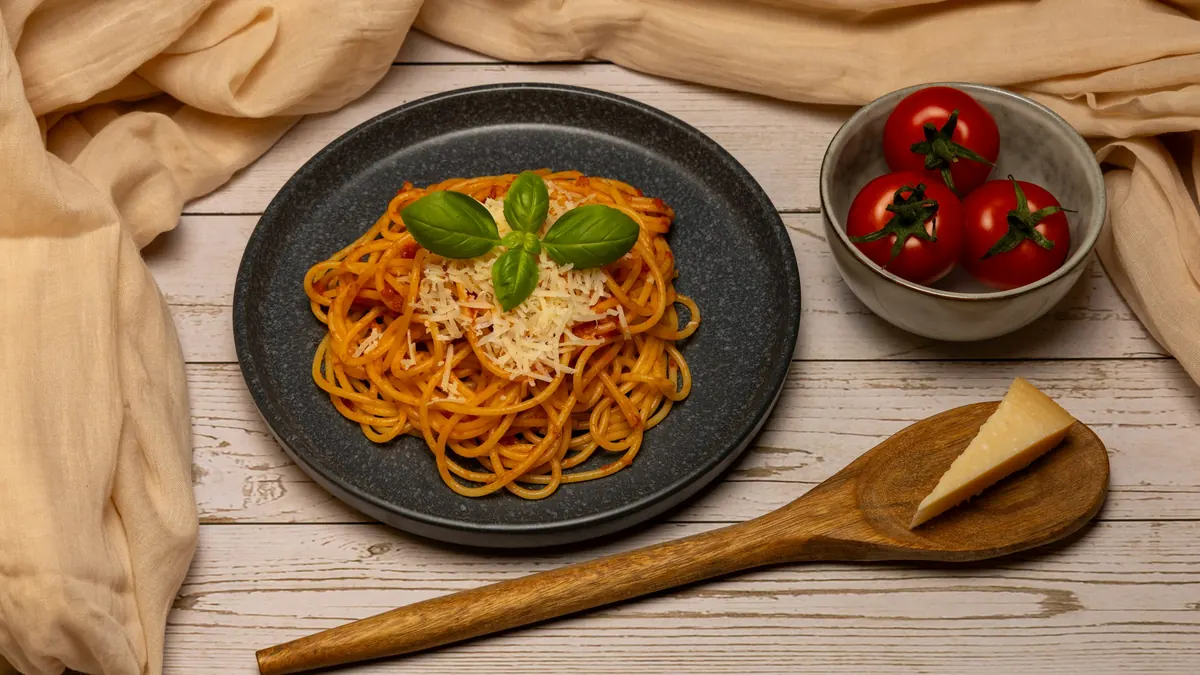
You can make pasta sauce from tomato paste in about 15 minutes with one 6-ounce can, 1 1/2 cups of water, garlic, olive oil and dried herbs. The trick is to fry the paste in oil until it turns brick red before you add any liquid. That short toast removes the raw, tinny edge and gives the sauce a slow-cooked depth.
This is the sauce for nights when the pantry is thin. There are no tomatoes to chop and no long simmer. A pinch of sugar balances the acidity, a splash of starchy pasta water makes it glossy, and a handful of Parmesan rounds it out.
Below you will find exact amounts, a paste-to-water ratio chart for every thickness, creamy, spicy, meat and vegan variations, and how to store and freeze leftovers.
Why Tomato Paste Makes a Great Pasta Sauce
Tomato paste is tomatoes that have been cooked for hours, strained of skins and seeds, and reduced until most of the water is gone. In other words, the long simmer has already happened. All you do is put the water back in a controlled amount.
That concentration gives you three advantages over a quick sauce made from canned whole tomatoes:
- Speed. The paste is already thick and sweet, so it needs only 5 to 8 minutes of simmering after the water goes in.
- Control. You choose the thickness. More water gives a loose sauce for thin strands, less gives a dense sauce that clings to rigatoni.
- Depth. Paste is rich in the savory glutamates that make tomatoes taste meaty. Browning it in oil adds caramelized, roasted notes on top.
A single 6-ounce (170 g) can holds about 2/3 cup of paste. Diluted with 1 1/2 cups of water, it yields roughly 2 1/4 cups of finished sauce, which is plenty for 12 ounces to 1 pound of dried pasta.
Ingredients for Tomato Paste Pasta Sauce
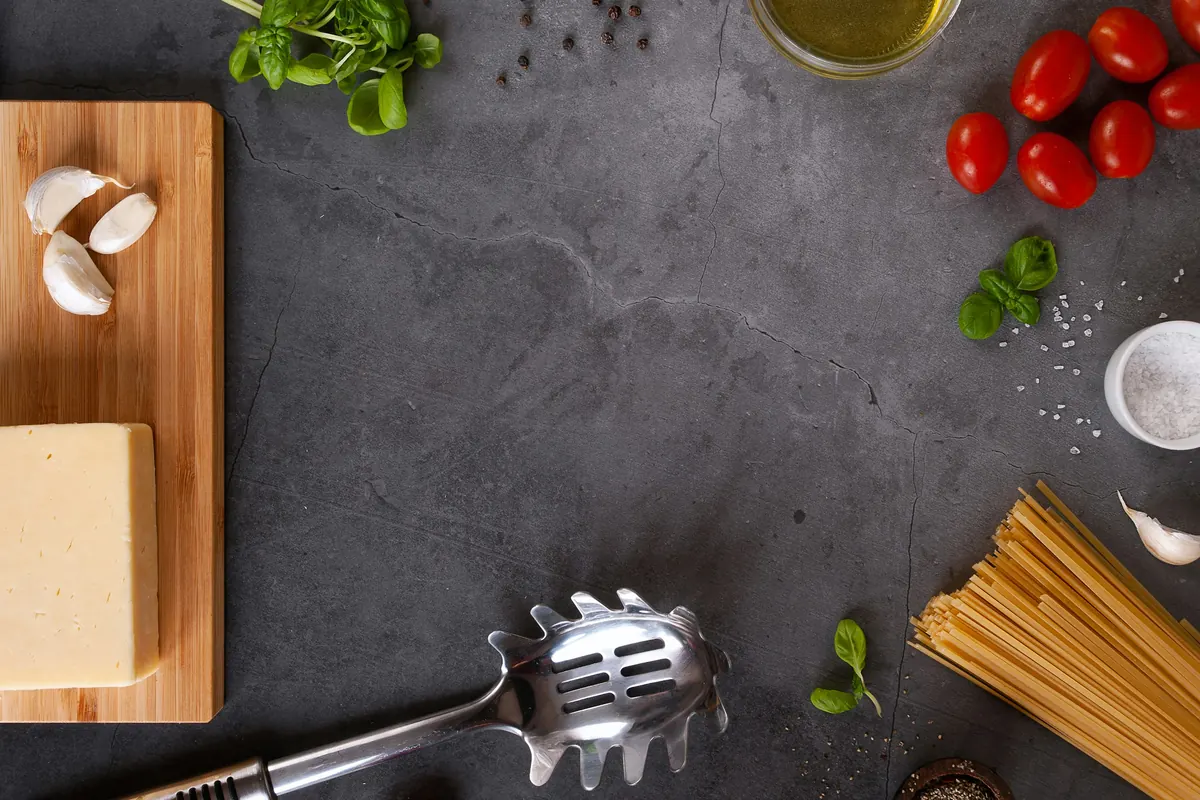
For the base, you need 2 tablespoons (30 ml) extra-virgin olive oil, 3 garlic cloves and one 6-ounce (170 g) can of tomato paste. Double-concentrated paste in a tube works too, but use about 2 tablespoons less because it is stronger.
For the liquid, use 1 1/2 cups (360 ml) water. If your pasta is boiling at the same time, swap some or all of it for starchy pasta water. The starch helps the sauce coat the noodles instead of sliding off.
For seasoning, add 1 teaspoon dried oregano, 1/2 teaspoon dried basil, 1/4 teaspoon red pepper flakes, 1/2 teaspoon kosher salt and a pinch of sugar (about 1/4 teaspoon). Finish with 1/4 cup (20 g) finely grated Parmesan.
Half a small yellow onion, finely chopped, is optional. It adds sweetness and body, plus about 4 minutes of cooking time. On the busiest nights, leave it out and lean on the garlic.
How to Make Pasta Sauce From Tomato Paste
Put a large pot of salted water on to boil first. The sauce cooks in roughly the same time as most dried pasta, so both are ready together.
- 01
Soften the aromatics
Warm the olive oil in a 10- or 12-inch skillet over medium heat. If using onion, cook it for 4 to 5 minutes until soft and golden at the edges. Add the garlic, oregano and red pepper flakes and stir for 30 to 60 seconds, just until fragrant. Garlic burns fast, so keep it moving.
- 02
Toast the tomato paste
Scrape in the whole can of paste. Spread it across the pan and cook, stirring often, for 2 to 3 minutes. It will darken from bright red to a deep brick color, smell sweet and start to stick in spots. This is where the flavor comes from, so do not rush it.
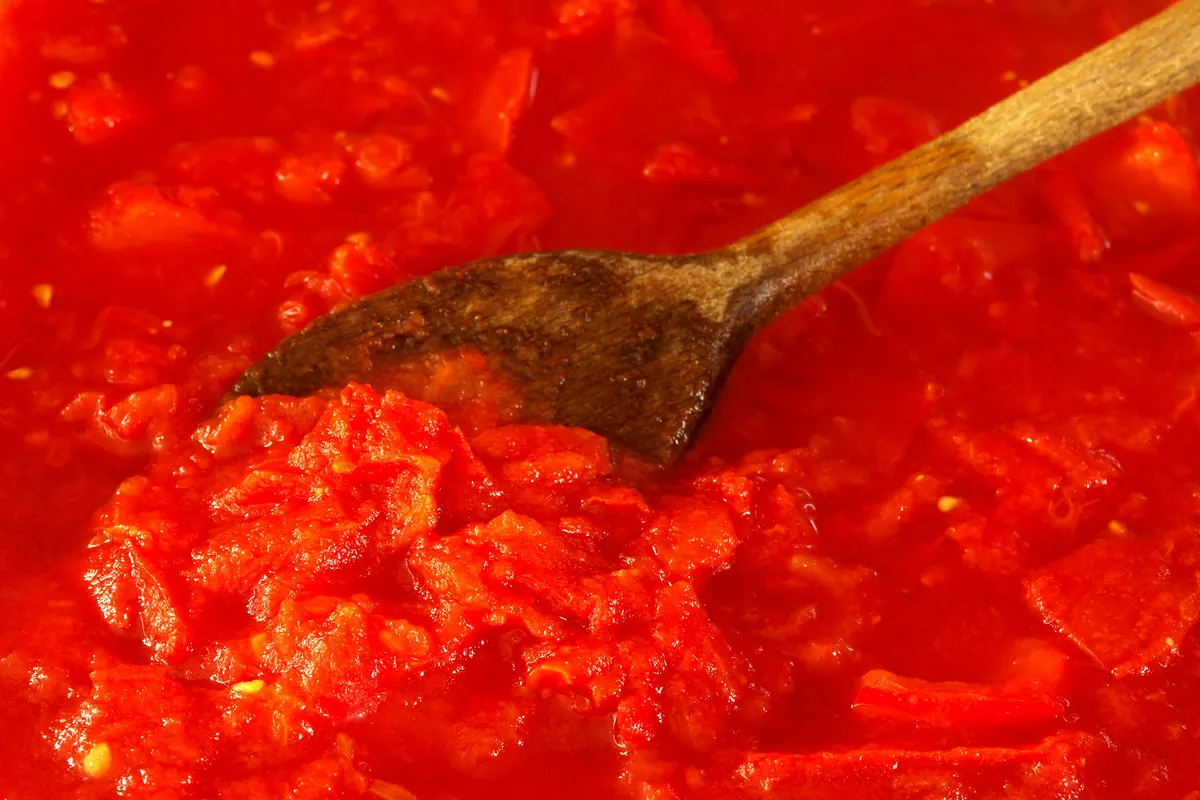
Fry the paste in the garlicky oil until it darkens to brick red. Photo by stephan de MARANTHI on Unsplash. - 03
Whisk in the water gradually
Pour in about 1/2 cup of the water and stir hard, scraping up the browned bits, until smooth. Add the rest in two more additions. Adding it slowly prevents lumps, which form easily if you dump all the liquid in at once.
- 04
Season and simmer
Stir in the salt, sugar and dried basil. Bring to a gentle bubble, then lower the heat and simmer for 5 to 8 minutes, stirring now and then. Thick tomato sauce spits, so a partly covered lid or a splatter screen helps.
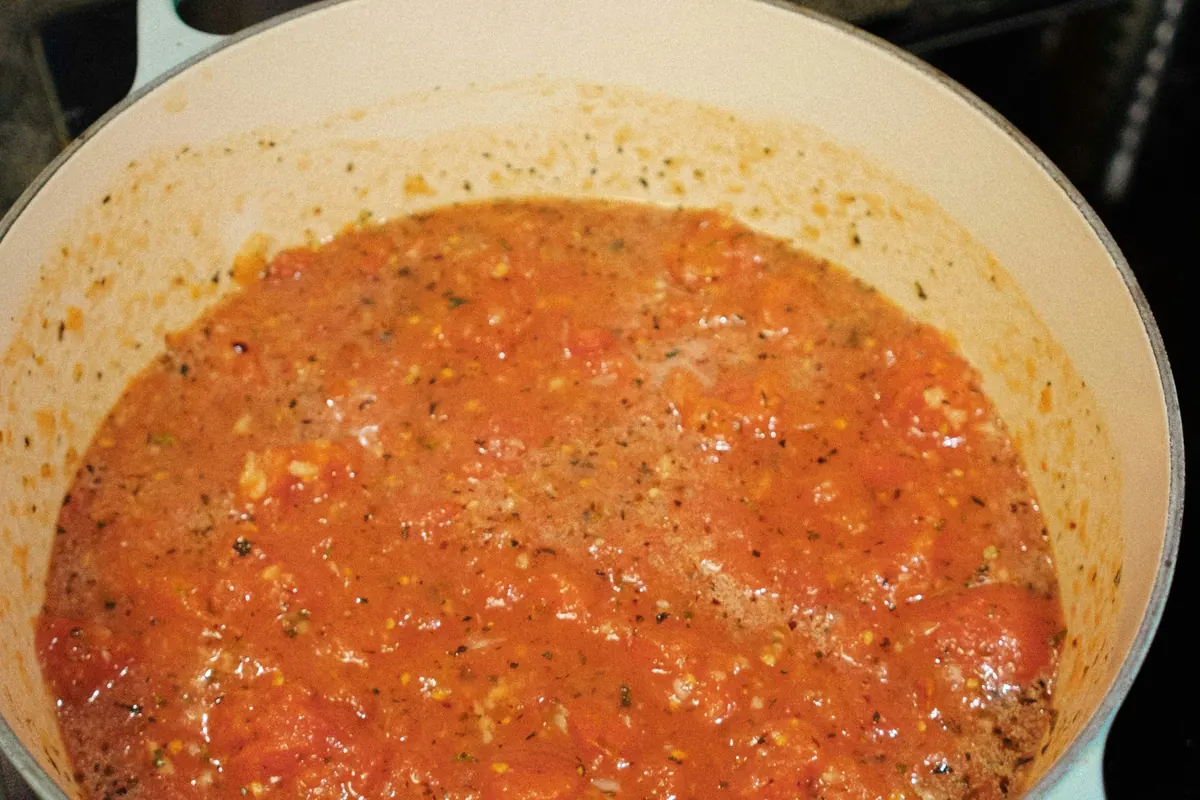
The finished sauce should coat a spoon and leave a slow trail across the pan. Photo by Tim McErston on Unsplash. - 05
Adjust and finish
Taste and add more salt or chili if needed. Toss in the drained pasta with a splash of pasta water and cook together for 1 minute. Take the pan off the heat and stir in the Parmesan.
Finishing the pasta in the sauce for a minute matters more than any seasoning, because the noodles absorb flavor and release starch that makes the sauce cling. If the sauce tightens up too much, loosen it with pasta water 2 tablespoons at a time. If it seems thin, simmer for another 2 minutes, or see our guide on how to thicken spaghetti sauce.
Tomato Paste to Water Ratio Chart
The amount of water decides the texture. Use this chart for one 6-ounce (170 g) can of paste. Yields are approximate and shrink a little as the sauce simmers.
| Sauce thickness | Water to add | Approx. yield | Best for |
|---|---|---|---|
| Very thick, spreadable | 1/2 to 3/4 cup (120 to 180 ml) | About 1 1/4 cups | Pizza sauce, flatbreads, dipping |
| Thick and clingy | 1 cup (240 ml) | About 1 2/3 cups | Rigatoni, baked ziti, meat sauce base |
| Classic pasta sauce | 1 1/2 cups (360 ml) | About 2 1/4 cups | Spaghetti, penne, everyday pasta |
| Light and loose | 2 cups (480 ml) | About 2 3/4 cups | Angel hair, thin spaghetti, gnocchi |
| Soup or braising base | 3 cups (720 ml) | About 3 1/2 cups | Minestrone, shakshuka, braised beans |
If you are adding ground meat or vegetables that release liquid, start one row thicker than you want. For half a can, simply halve the water.
Tomato Paste Sauce vs Jarred and Canned Tomato Sauce
Tomato paste sauce is not trying to replace a slow Sunday sauce. It fills a different gap. Here is how it compares with the two usual alternatives.
| Option | Time | Texture | Flavor | Pantry note |
|---|---|---|---|---|
| Tomato paste sauce | 15 min | Smooth, adjustable | Deep, savory, slightly sweet | Small cans store neatly and keep for months unopened |
| Jarred marinara | 5 min | Fixed by the brand | Varies, often sweet | Convenient, but you cannot change the thickness much |
| Canned whole or crushed tomatoes | 25 to 45 min | Chunky, rustic | Brighter, fresher tomato | Needs a longer simmer to lose water |
When you have an hour, our homemade spaghetti sauce with canned tomatoes gives a fuller, more layered result. For a fast weeknight, the paste version gets surprisingly close.
Tips for Deeper Flavor and Less Acidity
Tomato paste is concentrated, so its acidity is concentrated too. A few small moves keep the sauce balanced and round.
- Toast it properly. Raw paste tastes metallic. Two to three minutes in hot oil is the single biggest flavor upgrade.
- Use a pinch of sugar, not a spoonful. About 1/4 teaspoon softens sharpness without making the sauce sweet. Add more only after tasting.
- Finish with fat. A teaspoon of butter or a drizzle of good olive oil stirred in at the end smooths out sharp edges.
- Bloom the dried herbs. Adding oregano to the hot oil with the garlic wakes up its flavor. Add fresh basil only at the end.
- Add a savory boost. A minced anchovy fillet or a splash of soy sauce melted into the oil adds depth without tasting fishy or salty.
- Salt last. The Parmesan and pasta water both add salt, so taste before the final seasoning.
If the sauce still tastes sharp, a tiny pinch of baking soda (no more than 1/8 teaspoon) will neutralize some acid. It foams briefly. Use it sparingly, as too much leaves a flat, soapy taste.
Variations: Creamy, Spicy, Meat and Vegan
The base recipe is a blank canvas. Each of these changes the sauce with one or two extra ingredients.
Creamy Tomato Paste Sauce
Stir 1/2 cup (120 ml) heavy cream into the finished sauce over low heat and warm through for 2 minutes without boiling. The sauce turns a soft blush pink, close to a simple vodka pasta without the vodka. For a tangier version, melt in 2 ounces (56 g) of cream cheese instead. For a fuller white-sauce approach, see our creamy pasta sauce base.
Spicy Arrabbiata-Style Sauce
Raise the red pepper flakes to 3/4 to 1 teaspoon, or stir 1 tablespoon Calabrian chili paste into the tomato paste as it toasts. Finish with chopped parsley. Pair it with penne, the classic shape for arrabbiata.

Meat Sauce
Brown 8 ounces (225 g) ground beef or Italian sausage in the skillet before the onion, breaking it up as it cooks. Drain off excess fat, then continue with the recipe. Add an extra 1/2 cup of water and simmer for 10 minutes so the meat absorbs some sauce. Cook ground beef to at least 160°F (71°C).
Vegan Tomato Paste Sauce
The base is already vegan apart from the cheese. Skip the Parmesan and stir in 1 to 2 tablespoons nutritional yeast for a savory, cheesy note, or use a plant-based Parmesan. Most dried supermarket pasta contains no egg, but check the label. Sautéed mushrooms or a can of drained lentils make it heartier.
What Pasta to Serve It With
Because this sauce is smooth rather than chunky, it suits long strands and ridged shapes that trap a thin coating. Spaghetti, linguine, penne rigate, rigatoni and fusilli are all good matches. For angel hair, use the light ratio from the chart.
Plan on 12 ounces (340 g) of dried pasta for 4 moderate servings, or a full pound if you are feeding big appetites. Serve with extra Parmesan, a green salad and garlic bread. If you are cooking more than one pasta for a crowd, a bright pesto pasta makes a good partner. Browse more ideas in our pasta recipes.
Storage, Freezing and Reheating
Cool the sauce and refrigerate it within 2 hours in an airtight container. It keeps for 3 to 4 days in the fridge, in line with USDA guidance on leftovers and food safety. The creamy and meat versions follow the same rule.
To freeze, store the sauce without the pasta in freezer containers or flat zip-top bags, leaving a little headspace. It holds its best quality for about 3 to 4 months. Thaw overnight in the fridge. The plain and meat versions freeze well. Cream can separate slightly after thawing, so freeze the base and add cream when you reheat.
Reheat in a skillet over medium-low heat with a splash of water, stirring until it bubbles gently and is hot all the way through. The sauce thickens in the fridge, so expect to loosen it.
Have half a can of paste left over from another recipe? Scoop it into 1-tablespoon mounds on a lined tray, freeze until firm, then bag them. They drop straight into sauces and soups from frozen.
Tomato Paste Pasta Sauce FAQs
Can you make pasta sauce from tomato paste?
Yes. Fry one 6-ounce can of tomato paste in olive oil with garlic, then whisk in about 1 1/2 cups of water and simmer for 5 to 8 minutes. Season with oregano, salt and a pinch of sugar for a full pasta sauce in about 15 minutes.
How much water do I add to a 6-ounce can of tomato paste?
Add about 1 1/2 cups (360 ml) of water for a classic pasta sauce. Use 1 cup for a thick, clingy sauce or 2 cups for a light sauce for thin noodles. Add it gradually and adjust at the end.
Why does my tomato paste sauce taste bitter or metallic?
The paste was probably not toasted long enough. Cook it in oil for 2 to 3 minutes until it turns brick red before adding water. A pinch of sugar and a little butter or Parmesan at the end also soften any sharp edge.
Is tomato paste the same as tomato sauce?
No. Tomato paste is tomatoes cooked down until most of the water is gone, so it is thick and concentrated. Tomato sauce is thinner and ready to pour. Adding water and seasoning to paste turns it into a sauce.
Can I use tomato paste instead of tomato sauce in a recipe?
Yes. Mix 1 part tomato paste with about 1 part water to replace tomato sauce, and taste for seasoning. For pasta sauce, the 1 1/2 cups of water per 6-ounce can in this recipe gives a looser, ready-to-serve texture.
How long does homemade tomato paste sauce last?
It keeps for 3 to 4 days in an airtight container in the fridge. Frozen without the pasta, it holds its best quality for about 3 to 4 months. Thaw overnight in the fridge and reheat with a splash of water.
Can I add meat to tomato paste pasta sauce?
Yes. Brown 8 ounces of ground beef or sausage first, drain the fat, then make the sauce in the same pan. Add an extra 1/2 cup of water and simmer for 10 minutes so the meat absorbs the sauce.
The recipe
Quick Tomato Paste Pasta Sauce
A smooth, savory pantry sauce made from one can of tomato paste, garlic, olive oil and dried herbs. Enough for 4 servings of pasta.
Ingredients
Instructions
- Start the pasta. Bring a large pot of salted water to a boil and cook the pasta until 1 minute short of the package time. Reserve 1 cup of pasta water before draining.
- Soften the aromatics. Warm the olive oil in a 10- or 12-inch skillet over medium heat. Cook the onion, if using, for 4 to 5 minutes. Add the garlic, oregano and red pepper flakes and stir for 30 to 60 seconds until fragrant.
- Toast the tomato paste. Add the tomato paste and cook, stirring often, for 2 to 3 minutes until it darkens to a deep brick red and smells sweet.
- Add the water. Whisk in the water in three additions, scraping up the browned bits, until the sauce is smooth.
- Simmer and season. Stir in the basil, salt and sugar. Simmer gently for 5 to 8 minutes, stirring now and then, until the sauce coats a spoon.
- Toss and finish. Add the drained pasta with a splash of pasta water and toss for 1 minute. Off the heat, stir in the Parmesan, adjust the salt and loosen with more pasta water if needed.
Notes
For a thicker or thinner sauce, use the ratio chart above: 1 cup water per can for thick, 2 cups for light. Leftover sauce keeps for 3 to 4 days in the fridge or 3 to 4 months frozen. Estimated nutrition for the sauce only, without pasta, is about 120 calories, 4 g protein, 9 g carbohydrate and 8 g fat per serving, based on 4 servings. Values change with your brand of paste and cheese.