Make a PastaGet the dough recipe
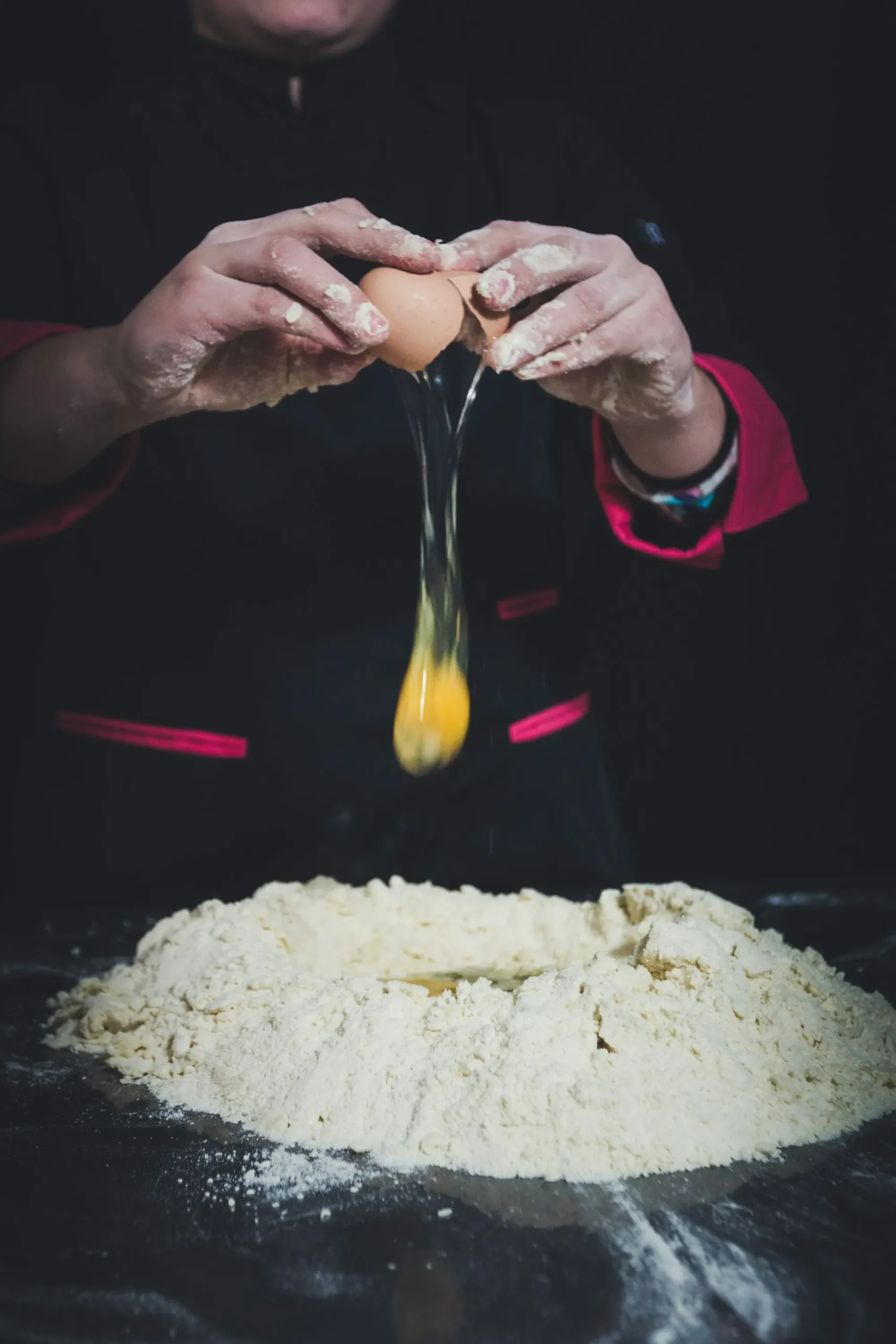
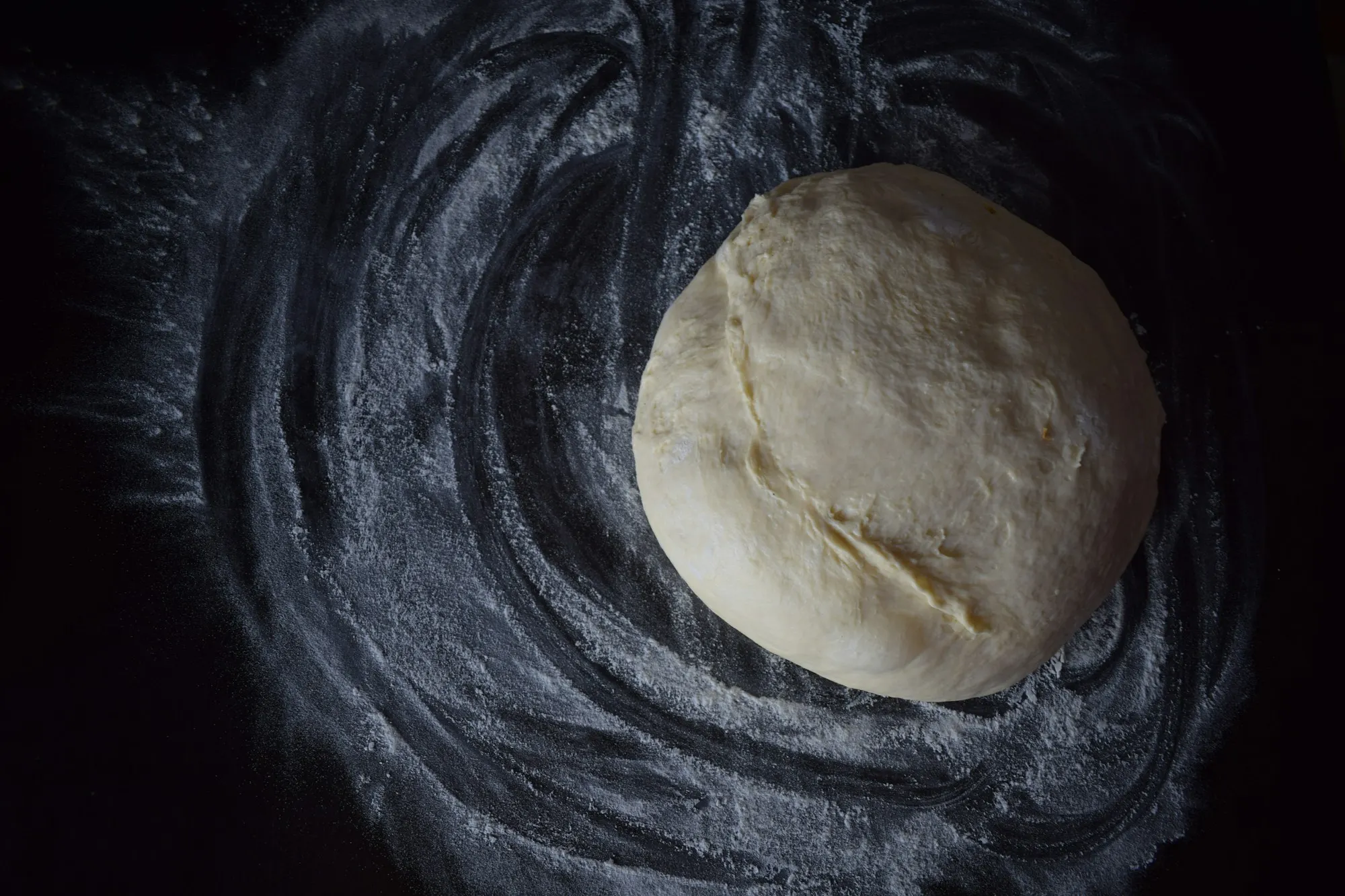
Egg falling into a mound of flour Egg yolks in a well of flour Pasta dough ball on a floured dark surface Fresh pasta sheet leaving a pasta machine Hands lifting fresh cut tagliatelle Spaghetti twirled on a fork with tomato and basil

01 · Flour

It begins with flour.

400 g Tipo 00, heaped into a fontana: the Italian well that will hold the eggs.

02 · Eggs

Gold in the well.

4 large eggs, about 70 g each. Beat with a fork and draw the flour in from the inside wall.

03 · Knead

Knead it to silk.

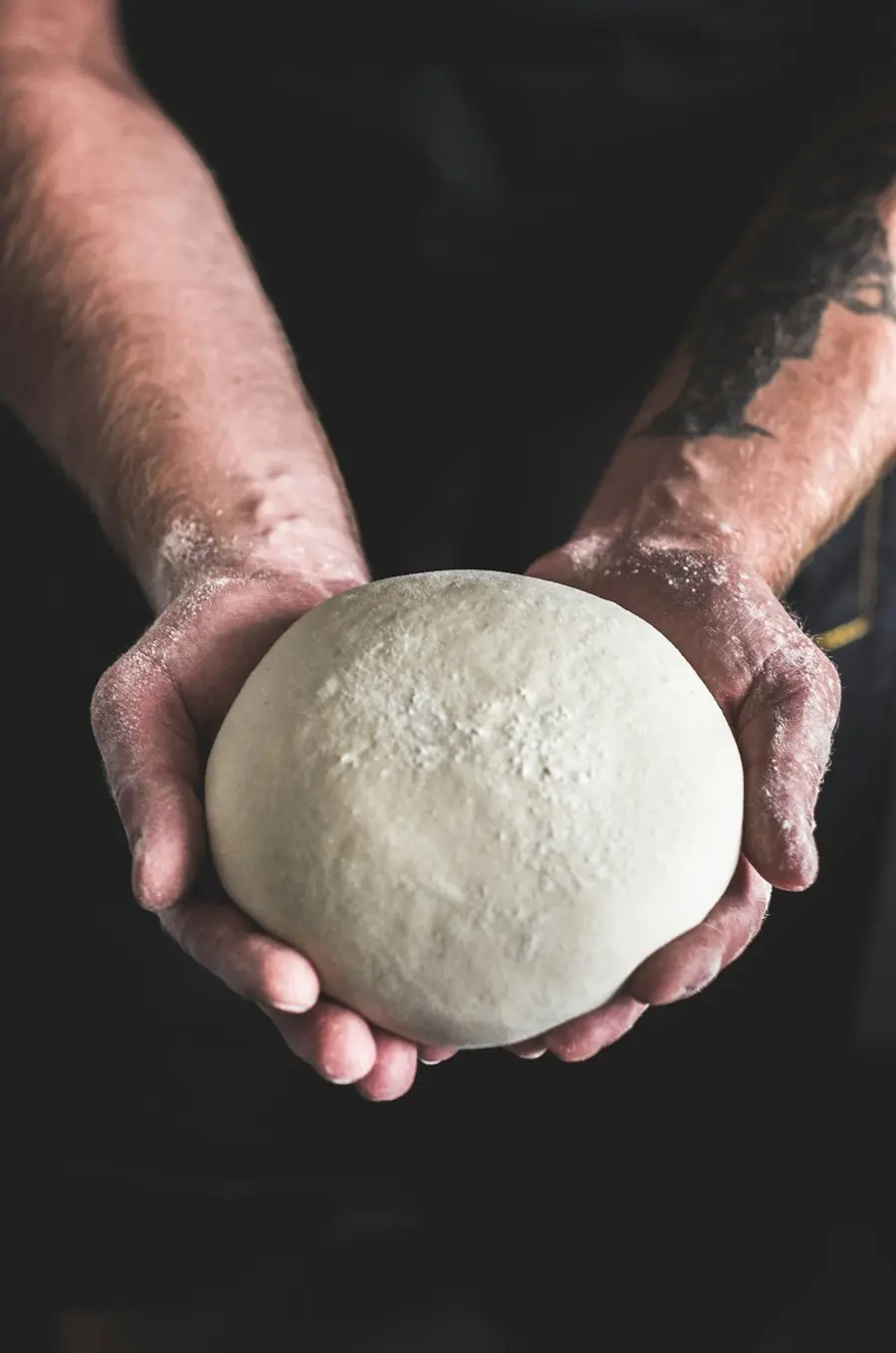
8 to 10 min by hand, then 30 min of rest under a cloth so the gluten relaxes.

04 · Roll

Rolled thin as light.

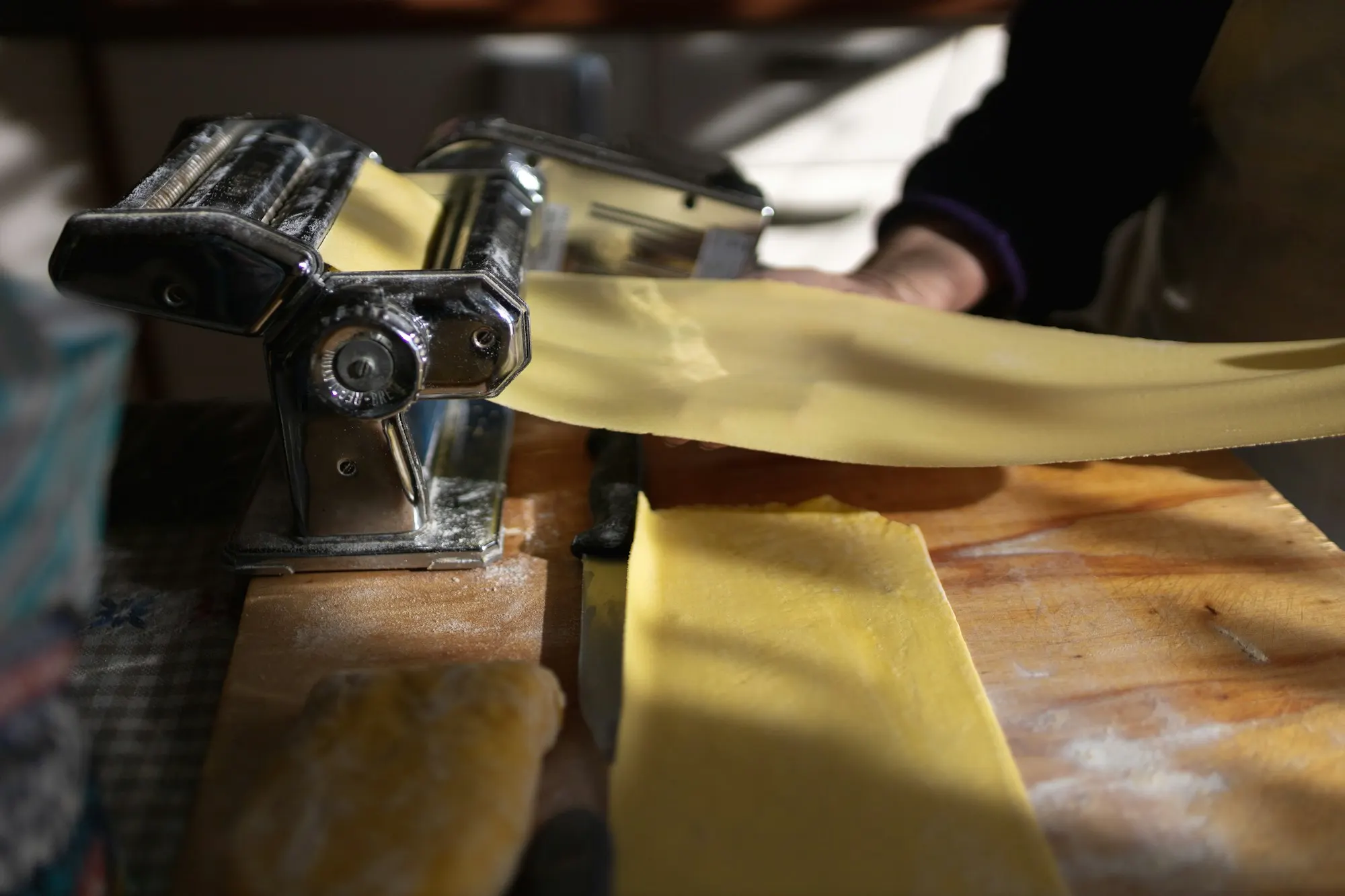
Through the machine from setting 1 to 6, until the sheet is about 1 mm and you can see your hand through it.

05 · Cut

Cut into ribbons.

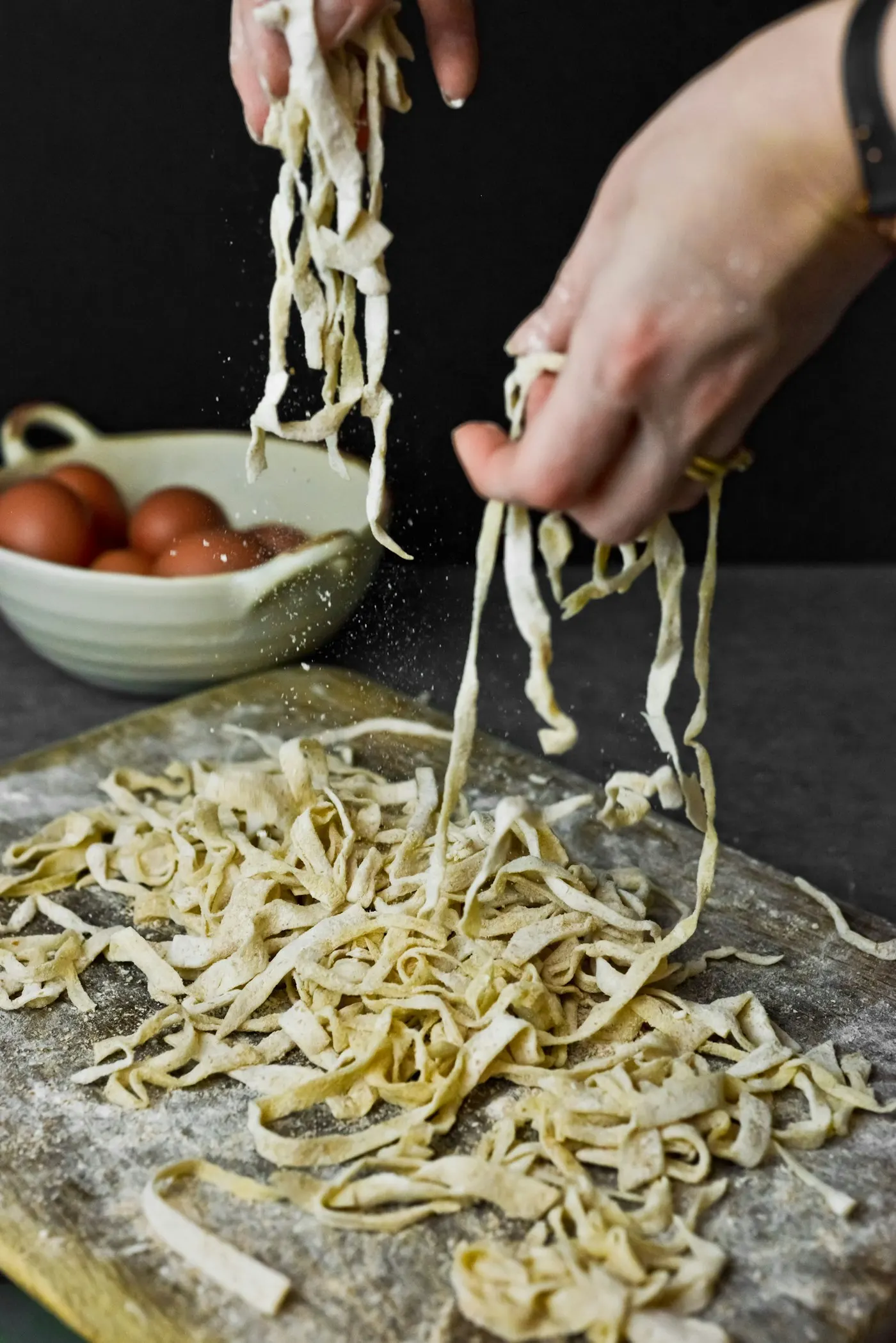
6 mm tagliatelle, 8 mm fettuccine, 2 cm pappardelle. Dust with semolina so the strands stay loose.

06 · Plate

Twirled with intention.

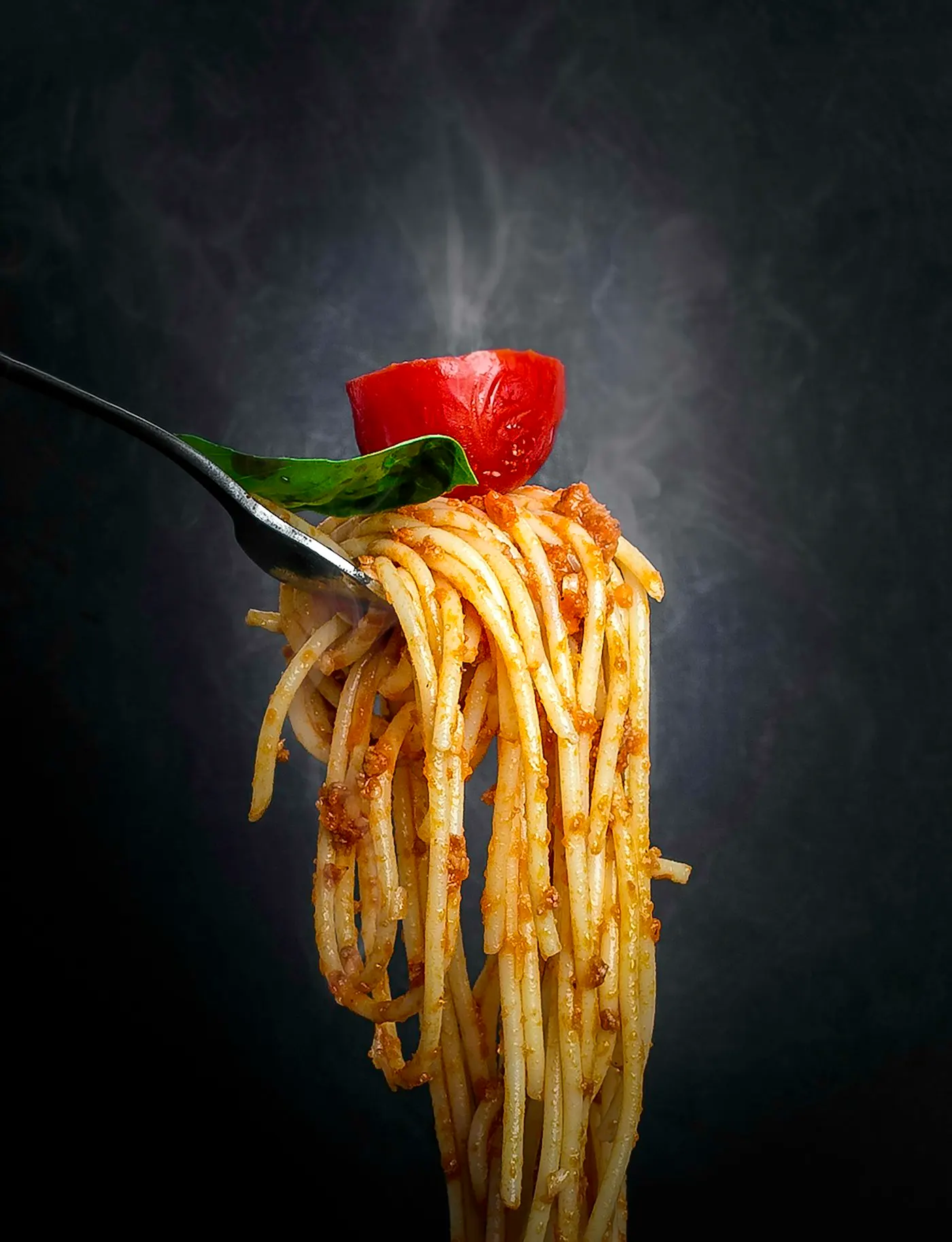
2 min in water salted like the sea, then straight into the sauce with a splash of pasta water.

    Scroll to make pasta

    The Make a Pasta method

    How To Make Pasta From Scratch: 6 Steps, Exact Ratios And 3 Ways To Roll It

    Making fresh pasta from scratch takes about one hour and four ingredients: flour, eggs, olive oil and sea salt. That short list turns into homemade pasta that tastes silky, tender and richer than dried pasta.

    The method follows six steps from the Italian tradition of Emilia Romagna, where a sfoglina rolls every sheet by hand: build the well, add the eggs, knead and rest, roll, cut, then boil it briefly.

    This beginner-friendly guide gives exact ratios, three rolling methods and fixes for common problems, so your first batch of pasta dough becomes chewy noodles with a restaurant-quality bite instead of a sticky, frustrating kitchen mess.

    The ratio

    Ingredients and Ratios

    The core ratio is 100 g flour per egg. Use Tipo 00 flour or all-purpose flour with large eggs; an Italian 70 g egg, weighed in its shell, carries enough liquid for that much flour.

    For 4 servings, or 1 lb pasta, combine 400 g flour with 4 large eggs. A cup-based version uses 2 cups flour and 3 large eggs, plus 1 tablespoon olive oil and 1/2 teaspoon salt.

    An extra yolk or egg yolk adds richness; season with kosher salt or sea salt and extra-virgin olive oil. Weigh ingredients on a digital scale: 300 g flour to 185 g eggs equals 61% hydration.

    400 gTipo 00 or all-purpose
    4Large eggs
    4 tspOlive oil, optional
    Based on 100 g flour per large egg, one egg per person. Hold back a little flour and adjust by feel.

    The foundation

    Choosing Your Flour

    Tipo 00 is a soft wheat flour with a fine grind, which gives tender pasta with a silky surface. Italian brands such as Caputo and Molino Grassi are sold online and in larger grocery stores.

    All-purpose flour from King Arthur or similar brands works well too. Its moderate protein content builds enough gluten for elasticity, so sheets stretch thin without tearing, and most home cooks notice little difference once sauced.

    Semolina flour, milled from durum wheat, adds bite, and rice flour makes a good dusting flour because it absorbs less moisture. Whole grain flour, rye, spelt, farro and kamut add nutty flavor when blended sparingly.

    SilkyTipo 00

    Finely milled soft wheat. The smoothest, most tender ribbons.

    ReliableAll-purpose

    Everyday flour with enough protein for stretch. Hard to tell apart once sauced.

    BiteSemolina

    Durum wheat for firmer pasta, egg-free dough and dusting.

    NuttyWhole grain

    Rye, spelt, farro or kamut, blended in small amounts for flavor.

    Your kit

    Equipment You Need

    You need little gear: a fork, a large bowl or wooden board, a bench scraper and a rolling pin. A floured pastry board grips best, and a measuring cup works if you skip a scale.

    A pasta machine saves time. The Marcato Atlas 150 is a hand-crank pasta roller; a KitchenAid stand mixer takes a pasta roller attachment and pasta cutter attachment, while a food processor or dough hook mixes.

    For finishing, keep plastic wrap, a kitchen towel, spray bottle, a dough scraper, a baking sheet lined with parchment paper, a drying rack or wood dowel, a large stock pot, a pasta basket and tongs.

    Essentials

    • Fork
    • Large bowl or wooden board
    • Bench scraper
    • Rolling pin
    • Plastic wrap
    • Large stock pot
    • Tongs

    Nice to have

    • Marcato Atlas 150
    • KitchenAid roller and cutter
    • Digital scale
    • Food processor
    • Drying rack
    • Semolina for dusting
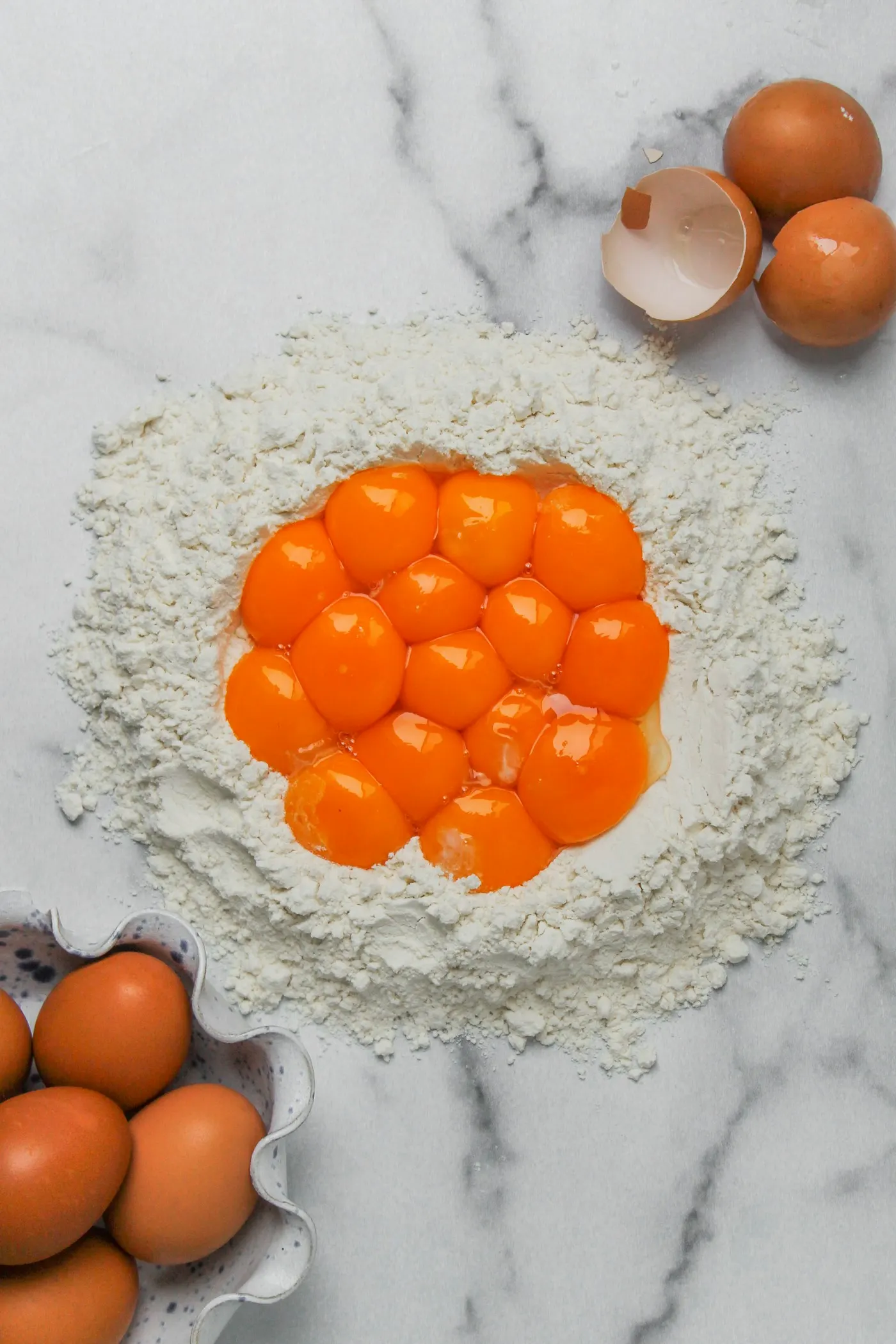
    Egg yolks resting in a well of flour
    Step 1 · The fontana

    Step 1 of 5

    Making The Dough By Hand

    Start on a clean work surface; a kitchen table gives you room. Mound the flour, then firmly press a flour well into the center, called the fontana, shaped like a volcano with a deep crater.

    Crack eggs into the well, add the salt and oil, then beat eggs gently. Whisk with a fork in small circles and slowly draw in flour from the inside wall, keeping the outer rim intact.

    When the center thickens into a shaggy dough, use a bench scraper to fold in flour and bring together a rough ball. If it feels dry, work with wet hands; if sticky, add flour gradually.

    Hands holding a smooth ball of kneaded pasta dough
    Step 2 · Smooth and elastic

    Step 2 of 5

    Kneading and Resting

    To knead, press the dough away with the heel of the hand, then push and fold it back and turn it. Repeating this rhythm drives gluten development, which gives fresh pasta its structure and chew.

    Most recipes knead 8 to 10 minutes, softer doughs 5 to 7 minutes, and many cooks stop around 7 to 8 minutes. Finish when the dough looks smooth, feels elastic and silky, and springs back.

    Shape a dough ball, wrap in plastic or cover it to prevent drying, then rest 30 minutes at room temperature to relax gluten. Rushed cooks rest 20 to 30 minutes; others add a 10-minute rest.

    Step 3 of 5

    Three ways to roll

    Method A

    Rolling Pasta By Hand

    With no machine, the traditional method needs only a rolling pin and a lightly floured surface. Italian cooks use a long rolling pin to stretch the batch into one large thin sheet, called a sfoglia.

    Roll from the center outward, then rotate the dough a quarter turn after every few passes. This keeps an even thickness and a round shape, and stops the edges ending up thicker than the middle.

    Keep rolling until the sheet is 1 to 2 mm thick and translucent enough to see your hand through it. It takes patience and about fifteen minutes, but the rough surface helps sauce cling better.
    Method B

    Rolling With A Pasta Machine

    Quarter the dough and keep unused pieces covered. Flatten into a disc by hand, dust with flour, then feed through machine on the widest setting, labeled setting 1 on some models and 0 on others.

    Fold into thirds like a letter and roll again. Repeat two or three times to laminate the dough, which smooths edges and strengthens the sheet. Then pass through twice on each of the thinner settings.

    Machines offer settings 0 to 9 or similar gear settings. Stop at setting 5 for lasagna, setting 6, about 1/16 inch, for ribbons. If long sheets tangle, cut sheets in half, then flour pasta sheets.

    Method C

    Using A Stand Mixer Or Food Processor

    A stand mixer is a faster method with less mess. Add the flour, eggs, oil and salt to the bowl, mix with the paddle until combined, then switch to the dough hook on low speed.

    Knead in a KitchenAid or similar mixer for 6 to 7 minutes, until the dough turns smooth and pulls away from the bowl. Add water by the teaspoon if it stays too dry or crumbly.

    A food processor is quicker. Pulse until you see a crumbly mixture that forms a ball when pinched, then finish by hand for one minute. Using gram measurements here keeps every batch consistent and predictable.

    Step 4 of 5

    Cutting Pasta Shapes

    Let semi-dry sheets rest for 5 to 15 minutes until no longer feeling tacky. That leathery texture helps them cut cleanly and prevent sticking. Then use a cutter attachment or a sharp knife for ribbons.

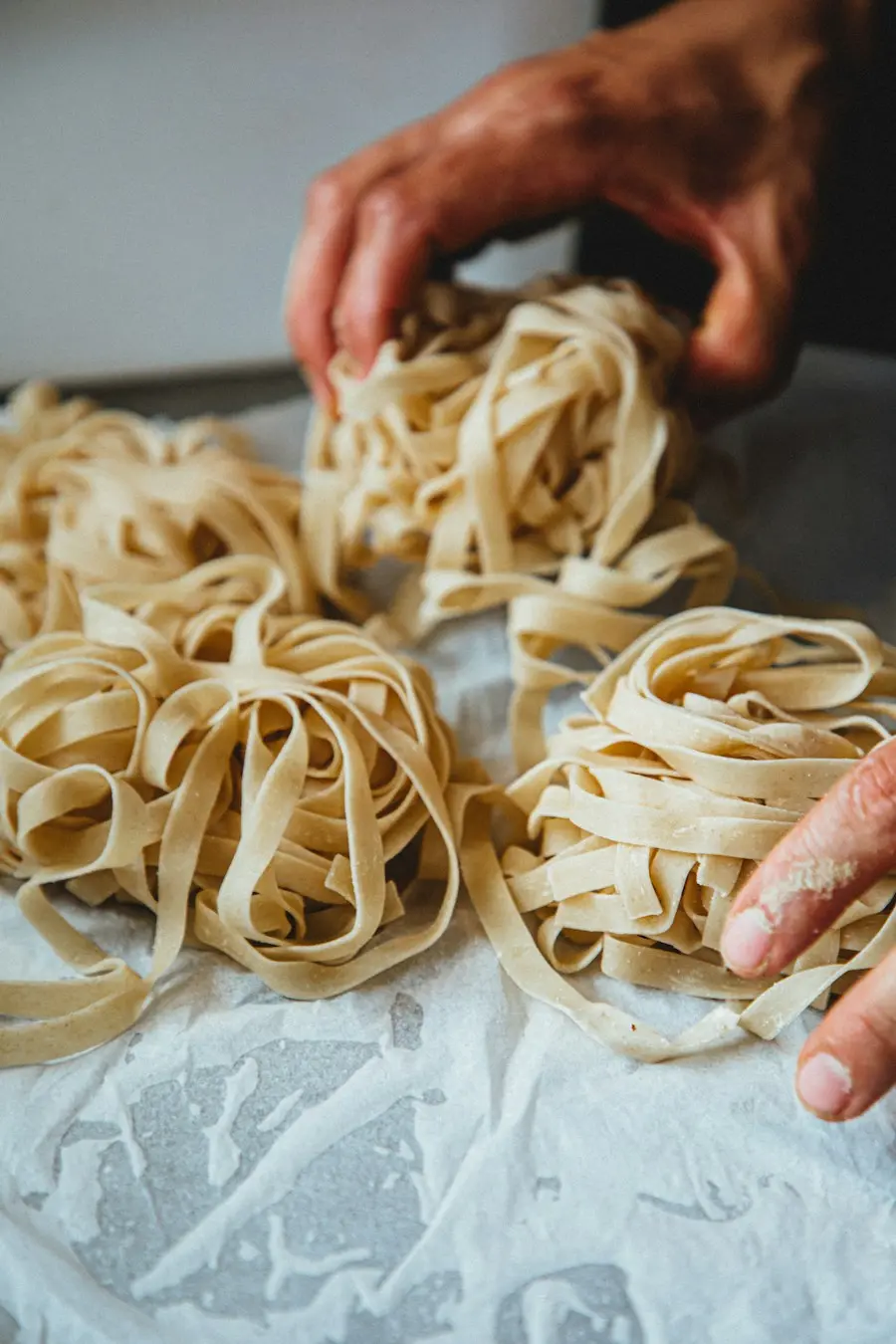
    To cut by hand, dust and roll up the sheet loosely, then slice 1/4 inch strips for fettuccine or tagliatelle, and 1 inch strips for pappardelle. A machine cutter also makes thin linguine or spaghetti.

    Keep lasagna sheets whole or fill for ravioli. Orecchiette, cavatelli, pici and trofie are shaped by hand, garganelli are rolled squares, bucatini need an extruder. Toss with flour or semolina dusting, and make pasta nests.

    Nests of fresh tagliatelle dusted with flour
    Tagliatelle nests
    Linguine3 mm
    Tagliatelle6 mm
    Fettuccine8 mm
    Pappardelle2 cm
    LasagnaWhole sheet
    RavioliFilled sheet

    Step 5 of 5

    Cooking Fresh Pasta

    Use a large pot of rapidly boiling water, seasoned until it tastes salty like the sea. Properly salted water is your only chance to season the noodles themselves, so do not skip this important step.

    Fresh pasta cooks fast: thin strands need 1 minute, most ribbons 2 to 3 minutes, and thicker cuts 2 to 5 minutes, depending on thickness. When it floats, start a taste test for al dente.

    Before draining, reserve pasta water. Starchy pasta water, with traces of gluten in water, helps the sauce cling and turn glossy. Transfer with tongs, toss in sauce, and finish in the pan for thirty seconds.

    Cooking times

    1 minThin strands
    2 to 3Minutes, ribbons
    2 to 5Minutes, thick cuts
    Spaghetti twirled on a fork with tomato and basil

    Keep it fresh

    Storing, Drying and Freezing

    Pasta sits at room temperature up to 2 hours. Refrigerate noodles in an airtight container for 12 hours to 24 hours; dough in plastic wrap keeps up to 1 day or up to 2 days.

    To store it dry, air-dry strands on a drying rack or hang them over a dowel, then dry 12 to 24 hours until brittle. Fully dried noodles keep for several weeks in a sealed jar.

    To freeze, air-dry 15 to 20 minutes before freezing, shape pasta nests, and freeze on a baking sheet to flash freeze them. Store in a freezer bag up to 1 month, then cook from frozen.

    Counter2 hours

    Under a towel at room temperature.

    Fridge24 hours

    Cut noodles in an airtight container.

    Air-dry12 to 24 hours

    On a drying rack until brittle.

    Freezer1 month

    Flash frozen nests in a freezer bag.

    Fix it

    Troubleshooting Pasta Dough

    Too sticky

    Dough that feels too sticky comes from large eggs or high humidity, so add flour one tablespoon at a time. Because egg size varies, always hold back some flour and adjust by feel while kneading.

    Dry or cracking

    If dough is too dry, crumbly or cracking, add water a teaspoon at a time, or add olive oil, and knead with wet hands. Small cracks often close up if you rest longer under cover.

    Tearing or gummy

    Tearing sheets and uneven edges mean the dough needs more folding at the widest setting, or is dough too cold from the fridge. Overworked, thick dough gives gummy pasta; damp strands end up sticking together.

    No eggs needed

    Egg-Free Pasta Dough

    Pasta made with no eggs is common across southern Italy. An eggless dough of semolina and water, or plain flour and water, makes naturally vegan pasta with a firmer bite and a pale golden color.

    Use about 200 g semolina to 100 ml warm water, with a teaspoon of olive oil for easier handling. Knead ten minutes until smooth, because this dough starts rough and takes longer to come together.

    Egg-free dough suits hand-shaped pasta better than thin ribbons. Roll ropes for pici, drag small pieces into cavatelli, or press thumb-sized coins into orecchiette. These shapes hold chunky sauces and need no machine at all.

    The finish

    Serving Fresh Pasta With Sauce

    Fresh pasta shines with simple sauces. Toss hot noodles with butter and Parmesan, or try cacio e pepe, pasta al limone and spaghetti aglio e olio, where just a few ingredients let the texture lead.

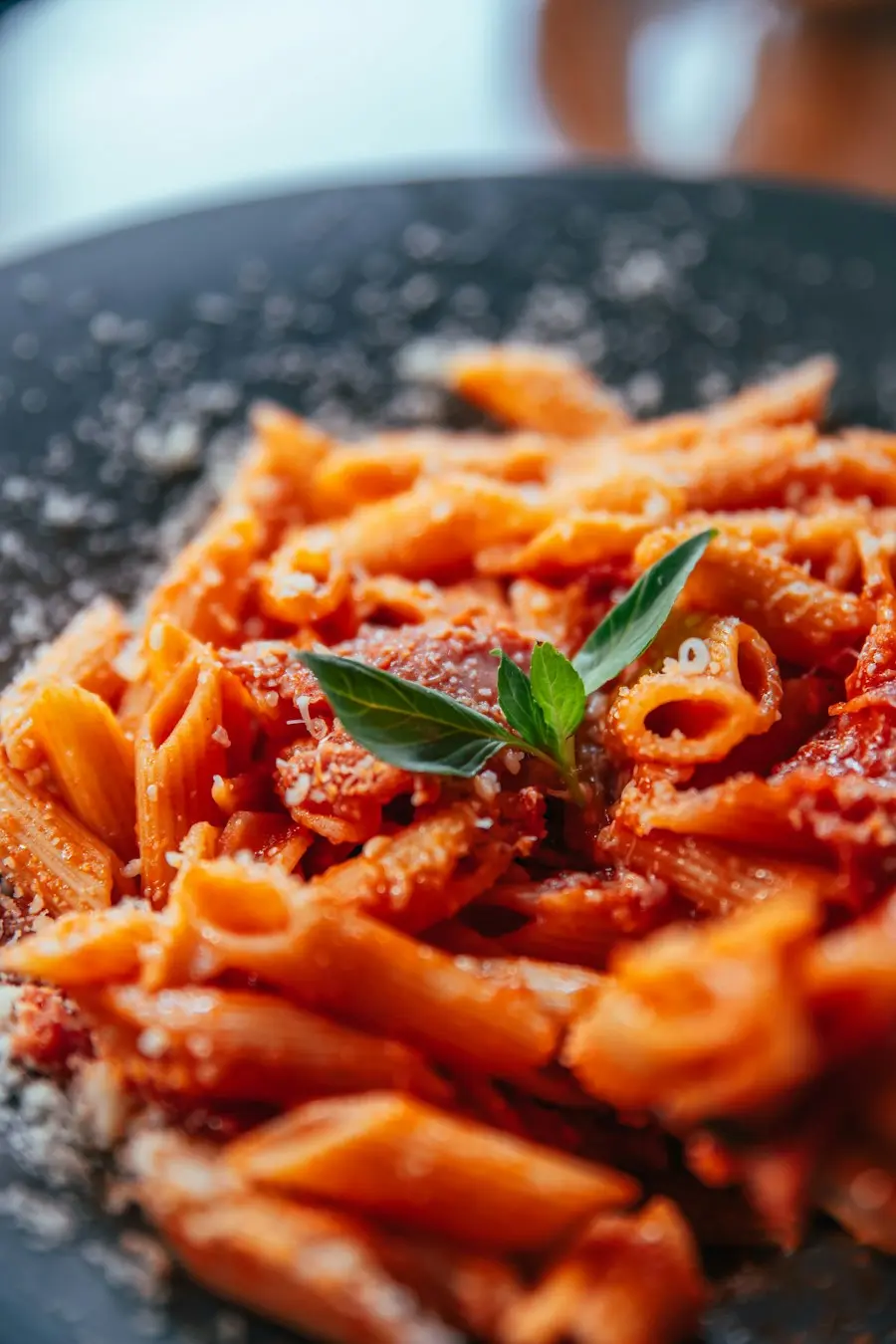
    For tomato dishes, use marinara, a five-minute tomato sauce, or any quick tomato sauce finished with torn basil. Wide ribbons also carry a slow ragù or classic Bolognese, which cling well to freshly rolled surfaces.

    Creamy carbonara, alfredo and fettuccine alfredo are natural matches, while pesto, sautéed mushrooms, clams with linguine and roasted vegetables add variety. Finish with Parmesan cheese or vegan Parmesan, and try beet fettuccine for bright color.

    Penne in tomato sauce with fresh basil
    Tomato and basil
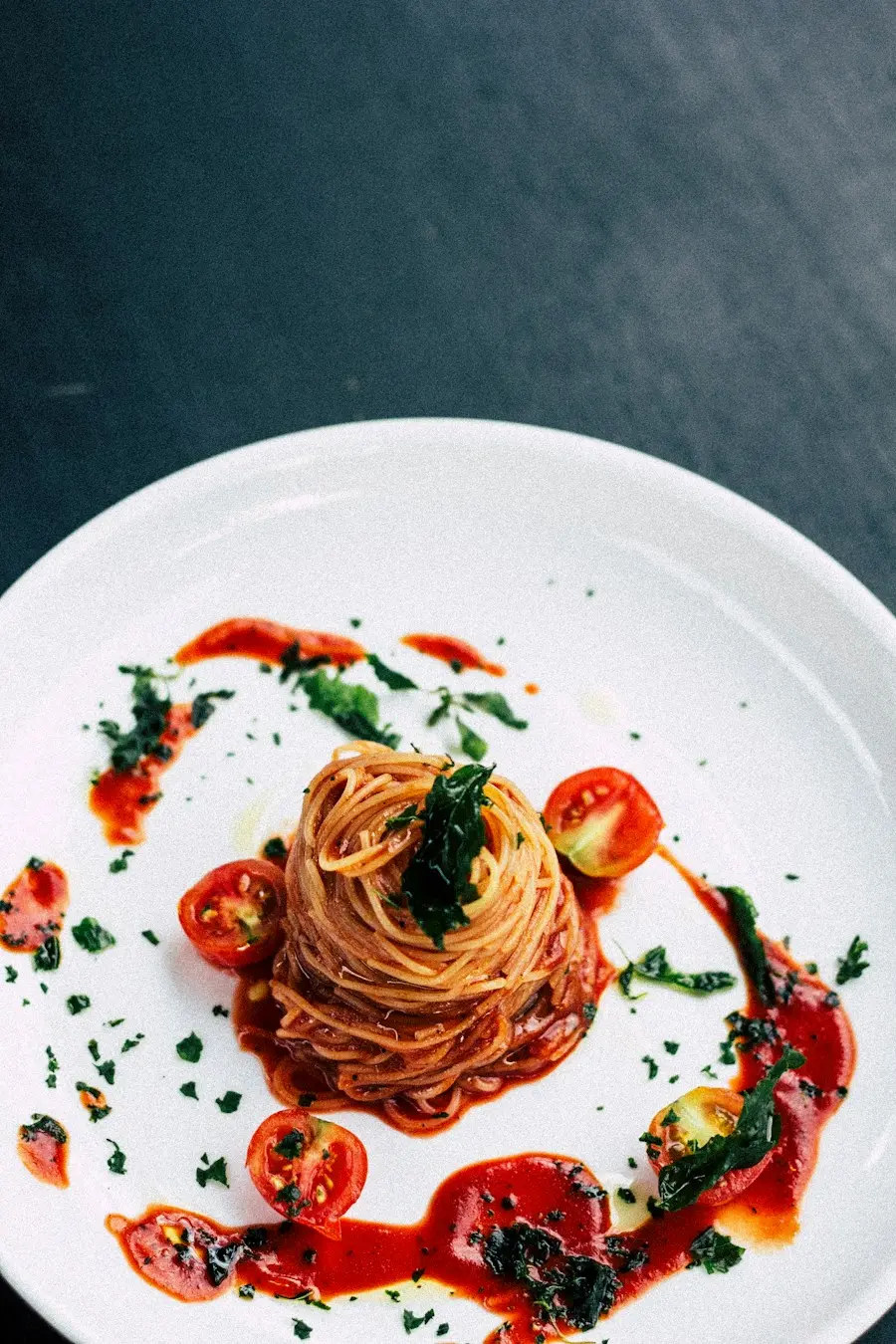
    Spaghetti nest plated with tomato sauce
    Plated to impress

    Pasta shapes

    From one dough
    • Pappardelle
    • Penne
    • Rigatoni
    • Bowtie pasta
    • Gnocchi
    • Ravioli

    Pasta sauces

    Homemade, from scratch
    • Homemade pasta sauce
    • Alfredo sauce
    • Pesto pasta
    • Vodka pasta
    • White sauce for pasta
    • Creamy pasta sauce

    Pasta recipes

    Weeknight favorites
    • Pasta salad
    • Rasta pasta
    • Chicken alfredo pasta
    • Pasta carbonara
    • Shrimp pasta
    • Butter pasta

    Questions

    Frequently Asked Questions

    How Long Does It Take To Make Pasta?

    The total time is about 1 hour: mixing, a 10 minutes knead, a 30 minutes rest, rolling, cutting and a 2 minutes cook. Recipes list 45 minutes prep, but hands-on time is closer to 30.

    Can You Make Pasta Without A Machine?

    Yes. You can make pasta without a machine with a rolling pin and knife. Work the dough by hand into a thin sheet, then roll and slice into ribbons. That makes a pasta maker optional.

    Can You Make Pasta Without Eggs?

    Yes. To make pasta without eggs, mix two parts semolina with one part warm water and a little olive oil. This eggless dough is firmer, so it suits hand-shaped pasta like orecchiette and cavatelli best.

    Why Is My Pasta Dough Sticky Or Cracking?

    Both come down to hydration. Sticky dough holds excess liquid, so add flour. Cracking dough holds too little, so add water or olive oil by the teaspoon. Egg size and flour type cause most swings.

    Which Flour Is Best For Homemade Pasta?

    Tipo 00, a finely milled soft wheat flour, gives the most silky texture. All-purpose flour works nearly as well and costs less. Blend in semolina for extra bite, or whole wheat flour for nutty flavor.

    How Long Does Fresh Pasta Last?

    Follow these limits: room temperature 2 hours, fridge 1 to 2 days in an airtight container, and freezer 1 month. Fully air-dried noodles become shelf-stable dried pasta, which keeps for weeks in a sealed jar.

    Photography via Unsplash: Jordane Mathieu, Wendy Rake, Tamara Gak, Lorenzo Tomassetti, Margaret Jaszowska, Narek Petrosyan, Arturrro, Anima Visual, Fatemeh Rz, Vinn Koonyosying.

    Scroll to Top