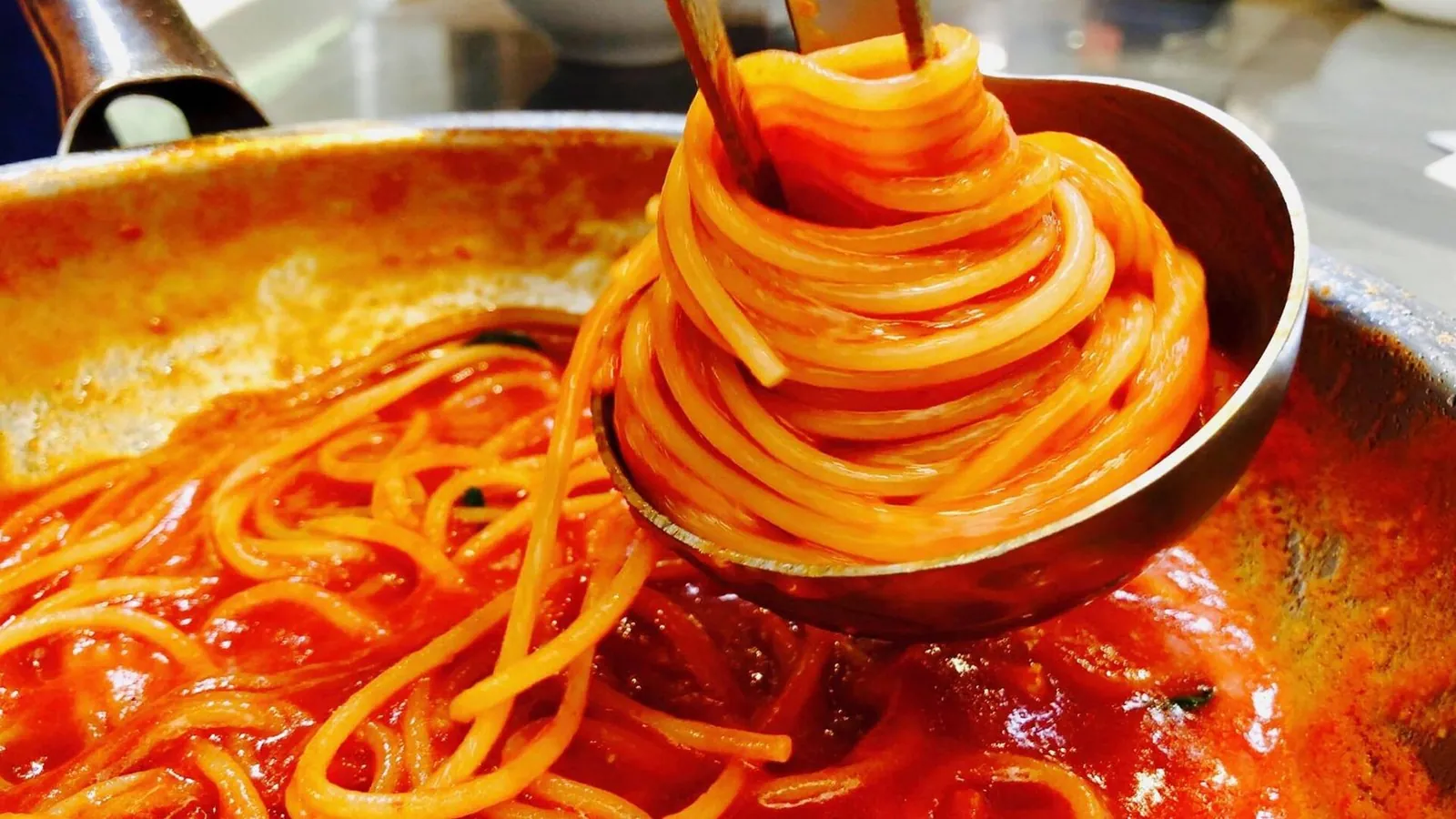
In this guide
Knowing how to make jarred pasta sauce better is one of the most useful weeknight skills a home cook can have. A good jar already holds tomatoes, oil and seasoning that have been cooked down for you. What it lacks is freshness, depth and balance, and every one of those can be added in the time it takes to boil the pasta.
This guide gives you twelve upgrades in the order you would use them at the stove, a table that matches upgrades to the type of jar you bought, five tested flavor combinations, a fix-it chart for sauce that is too sweet or too sharp, and storage rules. The printable recipe at the end turns one 24-ounce jar into a doctored marinara for four in about 30 minutes.
| Question | Short answer |
|---|---|
| What makes the biggest difference? | Cooking garlic and onion in olive oil before the sauce goes in, then simmering the sauce uncovered for 10 to 20 minutes. |
| How do I add depth fast? | Toast a tablespoon of tomato paste, then add an anchovy fillet or a Parmesan rind. |
| How do I fix a sweet jar? | A teaspoon of red wine vinegar, a pinch of salt and some red pepper flakes. |
| What is the last step? | Finish slightly undercooked pasta in the sauce with a splash of starchy pasta water. |
| How long does it take? | About 25 minutes of cooking, most of it hands-off simmering. |
Why Jarred Sauce Tastes Flat
It was cooked once, a long time ago
Jarred sauce is cooked, filled hot and sealed so it can sit on a shelf for months. That process is safe and convenient, but it dulls the bright, fresh notes of garlic and basil. The tomatoes can also pick up a flat, slightly tinny taste. A sauce made at home tastes alive because its aromatics were cooked minutes ago, and that is the gap you are closing.
It was seasoned for everyone
A brand has to please millions of palates, so most jars land in the middle: moderately salty, often a little sweet, with gentle herbs and almost no heat. That is a sensible starting point. It also means nearly every jar benefits from a push in one direction, whether that is more acid, more savory depth or a hint of chili.
What you can and cannot change
You can add fresh aromatics, savory depth, heat, richness and texture, and you can correct balance. You cannot easily remove salt or sugar once they are in, so read the label before you buy. A jar with tomatoes listed first, olive oil rather than soybean oil, and no added sugar gives every upgrade below a better base to build on.
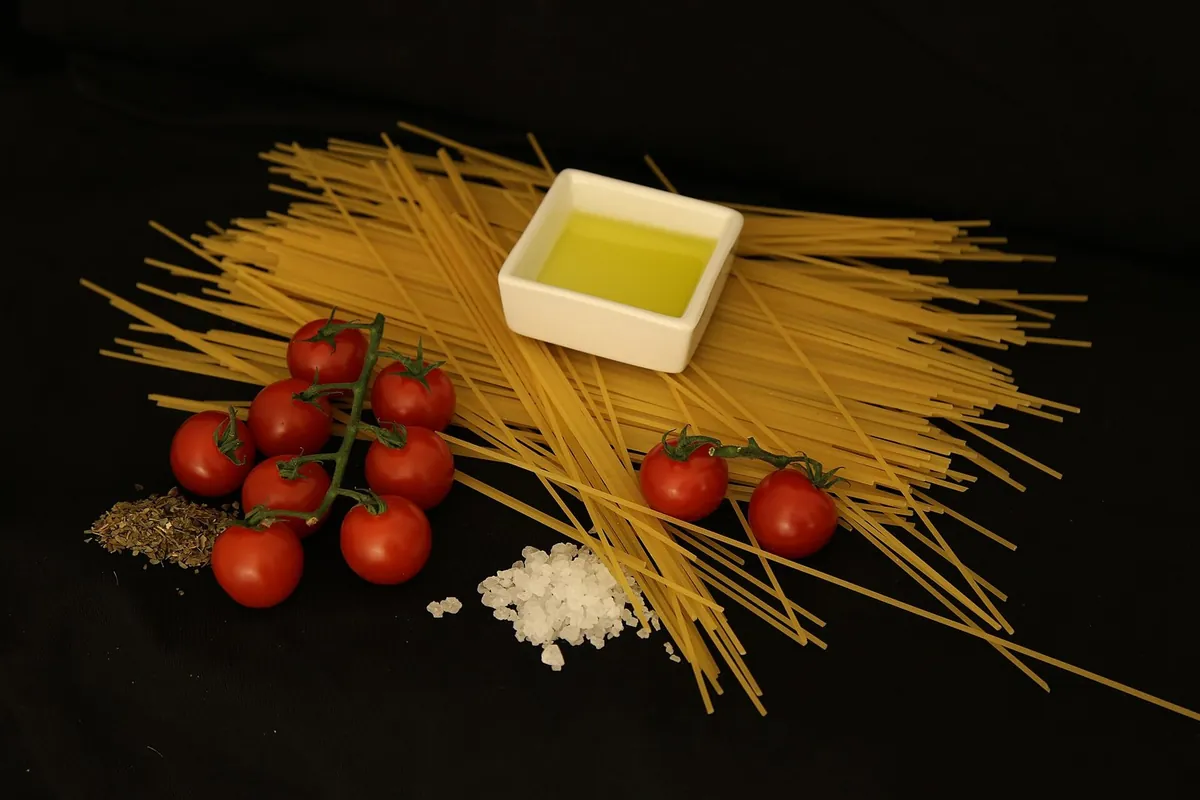
How to Make Jarred Pasta Sauce Better: 12 Easy Upgrades
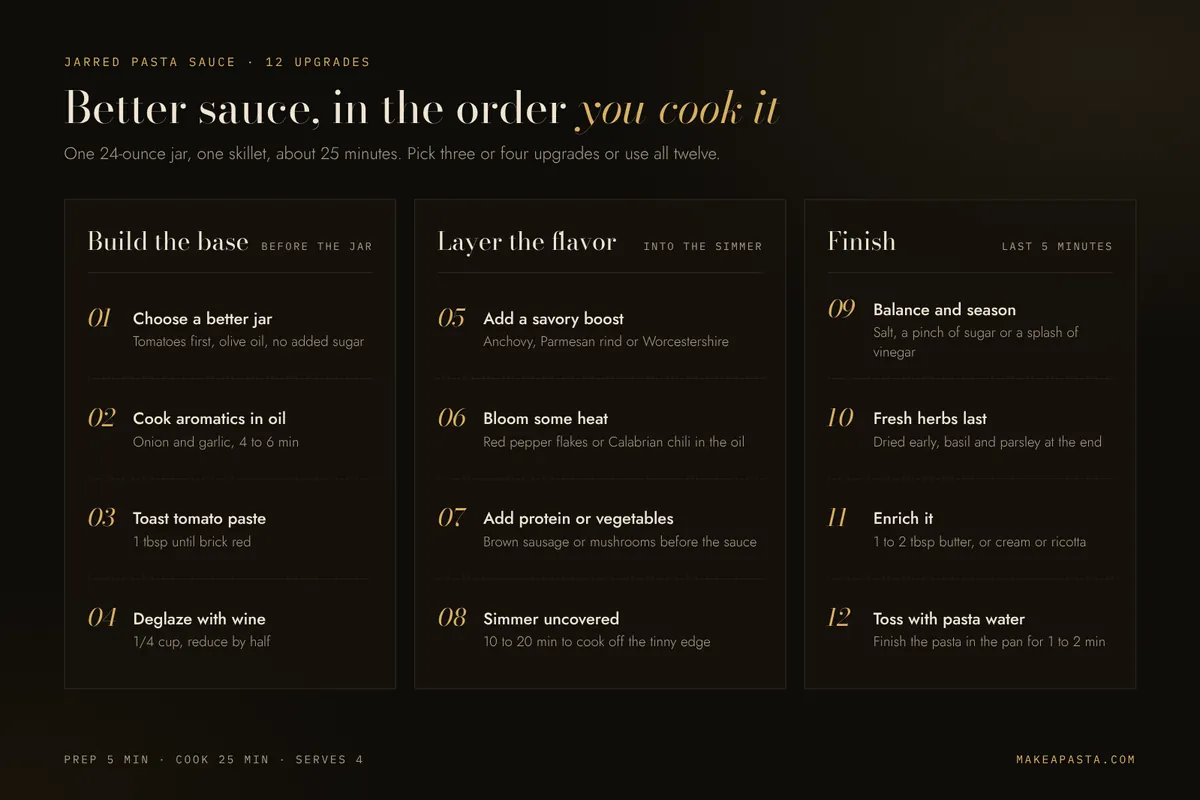
The upgrades run in cooking order, from the store shelf to the final toss. You do not need all twelve. Pick three or four for a fast weeknight dinner, or combine most of them for a sauce that tastes like it simmered all afternoon. Quantities assume one 24-ounce jar and a 12-inch skillet.
- 01
Upgrade 1: Start with a better jar
Turn the jar around and read the ingredients. Tomatoes should come first, and the list should be short: tomatoes, olive oil, onion, garlic, salt and herbs. Skip jars with sugar or corn syrup near the top. A plain marinara is the most flexible base, because you control the seasoning from there. Compare sodium per half cup between brands too, since it varies widely.
- 02
Upgrade 2: Cook aromatics in olive oil first
Never just heat the sauce from cold. Warm 2 tablespoons of olive oil in the skillet over medium heat and cook half a finely chopped onion or a shallot for 4 to 5 minutes, until soft. Add 3 sliced garlic cloves for the last 1 to 2 minutes, until pale gold. This single step does more for jarred sauce than any other, because it puts fresh, sweet aromatics back into a sauce that lost them on the shelf. Keep the garlic from browning, or it turns bitter.
- 03
Upgrade 3: Toast a spoon of tomato paste
Stir 1 tablespoon of tomato paste into the aromatics and cook it for 1 to 2 minutes, until it darkens from bright red to brick red. Toasting caramelizes its sugars and gives the sauce a deeper, slow-cooked flavor and a richer color. It is the same move that makes our pasta sauce from tomato paste taste far longer cooked than it is.
- 04
Upgrade 4: Deglaze with a splash of wine
Pour in 1/4 cup of dry red or white wine and scrape up the browned bits from the pan. Let it bubble for 1 to 2 minutes, until reduced by about half, before adding the sauce. Red wine adds body and suits meat sauces. White wine is lighter and better with seafood or vegetables. No wine on hand: a tablespoon of balsamic vinegar or a splash of broth does a similar job.
- 05
Upgrade 5: Add a savory boost
Savory depth is what most jars lack. Melt 1 or 2 anchovy fillets into the hot oil with the garlic, mashing them with a spoon until they vanish. They will not make the sauce taste fishy, only fuller. Alternatively, drop a Parmesan rind into the simmering sauce and remove it before serving, or add 1 teaspoon of Worcestershire sauce. For a vegetarian pot, a teaspoon of white miso stirred into a little sauce works well.
- 06
Upgrade 6: Bloom some heat in the oil
Add 1/4 to 1/2 teaspoon of red pepper flakes with the garlic so their flavor spreads through the oil and into every bite. A teaspoon of Calabrian chili paste gives a fruitier, rounder heat. Even a small pinch helps: gentle warmth makes a sweet jar taste more balanced, though you will not notice it as spice.
- 07
Upgrade 7: Add protein or vegetables before the sauce
Brown 8 ounces of Italian sausage, ground beef or sliced mushrooms in the skillet before the aromatics, then build the sauce on top. The browned bits on the bottom of the pan are pure flavor. Diced bell peppers, zucchini or roasted red peppers can go in with the onion. Spinach and kale go in at the very end so they stay green. For a full meat sauce from scratch, our pasta Bolognese shows the long-simmered version.
- 08
Upgrade 8: Simmer it uncovered
Pour in the jar, then add 1/4 cup of water to the empty jar, shake it and add that too. Bring to a gentle simmer and cook uncovered for 10 to 20 minutes, stirring now and then. The sauce reduces slightly, the flavors of everything you added blend, and the flat, tinny edge cooks away. Keep the heat low so the sauce bubbles lazily rather than spattering.
- 09
Upgrade 9: Balance sweet, sour and salt
Taste the sauce after it has simmered. If it tastes sharp or acidic, add a pinch of sugar or a tablespoon of butter. If it tastes sweet or one-note, add 1 teaspoon of red wine vinegar or lemon juice. Then add salt in small pinches, since most jars are already seasoned. Adjust one thing at a time, simmer for 2 minutes and taste again.
- 10
Upgrade 10: Dried herbs early, fresh herbs late
Dried oregano, thyme or Italian seasoning need heat and time to release their flavor, so add 1/2 teaspoon with the sauce. Fresh basil and parsley lose their color and perfume when cooked, so tear them in at the very end, off the heat. A bay leaf simmered with the sauce adds a quiet, rounded note. Remove it before serving.
- 11
Upgrade 11: Enrich it with butter, cream or cheese
Stir 1 to 2 tablespoons of cold butter into the sauce off the heat. It smooths sharp edges and gives the sauce a glossy, restaurant finish, the same principle behind our garlic butter pasta. For a creamy tomato sauce, add 1/4 to 1/2 cup of heavy cream or a few spoons of mascarpone. Dollops of ricotta on top of each bowl give a cooler, milder contrast.
- 12
Upgrade 12: Finish the pasta in the sauce
Cook the pasta 1 to 2 minutes less than the package says and save a cup of the cooking water. Move the pasta into the skillet with about 1/2 cup of that water and toss it over medium heat for 1 to 2 minutes. The starch in the water helps the sauce cling, and the pasta absorbs flavor as it finishes cooking. Add more water a splash at a time until the sauce coats every strand. Finish with grated Parmesan and a drizzle of good olive oil.
Matching Upgrades to the Jar You Have
Different jars need different help. A sweet tomato basil sauce and a spicy arrabbiata should not get the same treatment. The table points each common type to the upgrades that suit it best.
| Jar type | Typical weakness | Best upgrades |
|---|---|---|
| Plain marinara | Mild, needs direction | Aromatics, tomato paste, anchovy, fresh basil, butter |
| Tomato basil | Often sweet, faded basil | Red wine vinegar, red pepper flakes, fresh basil at the end |
| Arrabbiata | Heat without much depth | Garlic in oil, Parmesan rind, a spoon of butter to round it out |
| Meat sauce | Soft, sparse meat | Brown fresh sausage or beef first, red wine, longer simmer |
| Budget or store brand | Sweet, thin, tinny | Simmer 20 minutes, tomato paste, vinegar, salt, finish with olive oil |
Premium jars need less
An expensive jar made with good tomatoes and olive oil often needs only two things: fresh garlic bloomed in oil and the pasta finished in the pan. Heavy doctoring can bury the flavor you paid for. Save the long list of upgrades for plainer jars.
Budget jars need the most
Lower-priced sauces tend to be thinner and sweeter. Give them the full treatment: a longer uncovered simmer to thicken them, toasted tomato paste for body, a splash of vinegar to cut sweetness, and a savory boost. The difference between a doctored budget jar and an untouched premium one is often smaller than you would expect.
Five Combinations Worth Making
Each combination below starts from one 24-ounce jar of marinara and serves four with a pound of pasta. Think of them as templates you can rotate through the week.
Weeknight garlic and basil
Upgrades 2, 6, 8, 10, 11 and 12. Cook four sliced garlic cloves in olive oil with a pinch of red pepper flakes, add the sauce, simmer 10 minutes, then finish with butter, torn basil and Parmesan. It is the quickest way to a sauce that tastes made from scratch.
Puttanesca-style
Melt three anchovy fillets into the garlic oil, add the sauce, then stir in 1/3 cup of chopped Kalamata or Gaeta olives and 2 tablespoons of rinsed capers. Simmer 10 minutes and finish with parsley. Taste before salting, since olives, capers and anchovies all bring salt.
Sausage and pepper
Brown 8 ounces of crumbled Italian sausage, then cook a sliced bell pepper and half an onion in the fat. Deglaze with red wine, add the sauce and simmer 15 minutes. This works especially well with rigatoni or penne, which trap the pieces of sausage.
Creamy tomato
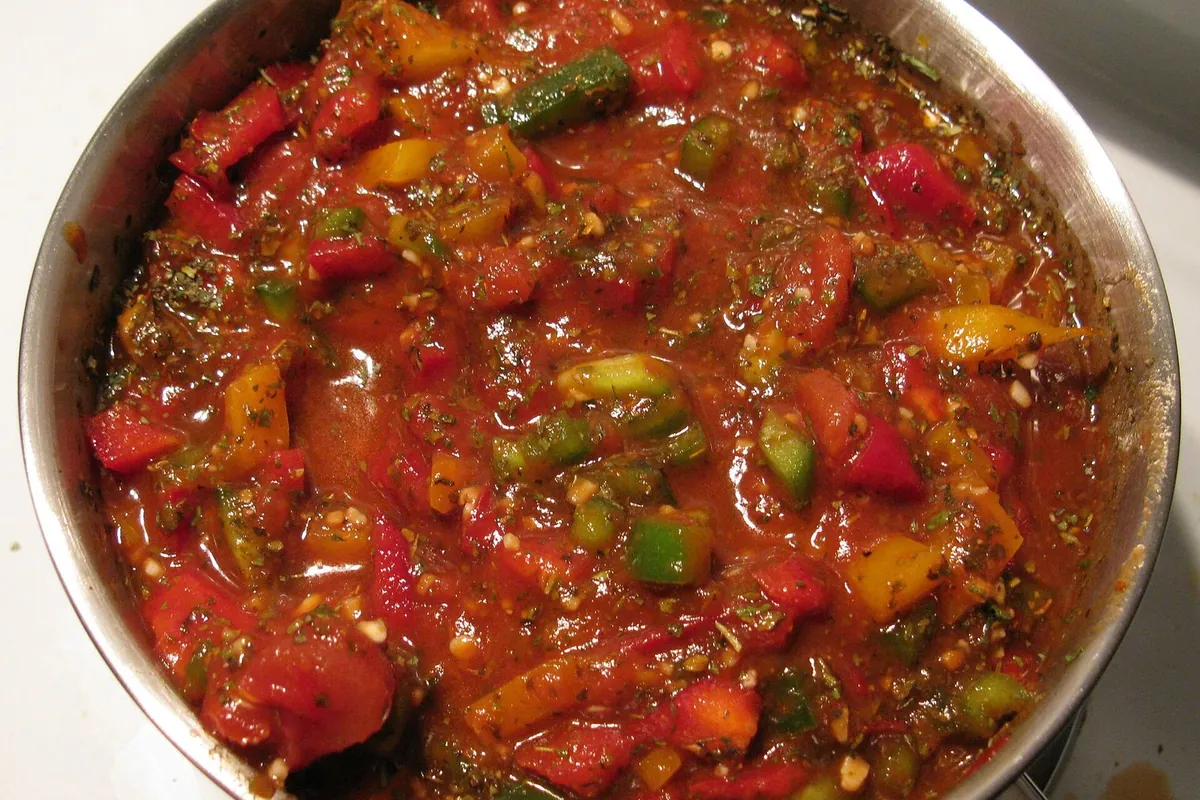
Build the base with aromatics and toasted tomato paste, simmer the sauce, then lower the heat and stir in 1/2 cup of heavy cream and a handful of Parmesan. For a deeper version with a splash of vodka, our vodka pasta walks through the method, and our creamy tomato pasta shows how to keep it rich without too much cream.
Mushroom and red wine
Brown 8 ounces of sliced cremini mushrooms in olive oil until deep golden, add garlic and a sprig of thyme, then deglaze with 1/2 cup of red wine and reduce by half. Add the sauce and simmer 15 minutes. A Parmesan rind in the pot makes this vegetarian version taste almost meaty.
Fixing Common Jarred Sauce Problems
Most problems with jarred sauce come down to balance or texture. Correct one thing at a time, in small amounts, and taste after each change.
| Problem | Likely cause | Fix |
|---|---|---|
| Too sweet | Added sugar in the jar | 1 teaspoon red wine vinegar or lemon juice, a pinch of salt, red pepper flakes |
| Too sharp or acidic | Acidic tomatoes, short simmer | Simmer 10 minutes longer, then add a pinch of sugar or 1 tablespoon butter |
| Too salty | Salty jar plus salty add-ins | Add a can of unsalted crushed tomatoes; skip extra salt and go light on cheese |
| Too thin | Watery jar, sauce not reduced | Simmer uncovered, stir in tomato paste, finish the pasta in the pan |
| Too thick | Over-reduced, or sat too long | Loosen with hot pasta water, 2 tablespoons at a time |
| Tastes flat or tinny | Under-seasoned, not simmered | Salt, a splash of acid, fresh basil, good olive oil and Parmesan |

Sweetness is the most common complaint
Many jars taste sweeter than homemade sauce. Adding more unsweetened tomato flavor helps, which is why toasted tomato paste works so well. Acid is the quickest fix: start with 1/2 teaspoon of red wine vinegar, simmer for a minute and taste. Savory ingredients like anchovy and Parmesan also make sweetness less noticeable.
Thicken by reducing, not with flour
A thin sauce usually needs only time. An uncovered simmer drives off water and concentrates flavor at once. A spoon of tomato paste adds body, and pasta water starch binds the sauce to the pasta at the end. Our guide on how to thicken spaghetti sauce covers every method if you need more help.
Storing Opened and Doctored Sauce
The opened jar
Refrigerate an opened jar right away and follow the use-within window printed on the label, since it differs by brand and recipe. Keep the lid clean and use a clean spoon each time. Throw the sauce out if you see mold, notice a sour or fermented smell, or the lid has bulged.
Once you add meat, cream or cheese
A doctored sauce is no longer the product the label describes. Treat it like any other cooked leftover: cool it within 2 hours, refrigerate it in a shallow covered container and eat it within 3 to 4 days. The FoodSafety.gov cold storage chart gives the same window for cooked meat leftovers. Reheat it until it is steaming hot all the way through.
Freezing in portions
Doctored tomato sauce freezes well. Portion it into freezer containers or flat zip-top bags, leaving a little headspace, and use it within 2 to 3 months for the best flavor. Cream-based versions can separate slightly when thawed; whisk them over low heat with a splash of water and they come back together. Thaw frozen sauce in the refrigerator overnight.
Approximate Nutrition
Per serving, recipe as written
These figures are estimates for one of four servings of the doctored marinara recipe below, tossed with 4 ounces of dry spaghetti per person and topped with Parmesan. They are calculated from standard ingredient values, and your numbers will change with the brand of sauce, the pasta and how much cheese you add.
| Nutrient | Amount |
|---|---|
| Calories | 650 kcal |
| Total fat | 18 g |
| Saturated fat | 5 g |
| Carbohydrates | 96 g |
| Fiber | 7 g |
| Protein | 22 g |
| Sodium | 1,050 mg |
Most of the sodium comes from the jar and the cheese. Choosing a lower-sodium sauce and adding salt yourself at the end is the easiest way to bring it down. Skipping the butter removes about 25 calories per serving.
Jarred Pasta Sauce FAQs
What can I add to jarred pasta sauce to make it taste homemade?
Start by cooking onion and garlic in olive oil, then add the sauce and simmer it uncovered for 10 to 20 minutes. Toasted tomato paste, an anchovy fillet or a Parmesan rind add depth. Finish with fresh basil, a tablespoon of butter and pasta finished in the pan with some of its cooking water.
How do I make jarred sauce less sweet?
Add 1/2 to 1 teaspoon of red wine vinegar or lemon juice, a pinch of salt and a few red pepper flakes, then simmer for a minute and taste. Savory additions like anchovy, Parmesan or a spoon of toasted tomato paste also balance the sweetness. Next time, choose a jar without added sugar.
How long should I simmer jarred pasta sauce?
Simmer it uncovered for 10 to 20 minutes over low heat. That is long enough to blend in the aromatics and other additions, cook off the flat canned taste and thicken the sauce slightly. Stir it now and then so it does not catch on the bottom of the pan.
Should I add butter or olive oil to jarred sauce?
Both have a role. Use olive oil at the start to cook the garlic and onion, and drizzle a little good oil over each plate at the end. Stir in 1 to 2 tablespoons of butter off the heat to round out sharp edges and give the sauce a glossy finish.
Can I add raw meat to jarred pasta sauce?
Brown the meat in the skillet first, then build the sauce on top. Browning adds flavor and lets you drain excess fat. Once the sauce is added, simmer it for at least 10 to 15 minutes so ground meat is fully cooked through and the flavors combine.
How long does doctored jarred sauce last in the fridge?
Treat it as a cooked leftover and eat it within 3 to 4 days, especially if you added meat, cream or cheese. Cool it within 2 hours and store it covered. For longer storage, freeze it in portions and use it within 2 to 3 months for the best flavor.
Final Thoughts
The rule to remember
A jar of sauce gets better when you treat it as an ingredient. Cook fresh aromatics in oil, add a layer of savory depth, simmer it uncovered, balance it by taste and finish the pasta in the pan. Those five habits cover most of what makes homemade sauce taste homemade. When you have a free afternoon, our homemade spaghetti sauce shows how far the same ideas go when you start from whole tomatoes.
The recipe
Doctored Jarred Marinara
One 24-ounce jar of marinara turned into a deeper, brighter sauce for four: onion and garlic in olive oil, toasted tomato paste, a splash of wine, anchovy or a Parmesan rind, a short uncovered simmer, butter and basil, with the pasta finished in the pan.
Ingredients
Instructions
- Bring a large pot of well-salted water to a boil for the pasta.
- Warm the olive oil in a 12-inch skillet over medium heat. Add the onion with a pinch of salt and cook for 4 to 5 minutes until soft and translucent. Add the garlic, anchovies and red pepper flakes and cook for 1 to 2 minutes, mashing the anchovies until they dissolve, until the garlic is pale gold.
- Stir in the tomato paste and cook for 1 to 2 minutes until it darkens to brick red. Pour in the wine and simmer for 1 to 2 minutes until reduced by about half, scraping up any browned bits.
- Add the marinara, then the water swirled in the empty jar. Add the Parmesan rind and oregano. Simmer uncovered over low heat for 15 to 20 minutes, stirring now and then, until slightly thickened.
- While the sauce simmers, cook the pasta for 1 to 2 minutes less than the package time. Scoop out 1 cup of the cooking water before draining.
- Taste the sauce. Add salt and pepper as needed, a pinch of sugar if it tastes sharp, or the vinegar if it tastes sweet. Remove the Parmesan rind.
- Add the drained pasta and 1/2 cup of the pasta water to the skillet. Toss over medium heat for 1 to 2 minutes until the sauce clings to the pasta, adding more water a splash at a time if it looks tight.
- Take the pan off the heat. Stir in the butter, the basil and half the Parmesan. Serve with the remaining cheese and a drizzle of olive oil.
Notes
No anchovies: use the Parmesan rind, or 1 teaspoon of Worcestershire sauce or white miso. No wine: deglaze with 2 tablespoons of water and 1 teaspoon of balsamic vinegar. For a meat sauce, brown 8 ounces of Italian sausage or ground beef before the onion and simmer at least 15 minutes. For a creamy version, stir in 1/2 cup of heavy cream after step 4. The sauce alone keeps 3 to 4 days refrigerated or 2 to 3 months frozen. Nutrition is approximate: about 650 calories, 18 g fat, 96 g carbohydrates, 7 g fiber and 22 g protein per serving with pasta and cheese.