In this guide
- Why Creamy Tomato Pasta Does Not Need a Cup of Cream
- How to Make Creamy Tomato Pasta Step by Step
- Ingredients and Why Each One Matters
- Cream Alternatives Compared
- Variations: Vodka-Style, Spicy, Vegan and Protein
- Make-Ahead and Storage
- Troubleshooting Creamy Tomato Sauce
- A Note on Nutrition
- Creamy Tomato Pasta FAQs
- Printable Recipe
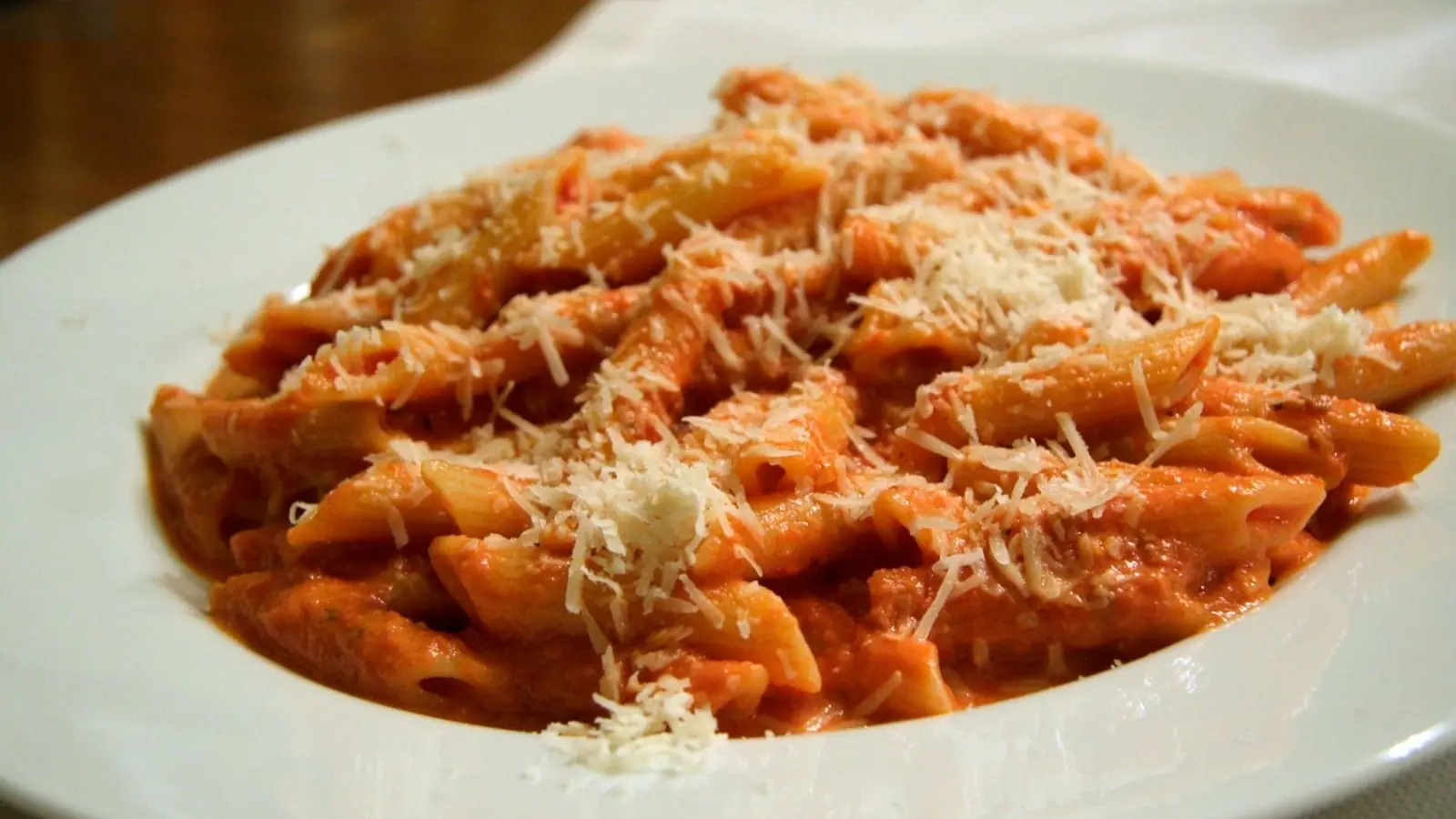
Creamy tomato pasta goes wrong in one predictable way: the cook pours in a cup of heavy cream, the sauce turns pale orange and pleasant, and the tomato disappears. The fix is not to skip the cream. It is to build the body of the sauce from tomato paste, grated Parmesan and starchy pasta water, then add just enough cream to round off the acidity.
This guide gives you that method in six steps, a table of cream alternatives from mascarpone to cashew cream, four variations including a vodka-style version, storage rules, and a troubleshooting table for sauces that split, taste sharp or run thin.
| Question | Short answer |
|---|---|
| How much cream for four servings? | About 1/3 cup (80 ml). The Parmesan and pasta water supply the rest of the body. |
| Which tomatoes? | Crushed canned tomatoes plus 2 tablespoons of tomato paste for depth. |
| Why does it split? | Cold cream hitting a boiling, acidic sauce. Lower the heat and stir it in off the boil. |
| Best pasta shape? | Penne, rigatoni or shells: anything with ridges or a hollow to trap sauce. |
| Total time? | 35 minutes, with the sauce cooking while the pasta boils. |
Why Creamy Tomato Pasta Does Not Need a Cup of Cream
What cream actually does in a tomato sauce
Cream does two jobs. Its fat coats your tongue and softens the sharp edge of the tomato acid, and its proteins help bind water and fat into a sauce that clings instead of pooling. Neither job needs much cream. Past a certain point, extra cream only dilutes the tomato flavor and tints the sauce a paler shade of pink.
The emulsion that does the heavy lifting
Starchy pasta water is the quiet ingredient in every good Italian pan sauce. The starch released by the pasta thickens the liquid slightly and helps fat and water stay mixed. Add finely grated Parmesan to that starchy liquid and you get a creamy, glossy coating with no cream at all, which is the same principle behind our creamy pasta sauce base. Cream then becomes a finishing touch rather than the structure.
How much cream is enough
For a 28-ounce can of tomatoes and 12 ounces of pasta, 1/3 cup of heavy cream is the sweet spot. The sauce turns a deep rosy red, tastes clearly of tomato, and still coats the pasta like a restaurant dish. If you prefer it richer, go to 1/2 cup, but taste before you add more. The comparison table further down shows how to replace that cream entirely.
How to Make Creamy Tomato Pasta Step by Step
These stages make four generous servings. The sauce takes about 20 minutes, so start it before the pasta water boils and both will be ready together.
- 01
Stage 1: Start the pasta water and the aromatics
Bring 4 quarts of water to a boil with 1 1/2 tablespoons of salt. While it heats, warm 2 tablespoons of olive oil in a wide skillet over medium heat. Add the finely chopped onion with a pinch of salt and cook for 5 to 6 minutes until soft and translucent but not browned. Stir in the garlic and red pepper flakes and cook for 1 minute more, until fragrant.
- 02
Stage 2: Toast the tomato paste
Push the onion to the side and add 2 tablespoons of tomato paste to the bare spot in the pan. Stir and cook for 1 to 2 minutes until it darkens from bright red to brick red and smells sweet. This step is where most of the depth comes from, and it is the same trick that makes our tomato paste pasta sauce taste slow-cooked in 15 minutes.
- 03
Stage 3: Simmer the tomatoes
Pour in the crushed tomatoes, add 1 teaspoon of salt and 1/2 teaspoon of black pepper, and stir, scraping up any browned paste. Bring to a gentle simmer and cook uncovered for 10 to 12 minutes, stirring now and then, until the sauce thickens and the raw, metallic edge of canned tomato is gone. Taste it: if it is noticeably sharp, add a pinch of sugar.
- 04
Stage 4: Cook the pasta short
Once the sauce is simmering, drop the penne into the boiling water and cook until 2 minutes short of the package time. The pasta finishes cooking in the sauce and absorbs flavor as it does. Before draining, scoop out 1 cup of the cloudy pasta water and set it aside.
- 05
Stage 5: Add the cream off the boil
Lower the heat under the sauce so it is barely bubbling. Pour in 1/3 cup of cream and 1/4 cup of the reserved pasta water and stir until the color evens out to a rosy red. Keep the sauce below a boil from this point on; a hard boil after the cream goes in is the main cause of a grainy or split sauce.
- 06
Stage 6: Toss, cheese and finish
Tip the drained pasta into the skillet and toss over low heat for 1 to 2 minutes, adding pasta water a splash at a time until the sauce clings to every piece and looks glossy. Pull the pan off the heat, add the grated Parmesan and torn basil, and toss again. Serve at once with more cheese and black pepper.
Ingredients and Why Each One Matters
Tomatoes: crushed plus paste
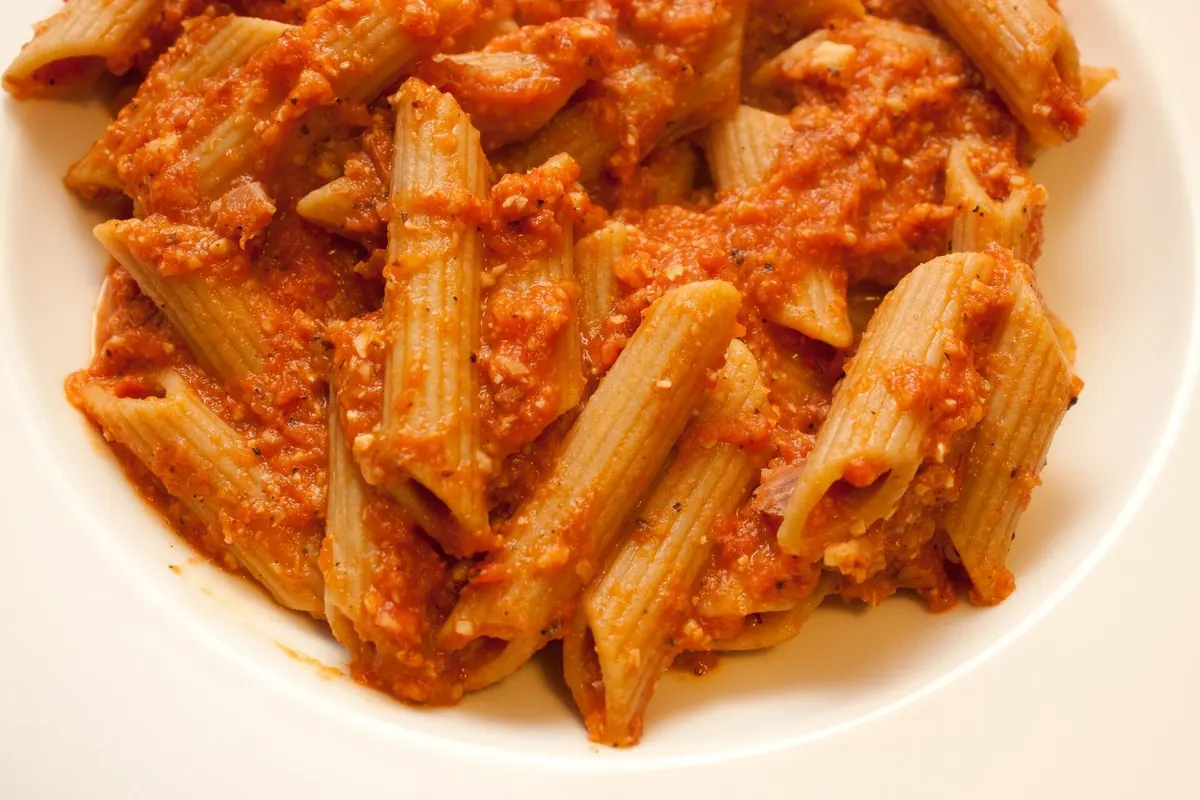
Crushed canned tomatoes give a sauce with body and a little texture without the long simmer that whole tomatoes need. Tomato paste, toasted in the oil, adds concentrated sweetness and the deep red color that a cream sauce otherwise loses. If you only have whole peeled tomatoes, crush them by hand and simmer 5 minutes longer. Fresh tomatoes work in late summer, but they need 25 to 30 minutes of cooking and an extra tablespoon of paste.
Aromatics and seasoning
Onion cooked slowly in olive oil gives sweetness that balances the tomato acid, which means you need less cream to do the same job. Garlic goes in late so it does not scorch. A pinch of red pepper flakes is not for heat; it keeps the sauce from tasting flat once the cream and cheese soften everything. Salt the sauce properly before the cheese goes in, because Parmesan adds its own salt at the end.
Cheese and the pasta shape
Finely grated Parmigiano Reggiano melts into the sauce almost instantly. Pre-grated cheese is coated in anti-caking starch and tends to clump, so grate your own on a fine rasp. For pasta, pick a shape with ridges or a hollow: penne rigate, rigatoni, shells or orecchiette. Smooth spaghetti works but holds far less sauce. Whatever shape you use, cook it short, because it keeps cooking in the pan.
Cream Alternatives Compared
Every option below replaces the 1/3 cup of heavy cream in the recipe. Amounts are per four servings.
| Option | Amount for 4 servings | How to add it | Result and notes |
|---|---|---|---|
| Heavy cream | 1/3 cup (80 ml) | Stir in off the boil with a splash of pasta water | Classic rosy sauce; most stable option, never curdles at this ratio |
| Mascarpone | 3 tablespoons (45 g) | Whisk into the hot sauce until dissolved | Richest flavor per spoonful; slightly sweet, very glossy |
| Whole-milk ricotta | 1/3 cup (80 g), blended smooth | Blend with 1/4 cup pasta water first, then stir in | Lighter, milky, a little textured unless blended; tastes fresh |
| Evaporated milk | 1/2 cup (120 ml) | Add off the heat and warm gently | Lowest fat dairy option; thinner, so reduce the sauce 2 minutes longer |
| Cashew cream | 1/3 cup (80 ml) | Blend 1/4 cup soaked cashews with 1/3 cup water, stir in | Vegan and surprisingly rich; faintly nutty, never splits |
| Pasta water and Parmesan only | 1/2 cup (120 ml) water, 3/4 cup (75 g) cheese | Toss pasta, water and cheese off the heat | No cream at all; sauce is glossy rather than pink, with a stronger tomato taste |
Reading the table
Mascarpone gives the most cream flavor for the smallest quantity, which makes it the best pick when you want a lighter dish without changing the taste. Ricotta and evaporated milk are the leaner routes, and both benefit from a slightly longer reduction before they go in. Cashew cream behaves most like heavy cream in the pan and is the base for the vegan variation below. If you enjoy the richer end of this style, our fettuccine Alfredo and white sauce pasta guides show where cream and bechamel do earn their place.
Variations: Vodka-Style, Spicy, Vegan and Protein
Vodka-style
Add 1/4 cup of vodka to the pan right after the tomato paste has toasted and let it bubble for about a minute before the crushed tomatoes go in. The alcohol cooks off but the sauce tastes a shade sharper and brighter, which is the signature of penne alla vodka. Our full vodka pasta recipe covers the no-vodka option and the pancetta version.
Spicy
Raise the red pepper flakes to 1 teaspoon and add 1 to 2 tablespoons of Calabrian chili paste with the tomato paste. The cream tempers the heat, so the dish ends up warm rather than fierce. A spoonful of the spice blend from our Cajun chicken pasta takes it in a smokier direction.
Vegan
Use cashew cream in place of the dairy cream, and replace the Parmesan with 3 tablespoons of nutritional yeast plus an extra pinch of salt. Finish with a drizzle of good olive oil. Because there is no cheese to provide body, reduce the sauce 2 or 3 minutes longer and lean on the pasta water to bring it together.
Add chicken or shrimp
For chicken, season 1 pound of boneless thighs or breasts, sear them in the skillet before the onion goes in, then slice and return them to the sauce at Stage 6. For shrimp, cook 1 pound of peeled shrimp in the pan for 2 minutes a side at the very start, set them aside, and fold them in during the final toss so they stay tender. The garlic butter method in our shrimp pasta recipe works well here too.
Make-Ahead and Storage
Make the sauce ahead, cook the pasta fresh
The tomato base through Stage 3 keeps in the refrigerator for 4 days and freezes for 3 months. Stop before the cream goes in, because cream-enriched sauce separates slightly when frozen and thawed. On the night, reheat the base gently, then add the cream, pasta water, pasta and cheese as written.
Leftovers and reheating
Finished creamy tomato pasta keeps for 3 days in a sealed container. The pasta absorbs sauce as it sits, so reheat it in a skillet over low heat with a few tablespoons of water or milk, stirring until the sauce loosens and turns glossy again. The microwave works at half power in 45-second bursts with a splash of water; full power makes the cheese tighten and the sauce turn oily.
Freezing the finished dish
You can freeze the assembled pasta, but expect a softer noodle and a slightly grainier sauce. Thaw overnight in the refrigerator and reheat in a pan with extra liquid. For best results, freeze the sauce base only and boil fresh pasta when you need it.
Troubleshooting Creamy Tomato Sauce
Most problems with creamy tomato pasta trace back to heat, acidity or liquid balance. The table matches each symptom to its cause and fix.
| Problem | Likely cause | Fix |
|---|---|---|
| Sauce split or looks curdled | Cold cream added to a boiling, very acidic sauce; or low-fat dairy | Lower the heat, whisk in a few tablespoons of hot pasta water; next time add the cream off the boil |
| Too acidic or sharp | Under-reduced tomatoes, or a thin, acidic brand | Simmer 5 minutes longer, add a pinch of sugar or 1/8 teaspoon baking soda, add a little more cheese |
| Too thin | Not reduced enough, or too much pasta water | Simmer uncovered to reduce, then add pasta and cheese; the starch and cheese thicken it fast |
| Too thick or pasty | Over-reduced, or pasta sat in the sauce | Loosen with pasta water a splash at a time over low heat |
| Grainy or stringy cheese | Cheese added over high heat, or pre-grated cheese | Add cheese off the heat, use freshly grated Parmesan, toss steadily |
| Tastes flat | Under-salted, or too much cream | Add salt, a pinch of pepper flakes and a squeeze of lemon; use less cream next time |
| Pale orange, not red | Too much cream, no tomato paste | Toast tomato paste at Stage 2 and cap the cream at 1/3 to 1/2 cup |
Why cream sauces split, and how to rescue one
Tomatoes are acidic, and acid makes the proteins in dairy clump when they are shocked by heat. Full-fat cream has enough fat to protect those proteins, which is why heavy cream rarely splits while half-and-half or milk often does. If your sauce does separate, take it off the heat, add 2 or 3 tablespoons of hot pasta water and stir briskly; the starch usually pulls it back together. Add the cream when the sauce is below a simmer and you will almost never need the rescue. For sauces that stay thin no matter what, our guide on how to thicken spaghetti sauce covers seven methods that do not dull the flavor.
A Note on Nutrition
Where the richness comes from
Exact figures depend on your pasta, cheese and which cream option you choose, so we do not print a calorie count for this recipe. What is clear is the direction: using 1/3 cup of cream across four servings instead of a full cup cuts the added fat per plate to a fraction of the typical restaurant version, and the mascarpone, ricotta, evaporated milk and cashew options in the table above each trim it further. The tomato base itself is mostly vegetables, olive oil and seasoning. For a lower-sodium plate, reduce the salt in the sauce and let the Parmesan season the dish at the end.
Creamy Tomato Pasta FAQs
Can I make creamy tomato pasta without heavy cream?
Yes. Mascarpone, blended ricotta, evaporated milk and cashew cream all work in place of heavy cream, and a sauce made with only starchy pasta water and finely grated Parmesan comes out glossy and creamy without any cream at all. Use the amounts in the comparison table and add each one off the boil, with a splash of pasta water to help it blend.
Why did my creamy tomato sauce curdle?
Dairy proteins clump when they meet hot acid, and tomatoes are acidic. Curdling usually happens when cold cream is poured into a boiling sauce, or when low-fat milk or half-and-half is used instead of cream. Lower the heat before adding the dairy, stir it in with a little pasta water, and keep the sauce below a boil afterward. To rescue a split sauce, take it off the heat and whisk in a few tablespoons of hot pasta water.
Can I use milk instead of cream?
Whole milk can work if you are careful, but it splits more easily than cream because it has far less fat. Stir in 1/2 cup of milk off the heat, warm it gently and add the Parmesan straight after, since the cheese helps bind the sauce. Evaporated milk is a safer swap because it is more concentrated and more stable.
What pasta shape is best for creamy tomato sauce?
Short shapes with ridges or hollows hold this sauce best: penne rigate, rigatoni, shells, orecchiette or fusilli. The sauce collects in the grooves and inside the tubes, so every bite is coated. Long pasta such as spaghetti or linguine works but carries less sauce per forkful.
How do I keep the sauce from tasting too acidic?
Cook the onion slowly for sweetness, toast the tomato paste, and simmer the tomatoes for a full 10 to 12 minutes so the raw edge cooks off. If the sauce still tastes sharp, add a pinch of sugar or a tiny pinch of baking soda, then taste again. The cream and Parmesan at the end soften what remains.
Can I make creamy tomato pasta ahead of time?
Make the tomato base up to the point before the cream goes in. It keeps for 4 days in the refrigerator or 3 months in the freezer. On the day, reheat it gently, then add the cream, cook fresh pasta and finish with pasta water and cheese. Fully assembled leftovers keep for 3 days and reheat best in a skillet with a splash of water or milk.
Is creamy tomato pasta the same as penne alla vodka?
They are close cousins. Penne alla vodka adds a splash of vodka after the tomato paste, which cooks off and leaves a slightly sharper, brighter sauce, and it is usually made with more cream. This recipe is the everyday version: the same rosy tomato sauce, less cream, and no alcohol. The vodka-style variation above turns one into the other in a single step.
Final Thoughts
The rule to remember
Build the body of a creamy tomato pasta from toasted tomato paste, starchy pasta water and freshly grated Parmesan, then add cream as a finishing touch rather than a foundation. A third of a cup is enough for four plates, the sauce stays red and tastes of tomato, and it comes together in the time it takes to boil the pasta. Once the method is in your hands, the slow-simmered base from our homemade spaghetti sauce makes an even deeper version on a weekend.
The recipe
Creamy Tomato Pasta
Penne in a rosy tomato sauce built on toasted tomato paste, Parmesan and starchy pasta water, finished with a modest 1/3 cup of cream and fresh basil.
Ingredients
Instructions
- Bring 4 quarts of water to a boil with the kosher salt. Meanwhile warm the olive oil in a wide skillet over medium heat, add the onion with a pinch of salt and cook 5 to 6 minutes until soft and translucent. Stir in the garlic and red pepper flakes and cook 1 minute.
- Add the tomato paste and stir constantly for 1 to 2 minutes until it darkens to brick red and smells sweet.
- Pour in the crushed tomatoes with the fine salt and black pepper, scraping up any browned paste. Simmer gently, uncovered, for 10 to 12 minutes, stirring occasionally, until thickened and no longer raw-tasting. Add a pinch of sugar only if the sauce tastes sharp.
- While the sauce simmers, cook the pasta until 2 minutes short of the package time. Scoop out 1 cup of the cooking water, then drain.
- Reduce the heat under the sauce to low so it is barely bubbling. Stir in the cream and 1/4 cup of the reserved pasta water until the sauce is an even rosy red. Do not let it boil again.
- Add the drained pasta and toss over low heat for 1 to 2 minutes, adding pasta water a splash at a time until the sauce clings and looks glossy.
- Remove the pan from the heat, add the Parmesan and basil and toss to combine. Taste for salt and serve immediately with more cheese and black pepper.
Notes
Cream alternatives for four servings: 3 tablespoons mascarpone, 1/3 cup blended ricotta, 1/2 cup evaporated milk, or 1/3 cup cashew cream; add any of them off the boil with a splash of pasta water. For a vodka-style sauce, add 1/4 cup vodka after the tomato paste and let it bubble 1 minute before the tomatoes. The tomato base (through step 3) keeps 4 days refrigerated or 3 months frozen; add cream, pasta and cheese fresh. Leftovers keep 3 days; reheat in a skillet over low heat with a few tablespoons of water or milk. If the sauce splits, remove from the heat and whisk in 2 to 3 tablespoons of hot pasta water.