In this recipe
- Why This Shrimp Pasta Works
- Ingredients for Garlic Shrimp Pasta
- How to Choose Shrimp for Pasta
- How to Thaw Frozen Shrimp Safely
- Best Pasta Shapes for Shrimp Pasta
- How to Make Shrimp Pasta
- How to Tell When Shrimp Is Done
- Pasta Water: The Secret to the Sauce
- Variations: Creamy, Tomato, Spicy and No-Wine
- Common Shrimp Pasta Mistakes
- Storage and Reheating
- Shrimp Pasta Nutrition
- Shrimp Pasta FAQs
- Printable Recipe Card
This shrimp pasta is a garlic butter pasta with seared shrimp, lemon and a little chili. For 4 servings you need 12 ounces of linguine or spaghetti, 1 pound of large raw shrimp, 6 garlic cloves, butter, olive oil, one lemon and a splash of white wine or broth. It takes about 20 minutes from turning on the burner, because the sauce cooks while the pasta boils.
The timing works only if the pasta water goes on first. While it heats, you prep. Once the pasta drops, the shrimp sear, the garlic sauce reduces, and everything meets in one skillet with a ladle of starchy pasta water. That water is what turns butter and lemon juice into a sauce that clings instead of pooling.
Below: how to buy and thaw shrimp, the best pasta shapes, a minute-by-minute method, a clear doneness guide, four easy variations, and how to store and reheat leftovers safely.
Why This Shrimp Pasta Works
Garlic shrimp pasta is close to a classic shrimp scampi with pasta. The shrimp take a quick sear in butter and oil, the garlic blooms in the same fat, and wine and lemon lift the whole pan. Three habits make it reliable on a weeknight.
- The shrimp cook twice, briefly. They sear for a minute or two per side, rest on a plate, then return at the end. They never sit in a bubbling sauce, so they stay tender.
- The garlic goes in after the shrimp. Sliced garlic browns in seconds over high heat. Lowering the heat first keeps it sweet and golden rather than bitter.
- Pasta water makes the sauce. Starch released by the pasta binds butter, lemon juice and wine into a glossy coating, with no cream or flour needed.
The result is bright and savory, light enough for a weeknight and quick enough that the pasta is still hot when it reaches the table.
Ingredients for Garlic Shrimp Pasta
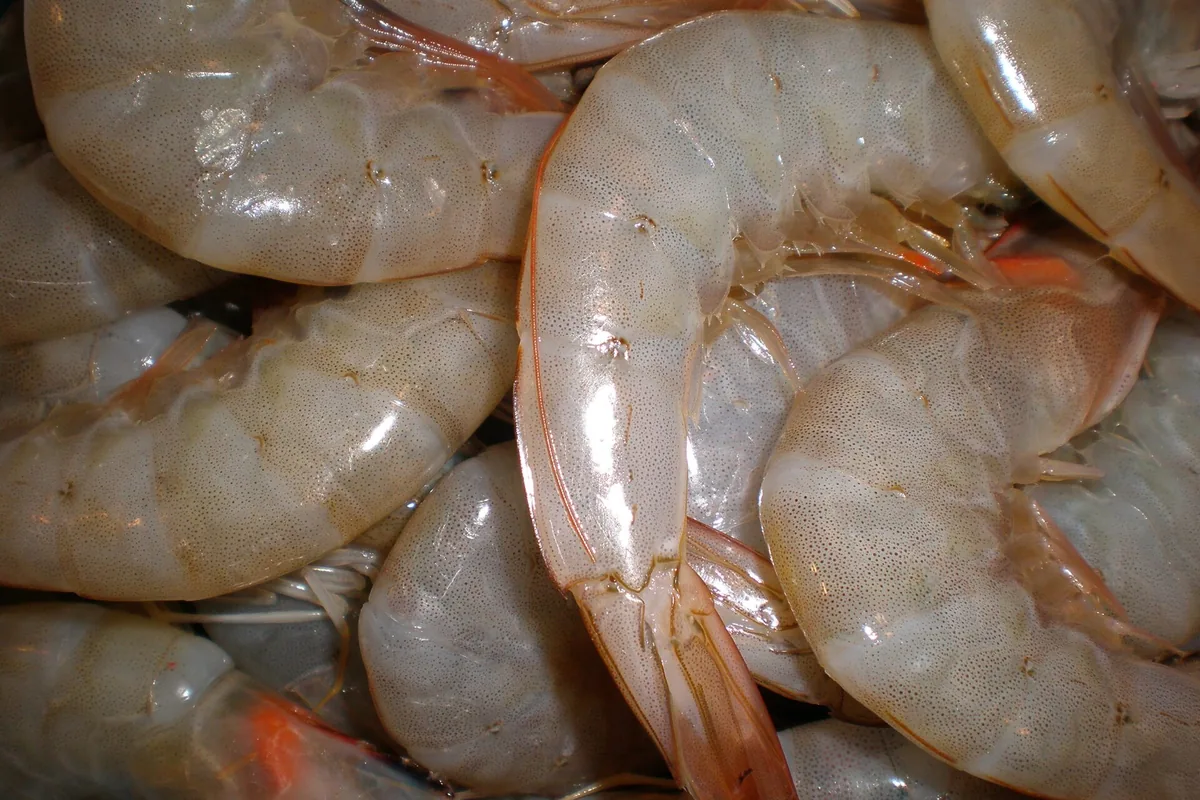
For the shrimp, use 1 pound (454 g) of large raw shrimp, peeled and deveined. Size 21/25 or 26/30 gives a juicy bite and a little leeway on timing. Tails on look nice; tails off are easier to eat with pasta.
For the pasta, plan on 12 ounces (340 g) of dried linguine or spaghetti. That is a generous 4 servings with this much shrimp. Keep at least 1 cup of pasta water before draining.
For the sauce, use 2 tablespoons of olive oil and 4 tablespoons (56 g) of unsalted butter. The oil raises the smoke point for searing, and the butter adds body and flavor. Add 6 garlic cloves, thinly sliced or minced, and 1/2 teaspoon of red pepper flakes for gentle warmth.
For brightness, add 1/2 cup (120 ml) of dry white wine such as Pinot Grigio or Sauvignon Blanc, plus one large lemon for both zest and juice. Low-sodium chicken broth replaces the wine if you prefer.
To finish, use 1/4 cup of chopped flat-leaf parsley and, if you like, 1 ounce (28 g) of finely grated Parmesan. Season with kosher salt and freshly ground black pepper.
How to Choose Shrimp for Pasta
Shrimp labels can be confusing. Names like “jumbo” and “large” are not standardized, so one brand’s jumbo can be another brand’s extra large. The reliable number is the count: two figures separated by a slash that tell you roughly how many shrimp make up a pound.
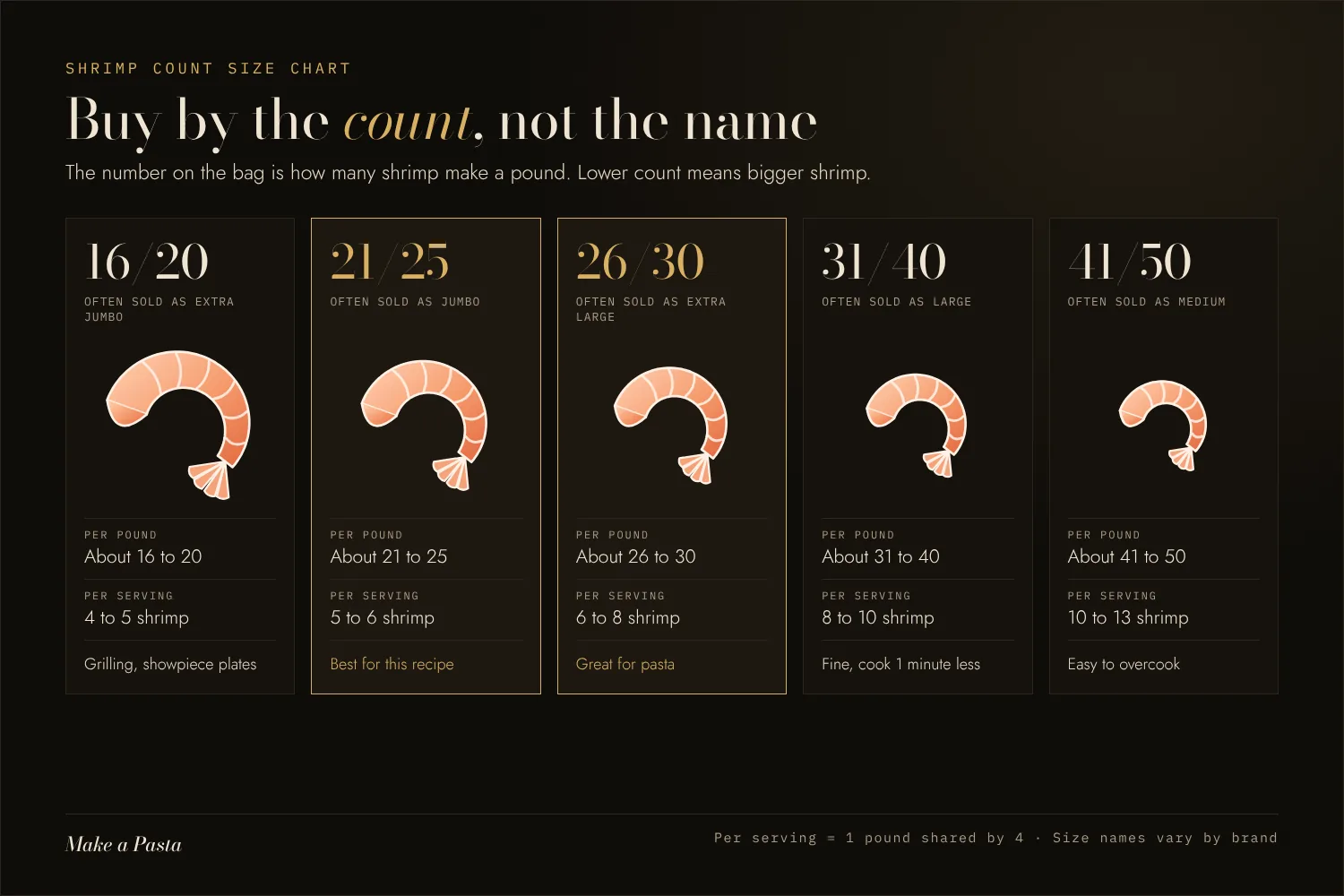
A bag marked 21/25 holds about 21 to 25 shrimp per pound, and 26/30 holds about 26 to 30. The lower the numbers, the bigger the shrimp. Both sizes are ideal for pasta. They are large enough to stay juicy through a hard sear, yet small enough to twirl onto a fork with the noodles.
| Count per pound | Shrimp per serving | Sear time | Good for |
|---|---|---|---|
| 16/20 | 4 to 5 | About 2 minutes per side | Showpiece plates; cut in half for pasta if you like |
| 21/25 | 5 to 6 | 1 1/2 to 2 minutes per side | This recipe; the best balance of size and timing |
| 26/30 | 6 to 8 | 1 to 1 1/2 minutes per side | Pasta, tacos and stir-fries |
| 31/40 | 8 to 10 | About 1 minute per side | Fine, but watch closely |
| 41/50 and smaller | 10 or more | Under 1 minute per side | Fried rice and salads; easy to overcook in pasta |
Fresh or frozen?
Unless you live near a shrimp dock, the “fresh” shrimp at the seafood counter has very often been frozen and thawed for display. Bags of frozen raw shrimp, usually frozen individually, are a good choice for most home cooks. You can thaw exactly what you need and keep the rest frozen.
Buy raw shrimp rather than precooked for this recipe. Raw shrimp browns in the skillet and seasons the butter, while precooked shrimp can only be warmed through. Shell-on shrimp tends to cost less, and it takes about 10 minutes to peel a pound. Peeled and deveined shrimp is the fastest route to a 20-minute dinner.
The dark “vein” along the back is the digestive tract. It is safe to eat, but it can be gritty, so most cooks remove it. If your shrimp still has it, run a paring knife along the back and lift it out under cold water.
Fresh shrimp should smell clean and faintly of the sea, never of ammonia. Cook it as soon as you can after buying. The government’s cold food storage chart lists 3 to 5 days in the fridge for fresh shrimp and 6 to 18 months in the freezer.
How to Thaw Frozen Shrimp Safely
Never thaw shrimp on the counter. Bacteria multiply fastest at room temperature, and the outside of the shrimp warms long before the center thaws. The USDA recommends three safe methods.
- In the fridge. Move the bag to the refrigerator the night before. This is the gentlest method, and thawed raw shrimp keeps there for a day or two.
- In cold water. Seal the shrimp in a leak-proof zip-top bag and submerge it in a bowl of cold tap water. Change the water every 30 minutes so it stays cold. About a pound can thaw in an hour or less, and individually frozen shrimp is often ready sooner. Cook it right away.
- In the microwave. Use the defrost setting and cook the shrimp immediately afterward, since some edges may start to warm.
Shrimp thawed in the fridge can go back in the freezer if you do not use it. Shrimp thawed in cold water or the microwave should be cooked before refreezing.
Whichever method you use, pat the shrimp very dry. Frozen shrimp holds a lot of water, and wet shrimp steams instead of searing.
Best Pasta Shapes for Shrimp Pasta

A garlic butter sauce is thin and glossy, so it suits pasta that it can coat in a fine film.
- Linguine. The classic choice for shrimp. Its flat, oval strands hold more sauce than round spaghetti and match the size of the shrimp.
- Spaghetti. Easy to find and quick to cook. Thin spaghetti shortens the cooking time by a couple of minutes.
- Fettuccine. Wider ribbons are best for the creamy variation below, where the sauce is richer.
- Angel hair. Very fast, but it overcooks easily and can clump. Toss it with extra pasta water.
- Short shapes. Penne, campanelle, orecchiette and farfalle catch pieces of garlic and shrimp. They are easier for kids and reheat a little better.
Check the package time before you start. This recipe assumes a pasta that cooks in about 9 to 10 minutes. If your linguine needs 12, the total time stretches by a couple of minutes, and you can start the shrimp a little later.
How to Make Shrimp Pasta
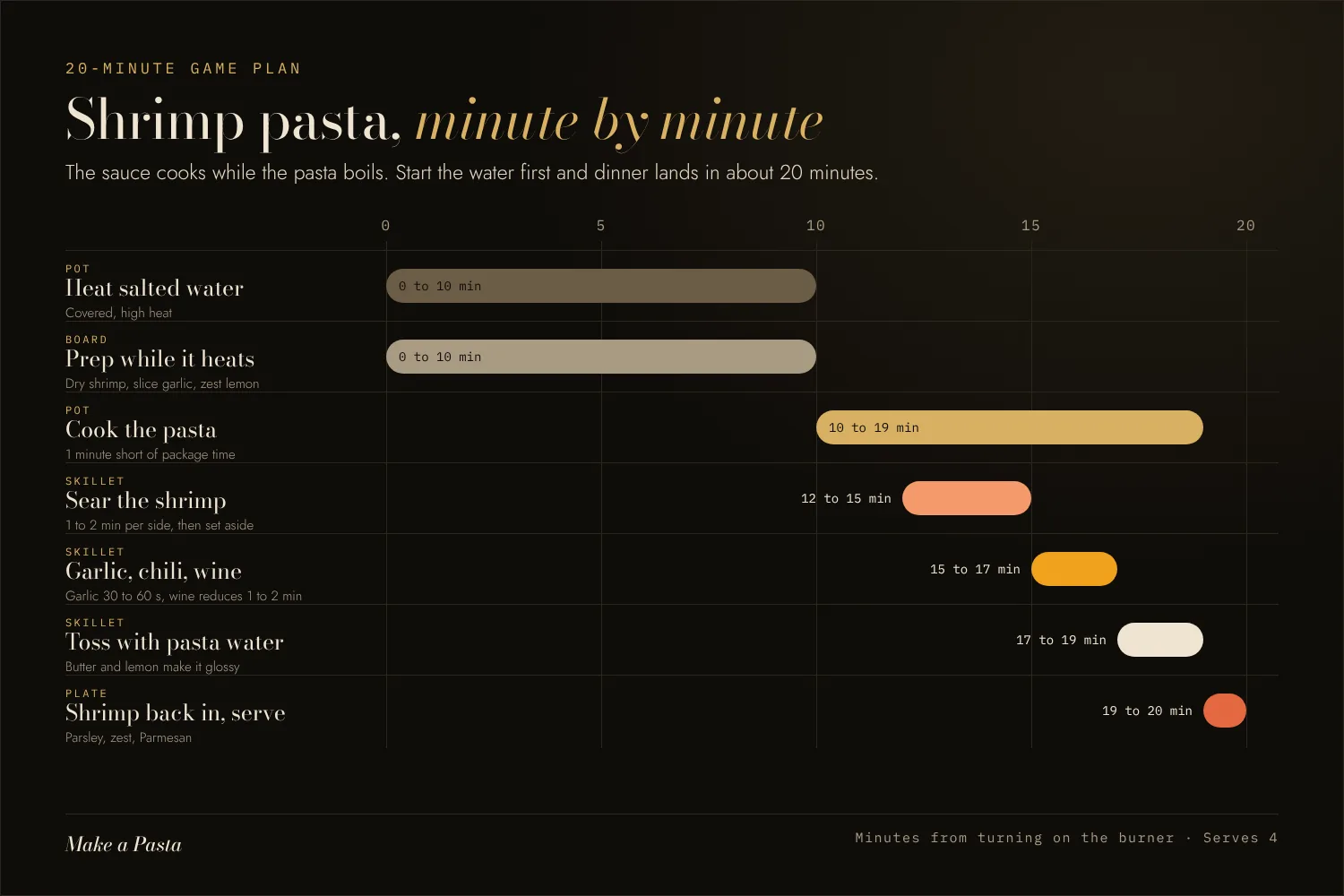
The total is about 20 minutes: 10 minutes while the water heats and you prep, then 10 minutes of cooking. That only works if the water goes on first.
- 01
Put the water on first (0 minutes)
Fill a large pot with 4 quarts of water, add 1 tablespoon of kosher salt, cover and set it over high heat. Most stoves need about 10 minutes to bring that much water to a boil, and that is your prep window.
- 02
Prep while the water heats (0 to 10 minutes)
Spread the shrimp on paper towels and pat them dry on both sides. Season with 1/2 teaspoon salt and the pepper. Thinly slice the garlic, zest the lemon and then juice it, chop the parsley and measure the wine. Set everything beside the stove, because the sauce moves quickly.
- 03
Start the pasta (10 minutes)
Add the pasta to the boiling water and stir for the first 30 seconds so it does not stick. Cook until 1 minute short of the package time. It finishes in the skillet. Before draining, scoop out 1 cup of the cloudy pasta water.
- 04
Sear the shrimp (about 12 to 15 minutes)
Heat the olive oil and 1 tablespoon of butter in a large skillet over medium-high heat until the butter foams. Add the shrimp in a single layer with space between them. Cook for 1 to 2 minutes, until the undersides turn pink, then flip and cook for 1 minute more. Move them to a plate while they are still slightly translucent in the center.
- 05
Build the garlic sauce (about 15 to 17 minutes)
Lower the heat to medium. Add 1 tablespoon of butter, the garlic and the red pepper flakes, and stir for 30 to 60 seconds until fragrant and barely golden. Pour in the wine and scrape up the browned bits from the shrimp. Simmer for 1 to 2 minutes, until the wine has reduced by about half and no longer smells sharp.
- 06
Toss with pasta water and butter (about 17 to 19 minutes)
Lift the pasta into the skillet with tongs, or drain and add it. Add 1/2 cup of pasta water, the remaining 2 tablespoons of butter and the lemon juice. Toss hard for about a minute. The sauce should turn creamy-looking and glossy and cling to each strand. Add more pasta water, a splash at a time, if it looks dry.
- 07
Return the shrimp and serve (about 19 to 20 minutes)
Add the shrimp and any juices from the plate, along with the lemon zest and parsley. Toss for 30 to 60 seconds, just until the shrimp are hot and opaque all the way through. Taste, adjust the salt and serve right away with Parmesan and extra red pepper flakes at the table.
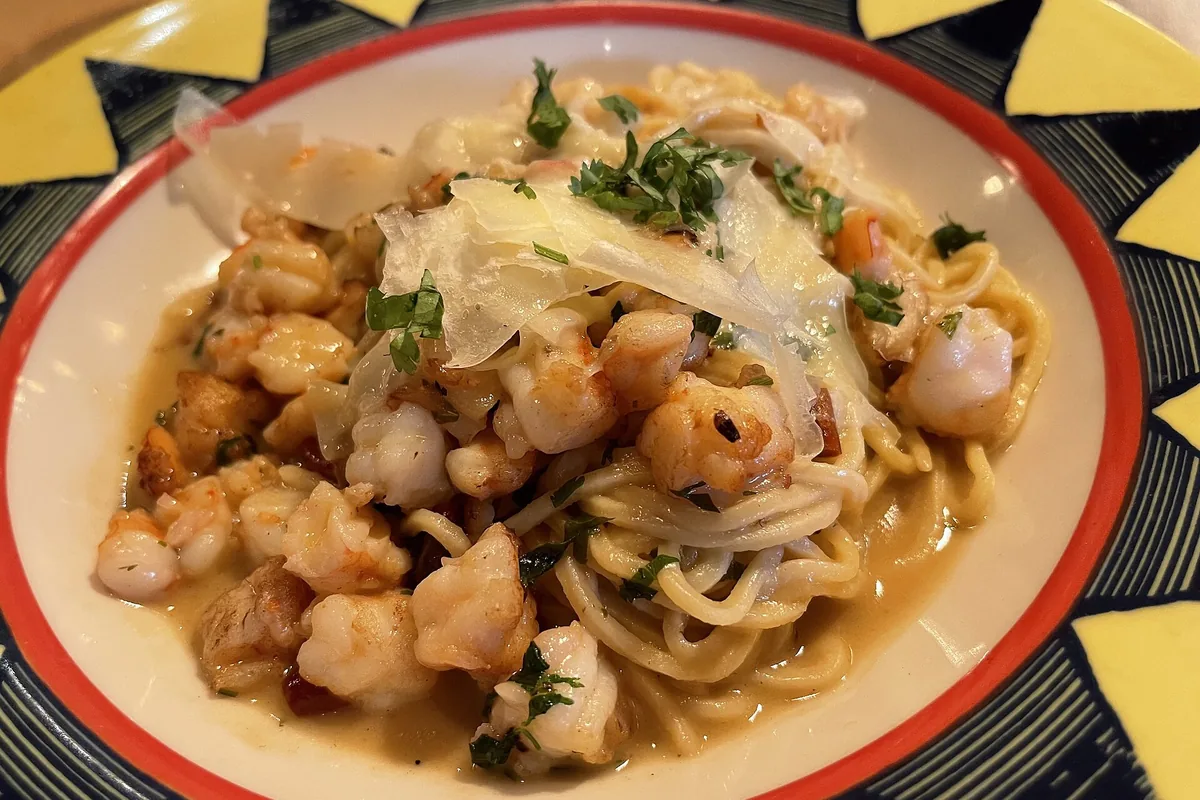
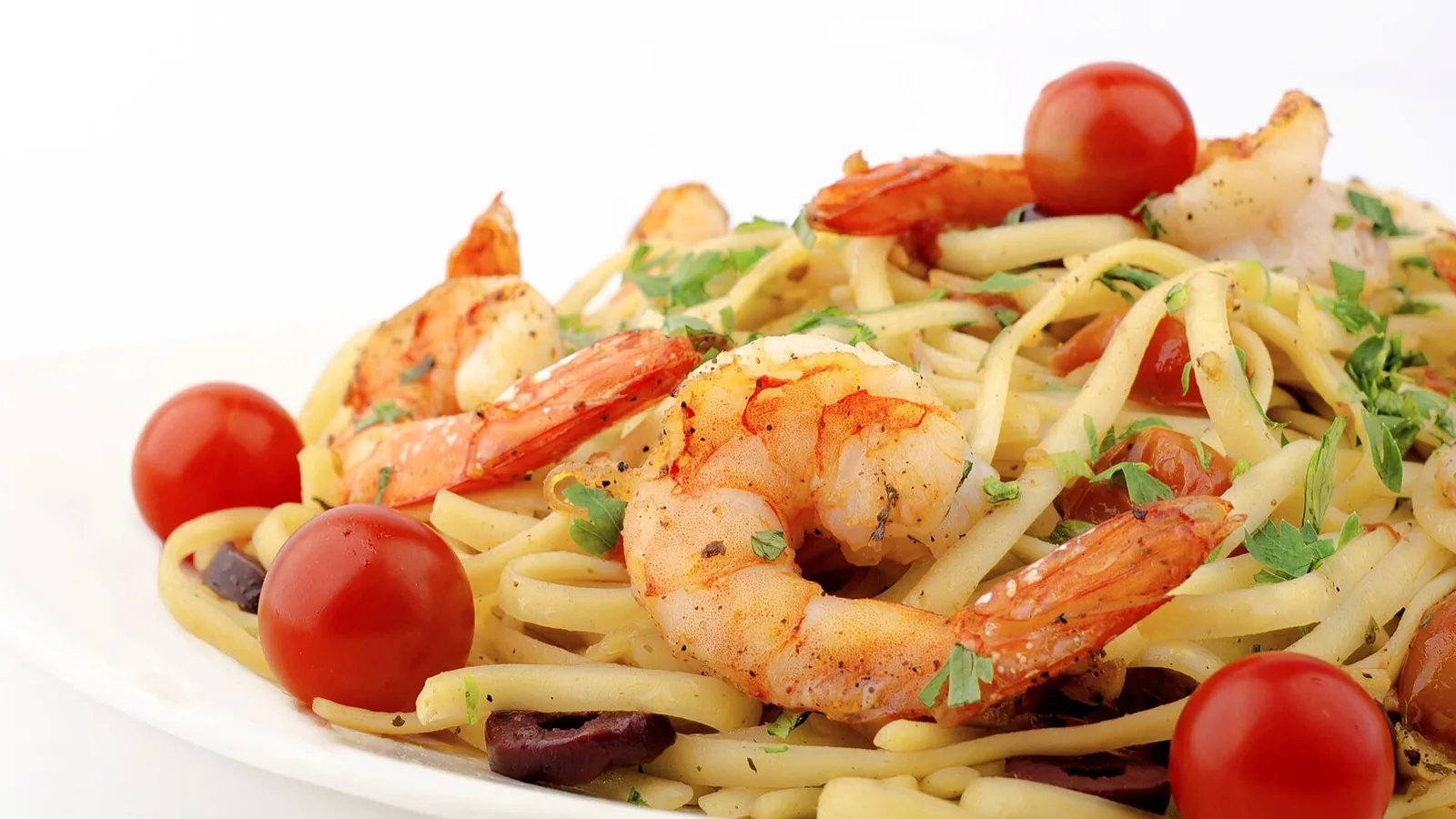
Finish with parsley and Parmesan, and serve while the sauce is still glossy. Photo: Missvain, CC BY 4.0, via Wikimedia Commons (cropped)
Searing the shrimp first and returning them at the very end is what keeps them tender. If they sit in the sauce while it reduces, they keep cooking and tighten. If you are cooking a single portion at work or in a dorm, our guide to cooking pasta in the microwave covers the noodles, and the shrimp can be seared in a small pan.
How to Tell When Shrimp Is Done
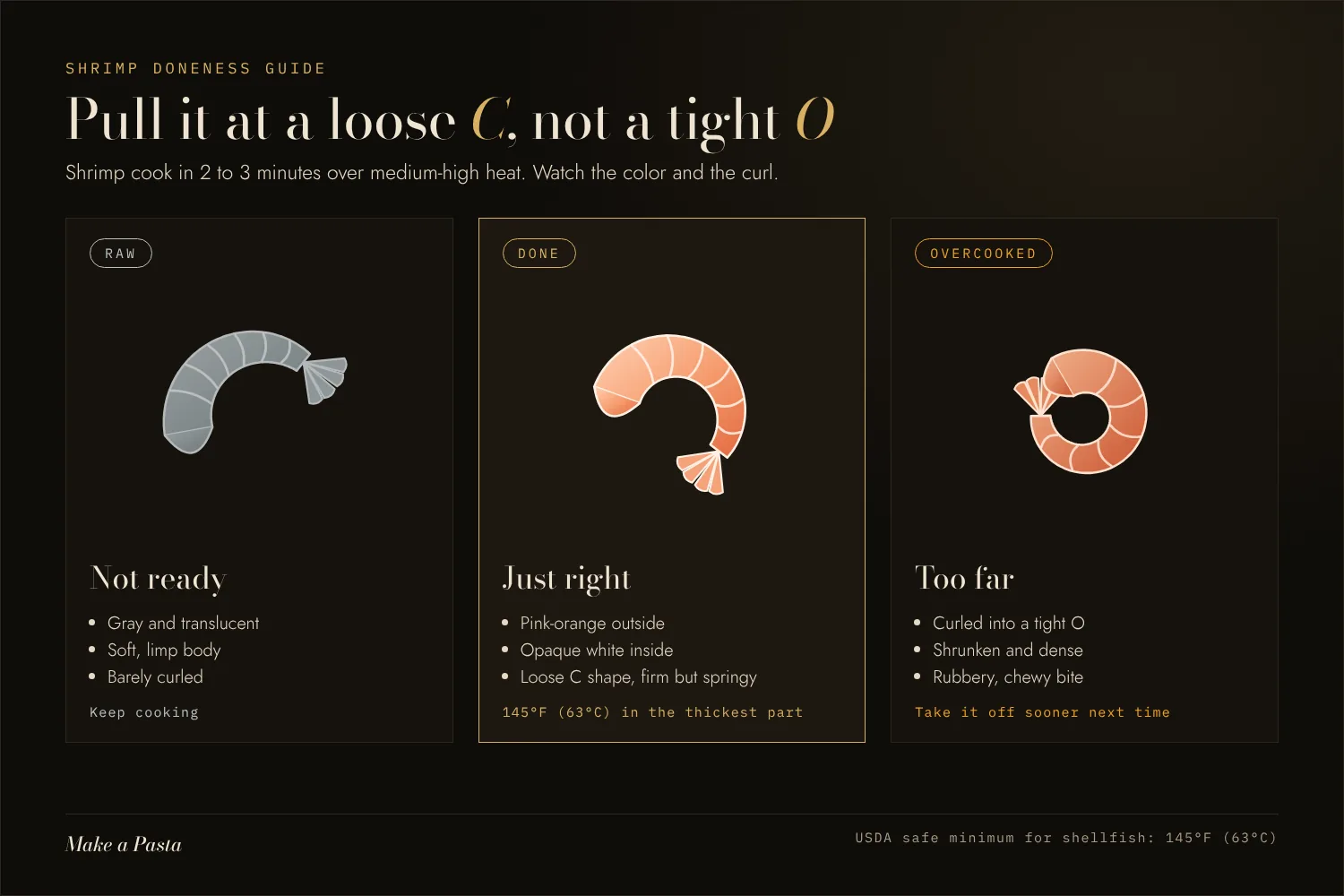
Shrimp goes from raw to overcooked in a few minutes, so watch it rather than the clock. Look for four signs.
- Color. Raw shrimp is gray and translucent. Cooked shrimp turns pink or orange on the outside.
- Flesh. Cut the thickest shrimp in half. The center should be opaque white, with no glassy gray patch.
- Shape. Cooks often say “C for cooked, O for overcooked.” A perfectly cooked shrimp curls into a loose C. A shrimp that has closed into a tight O has gone too far.
- Texture. It should feel firm but springy when pressed. Rubbery, dense shrimp is overcooked.
For a precise check, use an instant-read thermometer in the thickest part of the largest shrimp. The USDA’s safe minimum internal temperature chart lists 145°F (63°C) for fish and shellfish. Since the shrimp go back into the hot pan, pull them from the first sear while they are just short of fully opaque, then let the final toss bring them the rest of the way.
| Stage | Color | Shape | What to do |
|---|---|---|---|
| Raw | Gray, translucent | Straight or barely curled | Keep cooking |
| Nearly done | Pink outside, slightly glassy center | Starting to curl | Take off the first sear; it finishes in the sauce |
| Done | Pink outside, opaque white inside | Loose C | Serve; 145°F (63°C) |
| Overcooked | Deep orange, dense white | Tight O | Still safe, but chewy; pull it sooner next time |
Pasta Water: The Secret to the Sauce
Butter, lemon juice and wine do not mix on their own. Fat floats, liquid pools, and the pasta ends up greasy at the top and wet at the bottom. Pasta water fixes that.
As pasta boils, it releases starch into the water. When you toss that starchy water with butter in a hot pan, the starch helps hold tiny droplets of fat suspended in the liquid. The result is an emulsion: a smooth, slightly thick sauce that coats the noodles. It looks almost creamy, even though there is no cream in it.
- Save more than you need. Scoop out a full cup. It is easy to add, and impossible to get back once it goes down the drain.
- Add it in stages. Start with 1/2 cup and toss hard. Add more a splash at a time until the sauce flows but does not pool.
- Keep the pan hot, not boiling. Medium heat and constant tossing build the emulsion. A hard boil after the butter goes in can split it.
- Add the cold butter last. Cold butter melts more slowly into the hot liquid, which helps it emulsify instead of turning oily.
The same trick makes a silky pesto pasta and keeps cheese-based sauces from clumping. If the finished dish sits for a few minutes and tightens up, loosen it with another splash of pasta water.
Variations: Creamy, Tomato, Spicy and No-Wine
The base recipe is a template. Each variation below swaps in at step 5 or 6, so the shrimp still sear first and return at the end.
Creamy Garlic Shrimp Pasta
After the wine reduces, stir in 3/4 cup (180 ml) of heavy cream and simmer for 2 minutes until it thickens slightly. Toss with the pasta, 1/4 cup of pasta water and 1/2 cup of grated Parmesan, then add the shrimp. Fettuccine suits this version best. For more cream-based ideas, see our creamy pasta sauce, or turn it into shrimp Alfredo with the method from our fettuccine Alfredo.
Tomato Shrimp Pasta
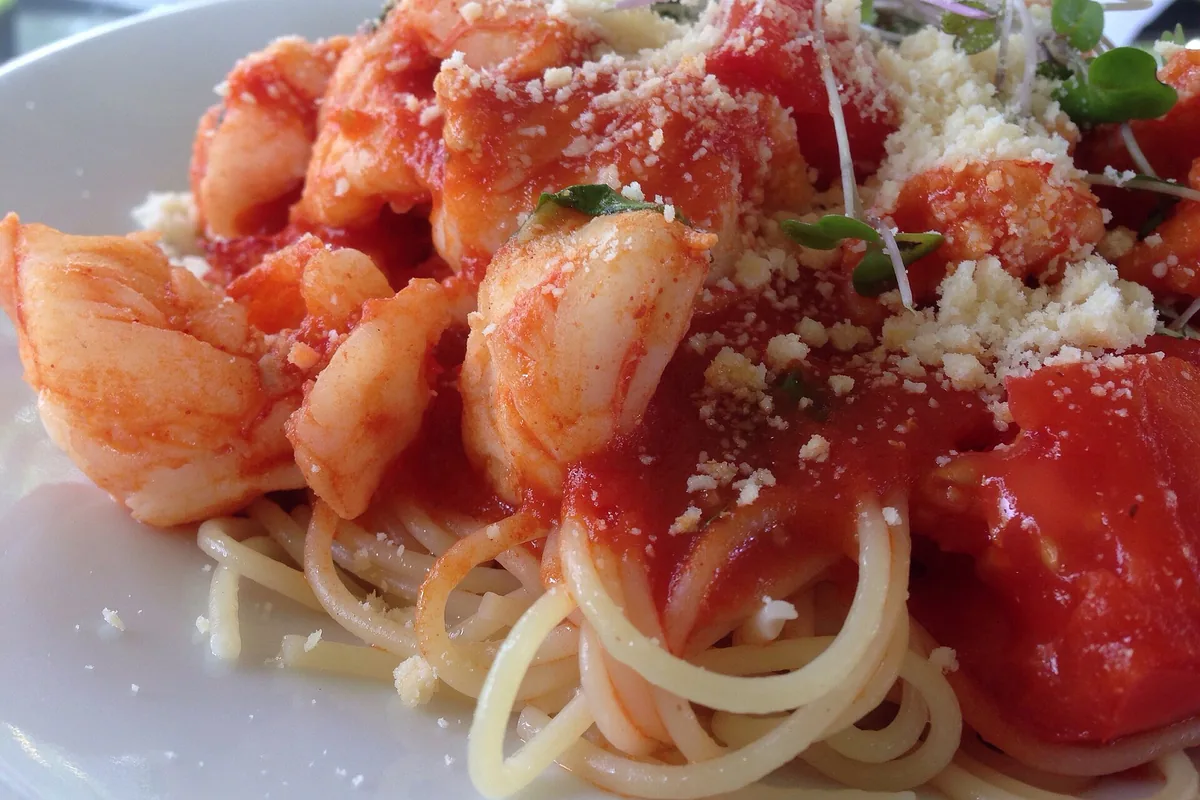
Add 1 pint (about 300 g) of halved cherry tomatoes with the garlic and cook for 3 to 4 minutes, until they soften and start to burst. Then add the wine and carry on. For a deeper red sauce, stir 2 tablespoons of tomato paste into the garlic for a minute before the wine, as in our pasta sauce from tomato paste. Shrimp also pairs well with the creamy tomato sauce of our vodka pasta.
Spicy Shrimp Pasta
Increase the red pepper flakes to 1 teaspoon, or stir in 1 to 2 teaspoons of chopped Calabrian chili with the garlic. For a Cajun-style version, toss the raw shrimp with 2 teaspoons of Cajun seasoning instead of the salt and pepper, and finish with a little cream. Fans of bold heat may also like our rasta pasta, which takes jerk spice in a creamy direction.
No-Wine Shrimp Pasta
Replace the wine with the same amount of low-sodium chicken broth, vegetable broth or extra pasta water. Add an extra tablespoon of lemon juice at the end to make up for the acidity the wine would have added. A pinch of grated lemon zest in the sauce helps too.
Other easy add-ins: a few handfuls of baby spinach or arugula tossed in with the pasta, or a cup of frozen peas added to the pasta pot for the last 2 minutes. Find more weeknight ideas in our pasta recipes.
Common Shrimp Pasta Mistakes
| Problem | Likely cause | Fix |
|---|---|---|
| Rubbery shrimp | Cooked too long, or simmered in the sauce | Sear briefly, set aside and add back only for the final toss |
| Pale, watery shrimp | Shrimp were wet, or the pan was crowded | Pat dry and cook in two batches in a 12-inch skillet |
| Bitter garlic | Garlic went into a very hot pan | Lower the heat to medium first and stir for under a minute |
| Greasy, separated sauce | Not enough pasta water, or the sauce boiled hard | Add pasta water off high heat and toss vigorously |
| Dry pasta | The pasta absorbed the sauce as it sat | Loosen with a splash of pasta water just before serving |
| Bland flavor | Unsalted pasta water or too little lemon | Salt the water well, then finish with lemon juice, zest and salt to taste |
| Mushy pasta | Cooked to full package time before the toss | Drain 1 minute early; it finishes in the skillet |
The most common mistake is cooking the shrimp too long. They keep cooking from the heat of the pan and pasta after they leave the burner, so err on the side of slightly underdone at the sear.
Storage and Reheating
Shrimp pasta is best eaten right away, but leftovers keep well with a little care. Refrigerate them within 2 hours of cooking, or within 1 hour if the room is above 90°F, in a shallow airtight container. Cooked shrimp pasta keeps for 3 to 4 days in the fridge.
To reheat, warm portions in a skillet over medium-low heat with 1 to 2 tablespoons of water per serving, tossing until hot all the way through. Leftovers should reach 165°F (74°C). In the microwave, cover the bowl loosely and heat at 50 percent power in 30 to 45 second bursts, stirring between each, so the shrimp do not toughen.
Freezing is not recommended. Cooked shrimp turns dry and chewy after freezing and reheating, and the butter sauce tends to separate. If you want to cook ahead, prep the shrimp and garlic earlier in the day and keep them in the fridge, then make the dish fresh in 10 minutes.
Shrimp Pasta Nutrition
These figures are approximate. They were calculated from USDA FoodData Central values for each ingredient, based on 4 servings with the wine version and the optional Parmesan. Sodium is not listed because it depends on how much salt goes into the pasta water.
| Nutrient | Amount | Main sources |
|---|---|---|
| Calories | About 640 | Pasta, butter and olive oil |
| Protein | About 37 g | Shrimp, pasta and Parmesan |
| Carbohydrate | About 67 g | Pasta |
| Fat | About 22 g | Butter and olive oil |
| Fiber | About 3 g | Pasta and garlic |
Shrimp itself is lean and high in protein. For a lighter plate, use 2 tablespoons of butter instead of 4, or serve 10 ounces of pasta with an extra half pound of shrimp. Values change with the brand of pasta and the size of your portions.
Shrimp Pasta FAQs
How long does shrimp take to cook for pasta?
Large shrimp (21/25 or 26/30 count) take about 2 to 4 minutes in a hot skillet, or 1 to 2 minutes per side. They are done when they turn pink and opaque and curl into a loose C shape. Smaller shrimp cook faster, so start checking after 1 minute.
Can I use frozen shrimp for shrimp pasta?
Yes. Frozen raw shrimp works well and is what many stores sell as fresh after thawing. Thaw it overnight in the fridge, or seal it in a bag and submerge it in cold tap water, changing the water every 30 minutes. Pat it dry before cooking so it sears instead of steaming.
How do you know when shrimp is cooked?
Cooked shrimp is pink or orange on the outside and opaque white all the way through, with no gray, glassy center. It curls into a loose C shape and feels firm but springy. The USDA safe minimum for shellfish is 145°F (63°C), measured in the thickest part.
What pasta goes best with garlic shrimp?
Long strands such as linguine, spaghetti and fettuccine suit a garlic butter sauce because they hold it in a thin, even coat. Short shapes like penne, campanelle and orecchiette work too and catch small pieces of garlic and shrimp.
Can I make shrimp pasta without wine?
Yes. Use the same amount of low-sodium chicken broth, vegetable broth or extra pasta water, and add an extra squeeze of lemon at the end for brightness. The sauce will taste a little rounder and less sharp, but it still comes together the same way.
Can I use precooked shrimp?
You can, but add it at the very end and toss only until it is heated through, about 1 minute. Precooked shrimp turns rubbery quickly if it cooks again. Raw shrimp gives better flavor because it browns in the pan and seasons the butter.
How many shrimp do I need per person?
Plan on about 4 ounces of raw peeled shrimp per person, or 1 pound for 4 servings. With 21/25 count shrimp that is about 5 to 6 shrimp each, and with 26/30 count it is about 6 to 8.
How long does leftover shrimp pasta last?
Refrigerate leftovers within 2 hours in an airtight container and eat them within 3 to 4 days. Reheat gently in a skillet with a splash of water until hot all the way through, to 165°F (74°C).
The recipe
Garlicky Shrimp Pasta
Seared shrimp tossed with linguine in a glossy garlic, butter, lemon and white wine sauce, bound with starchy pasta water. The sauce cooks while the pasta boils. Serves 4.
Ingredients
Instructions
- Heat the water. Bring 4 quarts of water to a boil in a large covered pot with 1 tablespoon of kosher salt. It takes about 10 minutes on most stoves, so start it before anything else.
- Prep while the water heats. Pat the shrimp very dry with paper towels and season with 1/2 teaspoon salt and the pepper. Slice the garlic, zest and juice the lemon, chop the parsley and measure the wine.
- Cook the pasta. Add the pasta to the boiling water and cook until 1 minute short of the package time. Scoop out 1 cup of pasta water before draining, or lift the pasta straight into the skillet with tongs.
- Sear the shrimp. While the pasta cooks, heat the olive oil and 1 tablespoon of the butter in a large skillet over medium-high heat. Add the shrimp in a single layer and cook for 1 to 2 minutes per side, until pink and just opaque. Move them to a plate.
- Build the garlic sauce. Lower the heat to medium and add 1 tablespoon of butter, the garlic and the red pepper flakes. Stir for 30 to 60 seconds until fragrant and pale gold. Pour in the wine, scrape up the browned bits and simmer for 1 to 2 minutes until reduced by about half.
- Toss with pasta water. Add the drained pasta, 1/2 cup of pasta water, the remaining 2 tablespoons of butter and the lemon juice. Toss hard over medium heat for about 1 minute, until the sauce turns glossy and coats the pasta. Add more pasta water if it looks dry.
- Finish and serve. Return the shrimp and their juices to the pan with the lemon zest and parsley. Toss for 30 to 60 seconds, just until the shrimp are hot and reach 145°F (63°C). Taste for salt and serve right away with Parmesan.
Notes
The 20-minute total assumes you start the water first and prep while it heats, and that your pasta cooks in about 9 to 10 minutes. Thaw frozen shrimp before cooking and pat it very dry. For a no-wine version, use broth and an extra tablespoon of lemon juice. Leftovers keep for 3 to 4 days in the fridge; reheat gently to 165°F (74°C). Approximate nutrition per serving, calculated from USDA ingredient data: about 640 calories, 37 g protein, 67 g carbohydrate and 22 g fat. Values change with your pasta and portion size.