In this recipe
- Pesto Pasta at a Glance: Times, Yield and Tools
- Why Pasta Water Makes the Sauce Silky
- How to Make Homemade Basil Pesto
- Blender vs Mortar and Pestle
- How to Upgrade Store-Bought Pesto
- Best Pasta Shapes for Pesto
- Pesto Pasta Add-Ins
- How to Keep Pesto Bright Green
- Nut-Free and Dairy-Free Swaps
- Storage and Reheating
- Pesto Pasta Nutrition Notes
- Pesto Pasta FAQs
- Printable Recipe Card
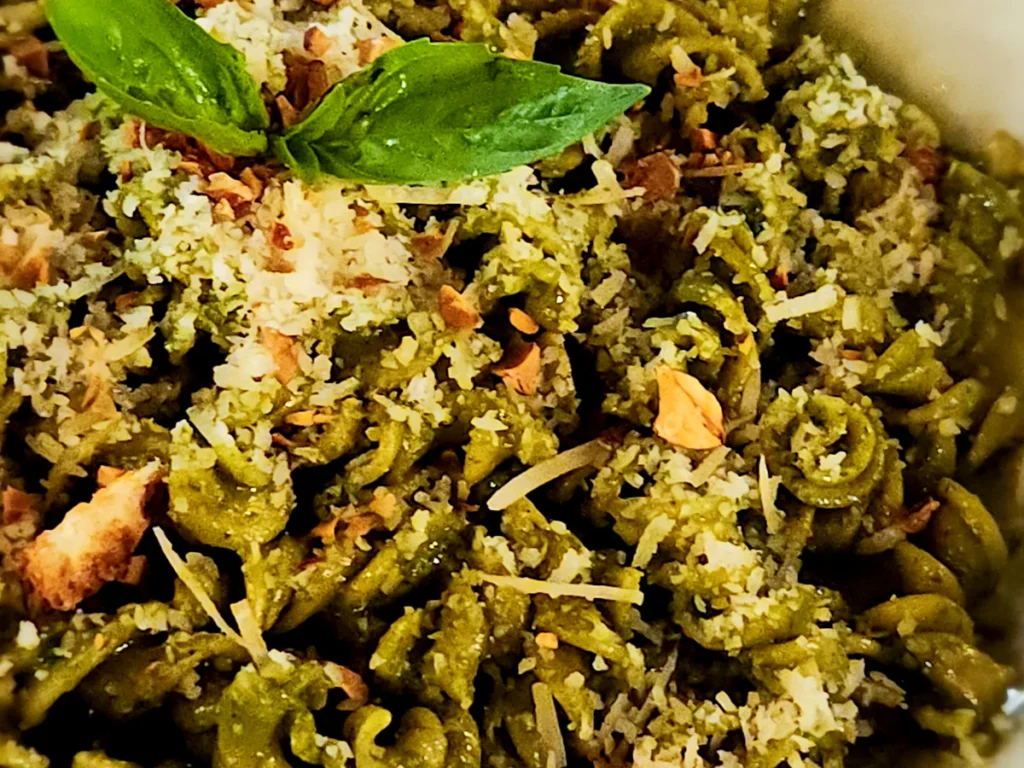
This pesto pasta takes 15 minutes from cold water to plate. You blend a fresh basil pesto while the spaghetti boils, then toss both with starchy pasta water off the heat. The result is a silky sauce.
That last step is the secret most recipes skip. Pasta water turns oily pesto into a glossy coating that clings to every strand. It makes this basil pesto dish a reliable weeknight dinner that tastes restaurant level.
Pesto Pasta at a Glance: Times, Yield and Tools
This recipe serves four as a main course. Prep time is 5 minutes and cook time is 10 minutes, for a total of 15 minutes. Spaghetti or linguine both work, and the pesto makes about 1 cup.
Start the water first, since the pesto is ready long before the pasta. Use extra virgin olive oil with a fruity flavor, because it carries the sauce. Then grate the cheese finely so it melts smoothly into the basil.
Reserve the pasta water before you drain. You need about 3/4 cup, though you may not use it all. Finally, taste at the end and adjust with kosher salt, black pepper and a squeeze of lemon juice.
Why Pasta Water Makes the Sauce Silky
Pesto is mostly oil, and oil does not cling to pasta on its own. The pasta cooking water is full of starch released by the noodles. That starch binds oil and water together into a stable emulsion.
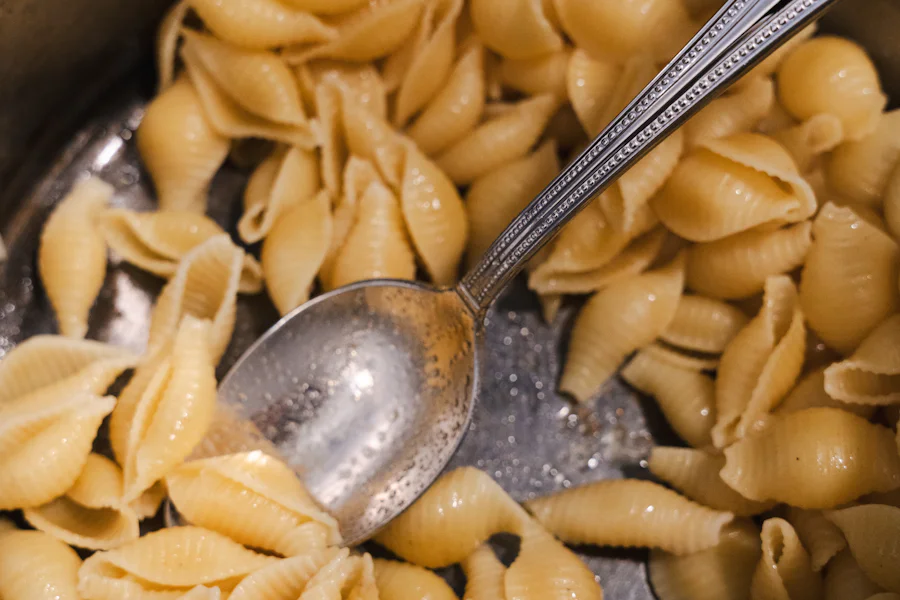
When you toss hard, the starch wraps tiny droplets of oil. As a result, you get a creamy texture with no cream at all. Without it, you see oil separation in the bowl and clumpy cheese on the noodles.
Never cook pesto over high heat, because heat turns basil dark and bitter and makes the cheese seize. Mix the sauce off the heat in a bowl. The residual heat of the drained pasta warms everything, and it also stops the darkening that happens in a hot pan.
How to Make Homemade Basil Pesto
Classic Genovese pesto comes from Liguria, on the northwest coast of Italy. It uses small-leaf Genovese basil, pine nuts, garlic, olive oil, sea salt and two aged cheeses. Our recipe follows that same formula.
The cheese blend matters. Parmigiano Reggiano adds nutty depth, while Pecorino adds a sharp, salty bite. In Liguria cooks often use Pecorino Sardo, which is milder. However, Pecorino Romano works well in smaller amounts.
Real Parmigiano Reggiano is a protected DOP cheese, aged at least 12 months. The Parmigiano Reggiano Consortium explains its production area and aging. Grate it on a microplane so it melts into the pesto instead of staying gritty.
Blender vs Mortar and Pestle
A mortar and pestle gives the most fragrant pesto. Pounding crushes the basil cells and releases their essential oils without heat. The texture comes out creamy yet slightly rustic, and the color stays bright for longer.
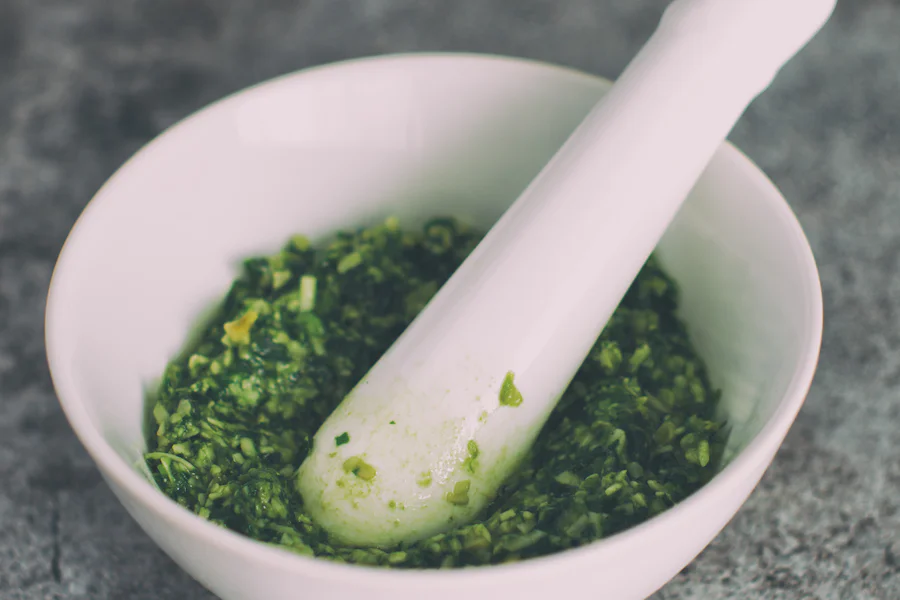
A heavy marble mortar takes about 20 minutes of steady work. First you pound the garlic, pine nuts and salt. Then you add basil in small handfuls, followed by the cheeses. Finally, you stir in olive oil slowly.
A food processor or immersion blender is faster and nearly as good. Pulse in short bursts, because over-blending warms the basil and turns it muddy. Add the cheese by hand at the end for the best texture.
| Method | Time | Texture | Best for |
|---|---|---|---|
| Mortar and pestle | 15 to 20 minutes | Creamy, rustic, most aromatic | Weekend cooking, traditional flavor |
| Food processor | 2 to 3 minutes | Even, slightly coarse | Weeknight dinners, larger batches |
| Immersion blender | 1 to 2 minutes | Smooth, can turn pasty | Small batches in a tall cup |
How to Upgrade Store-Bought Pesto
Store-bought pesto is a fine shortcut. Refrigerated pesto from the deli case usually tastes fresher than shelf-stable jarred pesto. Either way, a few small additions make it taste close to homemade.
First, stir in a handful of chopped fresh basil and 2 tablespoons (12 g) of extra Parmesan. Next, add a little lemon zest for brightness. Then taste for salt, since many brands are either flat or very salty.
Use less pasta water with store-bought pesto, because it is often thinner and oilier. Start with 2 tablespoons (30 g) and add more slowly. A pinch of red pepper flakes adds gentle warmth, too.
Best Pasta Shapes for Pesto
In Liguria, pesto is served with trofie, short twisted pasta, or trenette, a flat noodle similar to linguine. These shapes have grooves and edges that grab the sauce. Therefore, every bite gets an even coating.
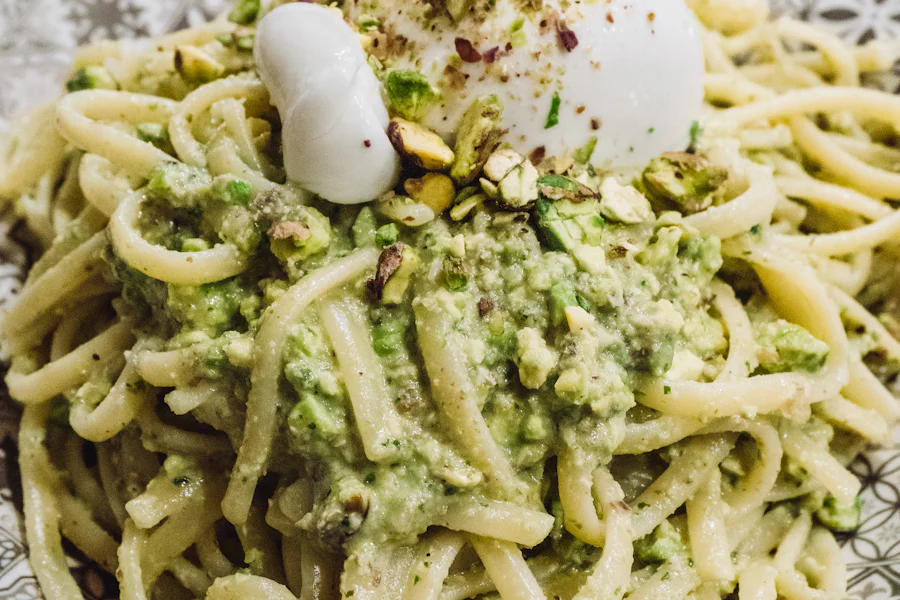
Linguine and spaghetti are easy to find and twirl well. Fusilli and gemelli hold pesto in their spirals, which makes them good for meal prep and lunch boxes. Medium shells catch small add-ins like peas.
For gluten-free pasta, choose a chickpea pasta or a corn and rice blend. These release less starch, so add an extra spoon of cheese. Also cook them just to al dente, since they soften quickly.
| Shape | Why it works | Best with |
|---|---|---|
| Trofie | Twists trap pesto in every curl | Traditional pesto, potatoes and green beans |
| Linguine or trenette | Flat surface holds a thin, silky coat | Shrimp, lemon |
| Fusilli or gemelli | Spirals grip thick sauce | Chicken, cherry tomatoes, cold salads |
| Spaghetti | Easy to find, twirls well | Classic weeknight pesto pasta |
| Medium shells | Cups catch small add-ins | Peas, Italian sausage |
Pesto Pasta Add-Ins
Grilled chicken turns pesto pasta into a full meal. Slice it thin and fold it in at the end. Shrimp also pairs well, so sear it for 2 minutes per side and add lemon juice.
Halved cherry tomatoes add sweetness and acidity. Toss them in raw or blister them in a hot pan first. Frozen peas can go into the pasta pot for the last 2 minutes of cooking.
For a classic Ligurian version, boil diced potatoes and green beans with the trofie. Other good add-ins include Italian sausage, fresh mozzarella, crumbled feta, olives and flaked salmon. Keep extras to about 2 cups (300 g) total.
How to Keep Pesto Bright Green
Basil browns fast once it is cut. This browning is oxidation, the same reaction that turns sliced apples brown. Heat and friction from a blender speed it up, which is why some pesto looks dull.
Blanching fixes this. Dip the basil leaves in boiling water for 10 seconds, then move them to an ice bath. Squeeze them dry before blending. The quick heat stops the enzyme that causes browning.
A little acid also helps. Lemon juice adds vitamin C, which slows oxidation. For stored pesto, smooth the top and cover it with a thin layer of olive oil to block air.
Nut-Free and Dairy-Free Swaps
For a nut-free pesto, swap the pine nuts for toasted sunflower seeds or pepitas. Both give a similar rich texture. Note that pine nuts are seeds, though many people with tree nut allergies still avoid them.
If nuts are fine but pine nuts are pricey, use walnuts or almonds. Walnuts taste slightly bitter, so toast them first. Almonds give a sweeter, milder pesto that kids often prefer.
For a dairy-free pesto or vegan pesto, replace both cheeses with 3 tablespoons (15 g) of nutritional yeast. Add an extra pinch of salt to cover the missing Pecorino. Then use a little more pasta water.
Storage and Reheating
Store leftover pesto pasta in an airtight container in the refrigerator for 3 to 4 days. Cool it within 2 hours of cooking. The sauce will thicken and look drier as the pasta absorbs it.
To reheat, add the pasta to a skillet with a splash of water. Warm it over low heat, stirring often, for 2 to 3 minutes. High heat will darken the basil and split the oil.
Plain pesto freezes well for up to 6 months. Freeze it in an ice cube tray, then move the cubes to a freezer bag. Leave the cheese out before freezing and stir it in after thawing.
Pesto Pasta Nutrition Notes
One serving of this recipe has about 680 calories. Most of them come from the pasta and olive oil. You can check single ingredients in USDA FoodData Central, the government food composition database.
The fat is mostly healthy fats from olive oil and pine nuts. These are rich in monounsaturated fat. Pesto pasta also gives you protein from the cheese and pasta, plus some fiber from the basil and nuts.
Tomato sauce is lower in calories than pesto. However, pesto feels more filling in smaller portions. To lighten it, use 1/3 cup (75 g) of oil, add more vegetables and watch the sodium from the cheese.
| Per serving (1 of 4) | Approximate amount |
|---|---|
| Calories | 680 kcal |
| Fat | 40 g |
| Carbohydrates | 65 g |
| Protein | 18 g |
| Fiber | 4 g |
| Sodium | 450 mg |
For more classic sauces, try our homemade spaghetti sauce on a cold night. For a picnic, our pasta salad recipe pairs well with leftover pesto. You can find every recipe on the Make a Pasta recipes page.
Pesto Pasta FAQs
Should I Heat Pesto Before Adding It to Pasta?
No. Toss pesto with hot drained pasta and pasta water in a bowl off the heat, because direct heat darkens the basil and makes the cheese clump.
How Much Pesto Do I Need for 1 Pound of Pasta?
Use about 1 1/4 cups (300 g) of homemade pesto for 1 pound (454 g) of pasta, or roughly 1/2 cup (120 g) of store-bought pesto, then loosen it with pasta water.
Can I Make Pesto Pasta Ahead of Time?
Yes. Make ahead by storing the pesto with a layer of oil on top for up to 1 week, then cook the pasta fresh and toss just before serving.
Can I Eat Pesto Pasta Cold?
Yes. A cold pesto pasta salad works well with fusilli, cherry tomatoes and mozzarella, but add a splash of lemon juice and extra oil because the sauce firms up when chilled.
Is Pesto Pasta a Side Dish or a Main Course?
It works as both. Serve a small portion as a side dish with grilled chicken or fish, or add protein and vegetables to make it a full entrée.
Why Is My Pesto Pasta Oily?
Oily pesto pasta means the sauce did not emulsify. Add a few tablespoons of hot pasta water and toss hard for 30 seconds until the oil turns creamy.
The recipe
15-Minute Basil Pesto Pasta
Fresh Genovese basil pesto tossed with spaghetti and starchy pasta water for a glossy, silky sauce. Serves 4.
Ingredients
Instructions
- Boil the water. Bring 4 quarts (3.8 liters) of water to a boil and add 1 tablespoon (18 g) of kosher salt.
- Cook the pasta. Add the pasta and cook until al dente, usually 9 to 10 minutes.
- Start the pesto. Meanwhile, pulse the pine nuts, garlic and salt in a food processor until finely chopped.
- Add the basil. Add the basil and pulse in short bursts until coarsely chopped.
- Stream in the oil. With the motor running, pour in the olive oil until the pesto looks smooth but still textured.
- Add the cheese. Scrape the pesto into a large bowl and stir in the Parmigiano Reggiano, Pecorino and lemon juice.
- Save the pasta water. Scoop out 3/4 cup (180 g) of pasta water, then drain the pasta.
- Loosen the pesto. Stir 1/4 cup (60 g) of the pasta water into the pesto until loose and creamy.
- Toss off the heat. Add the hot pasta and toss hard for 30 seconds, adding more water a splash at a time.
- Season and serve. Season with salt, black pepper and extra cheese, then serve right away.
Notes
Never cook pesto over direct heat, or the basil darkens and the cheese clumps. Leftover pesto keeps 3 to 4 days in the fridge under a thin layer of olive oil, or up to 6 months frozen without the cheese.