In this recipe
- What Makes Homemade Gnocchi Light
- The Best Potatoes for Gnocchi
- The Potato to Flour Ratio
- Egg or No Egg?
- Homemade Gnocchi Ingredients
- How to Make Homemade Gnocchi
- Ricing and Mixing Without Gumminess
- Shaping Gnocchi and Adding Ridges
- Why You Should Boil a Test Piece
- How Long to Cook Gnocchi
- Pan-Fried Gnocchi
- Gnocchi Troubleshooting
- Best Sauces for Gnocchi
- How to Freeze and Store Gnocchi
- Homemade Gnocchi Nutrition
- Homemade Gnocchi FAQs
- Printable Recipe Card
Homemade gnocchi are small Italian dumplings made from potato, flour and, often, an egg. Good ones are soft and light, with just enough structure to hold their shape in boiling water. Bad ones are gummy, heavy or fall apart before they reach the plate.
The difference comes down to a few choices: which potato you use, how you cook it, how much flour goes in and how much you handle the dough. This recipe serves 4. It uses baked russet potatoes, a measured starting ratio of potato to flour and a test piece before you shape the whole batch.
What Makes Homemade Gnocchi Light
Potato gnocchi depend on a balance between potato and flour. Cooked potato is mostly water and starch. Flour adds proteins that form gluten and hold the dumplings together. The goal is to use as little flour as possible while still getting a dough that keeps its shape.
- Dry potatoes. Less water in the potato means less flour is needed to firm up the dough, and less flour means lighter gnocchi.
- Fluffy texture. Ricing breaks the potato into fine strands without crushing it into paste.
- Brief mixing. The dough should just come together. Long kneading builds gluten and makes gnocchi chewy and dense.
- Gentle cooking. A steady, moderate boil cooks them through without knocking them apart.
If you remember nothing else, remember this: dry potato, little flour, light hands.
The Best Potatoes for Homemade Gnocchi
Use russet potatoes. They are the standard baking potato in US stores, with brown skin and white flesh. According to the University of Arkansas Cooperative Extension Service, russets are starchy potatoes, high in starch and low in moisture. That combination gives a dry, fluffy flesh, which is exactly what gnocchi need.
Why Russets Beat Waxy Potatoes
Waxy potatoes, such as red-skinned and fingerling potatoes, hold their shape well in salads and soups. That firmness works against you here. Their flesh is moister and smoother, so the dough needs more flour to come together, and the extra flour makes the dumplings heavier.
Yukon Gold sits in the middle. It is an all-purpose potato with moist, buttery flesh. It can make good gnocchi with a richer flavor and a golden color, but expect to add a little more flour.
| Potato | Type | Cooked texture | For gnocchi |
|---|---|---|---|
| Russet | Starchy | Dry, fluffy, mealy | Best choice; needs the least flour |
| Yukon Gold | All-purpose | Moist, smooth, buttery | Good; may need extra flour |
| Red or fingerling | Waxy | Firm, moist, creamy | Not recommended; dense results |
| Sweet potato | Starchy, sweet | Soft and moist | A separate recipe; needs more flour |
Bake, Don’t Boil
How you cook the potatoes matters as much as which ones you buy. Boiling adds water. Peeled chunks soak up the most, and even whole potatoes pick up some. Baking does the opposite. Dry oven heat cooks the flesh while steam escapes, so the potato ends up drier.
Bake whole russets at 400°F for 50 to 70 minutes, depending on size, until a thin knife slides into the center with no resistance. Choose potatoes of similar size so they finish together. Skip the foil, since it traps steam around the potato.
If you must boil, keep the potatoes whole and unpeeled, then let them steam dry before peeling.
The Potato to Flour Ratio

A good starting point is about 4 parts riced potato to 1 part flour by weight. For this recipe, that means about 1 1/2 pounds (680 g) of riced potato and 1 1/3 cups (170 g) of all-purpose flour.
Weight matters more than the number of potatoes, because potatoes vary. Weigh the riced potato, then use one quarter of that weight in flour as your starting amount.
Add Flour in Stages
Do not add all the flour at once. Start with about three quarters of it, mix gently, then add more only if the dough sticks to your hands. A slightly tacky dough is fine. A dough that clings in strings needs more flour. Keep up to 1/3 cup (40 g) extra on hand, though you may not need it.
Which Flour to Use
All-purpose flour is the easy choice and works well. Italian “00” flour is finer and also works. Bread flour has more protein and can make gnocchi chewier, so skip it here.
For gluten-free gnocchi, use a gluten-free flour blend that contains xanthan gum, and expect a softer dough. Our gluten-free pasta recipe shows how rice flour, tapioca and potato starch work with xanthan gum in fresh dough.
Egg or No Egg?
Recipes with and without egg are both common, and both work. The egg is a binder. It helps the dough hold together, which makes it more forgiving if your potatoes are a little wet or you are new to gnocchi. Without egg, gnocchi can be a touch lighter and taste more of potato, but the dough is more fragile.
| Version | Dough | Texture and flavor | Best for |
|---|---|---|---|
| With 1 egg | Holds together well; more forgiving | Slightly richer and a little firmer | Beginners, Yukon Gold potatoes, freezing |
| No egg | More fragile; needs gentle handling | Lightest, with the purest potato flavor | Dry russets and practiced hands |
How the Egg Changes the Dough
An egg adds moisture as well as binding power. Without it, the flour does all the binding, so handle eggless dough gently and let the test piece tell you whether it needs a spoonful more flour. This recipe uses 1 egg because it gives reliable results for most home cooks.
Homemade Gnocchi Ingredients
Gnocchi need only a handful of ingredients. Here is what to buy for 4 servings, and why each one matters.
- Russet potatoes: 2 pounds (900 g). About 4 medium potatoes of similar size. You need about 1 1/2 pounds (680 g) of riced flesh.
- All-purpose flour: 1 1/3 cups (170 g), plus extra. Keep up to 1/3 cup (40 g) more for the dough, and a little for dusting the counter and tray.
- Egg: 1 large, beaten. Optional. It makes the dough easier to handle.
- Kosher salt: 1 teaspoon for the dough. Plus more for the cooking water. Potato needs salt to taste of anything.
- To finish. Your sauce of choice, or 3 tablespoons of butter for pan-frying, plus grated Parmigiano Reggiano.
How to Make Homemade Gnocchi
Most of the time is hands-off baking. The active work takes about 45 minutes. Read the steps once before you start, because the potato is easiest to work with while it is still warm.
- 01
Bake the potatoes
Heat the oven to 400°F. Scrub the potatoes, pat them dry and prick each one a few times with a fork. Bake them directly on the oven rack for 50 to 70 minutes, until a knife slides into the center with no resistance.
- 02
Peel and rice while hot
Hold each potato in a folded towel and cut it in half. Scoop out the flesh and press it through a ricer onto a clean counter or sheet pan. Spread it out in a thin, even layer.
- 03
Let the steam escape
Leave the potato for 10 to 15 minutes, until it feels warm but is no longer steaming. More moisture evaporates as it sits, and the egg will not cook when it goes in.
- 04
Weigh and season
Weigh the riced potato. You want about 1 1/2 pounds (680 g). Sprinkle it evenly with 1 teaspoon of kosher salt.
- 05
Add the egg and flour
Gather the potato into a loose mound and make a well in the center. Pour in the beaten egg. Sprinkle about 1 cup (128 g) of the flour over the top.
- 06
Mix gently
Use a bench scraper to cut the flour and egg into the potato, folding it over itself. Once it looks shaggy, press it together with your hands into a soft dough. Add the remaining flour a little at a time, only if it sticks. Stop as soon as it holds together, after about 1 to 2 minutes.
- 07
Boil a test piece
Pinch off a small piece, roll it into a gnocchi and drop it into a small pot of salted water at a gentle boil. If it holds its shape and floats, the dough is ready. If it falls apart, work in 1 to 2 tablespoons more flour and test again.
- 08
Roll and cut
Divide the dough into 4 to 6 pieces. Roll each one on a lightly floured counter into a rope about 3/4 inch thick. Cut the rope into 3/4-inch pieces.
- 09
Add ridges
Roll each piece gently down the tines of a floured fork or a gnocchi board, pressing lightly with your thumb. Set the gnocchi on a floured sheet pan in a single layer, not touching.
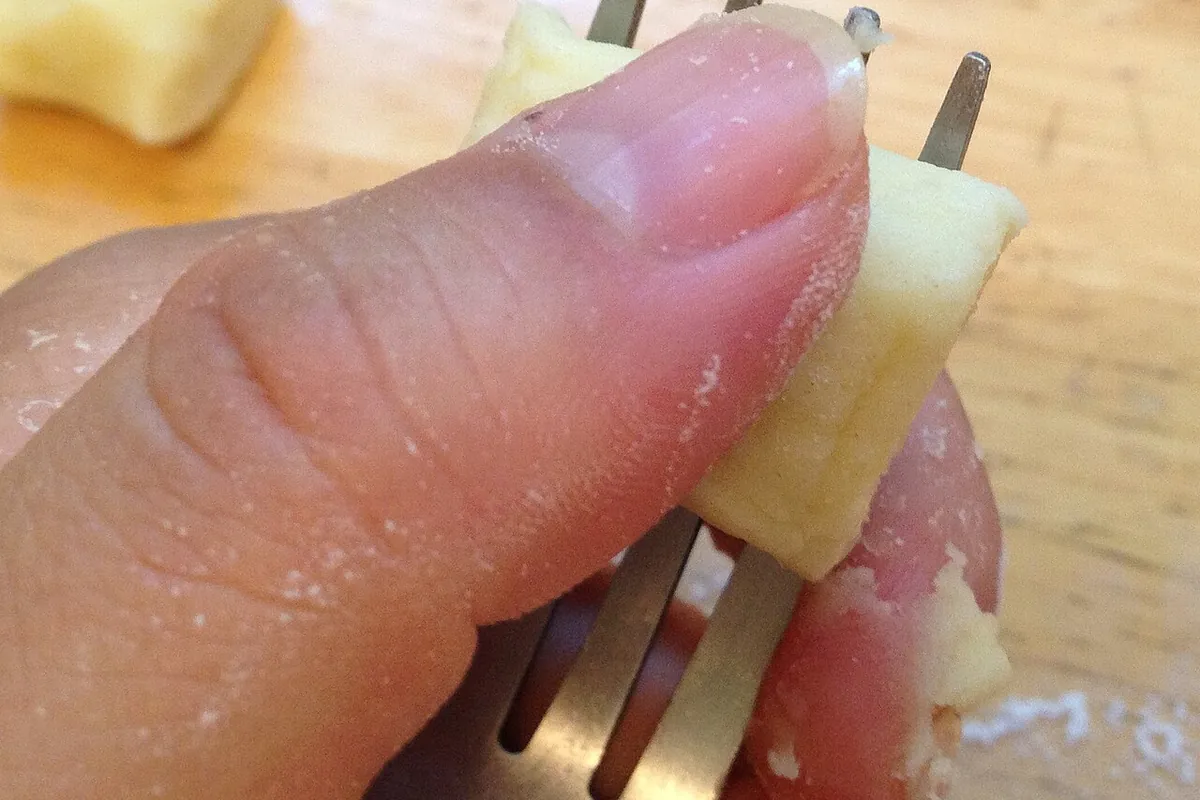
Rolling a piece of dough down a fork with your thumb makes the ridges and a small dimple. Photo: Joy, CC BY 2.0, via Wikimedia Commons (cropped) - 10
Cook and serve
Boil the gnocchi in batches in a large pot of gently boiling salted water. Once they float, cook them 30 to 60 seconds more. Lift them out with a slotted spoon straight into warm sauce, or pan-fry them in butter.
Handle the dough as little as possible. Every extra minute of kneading or pressing makes the gnocchi denser. If the dough feels soft and slightly tacky, it is right.
Ricing and Mixing Without Gumminess

Gummy gnocchi usually start here. Cooked potato is full of swollen starch granules. Press or beat it too hard and many of them burst, releasing sticky starch that turns the dough pasty. The tools and timing below keep the potato fluffy.
Use a Ricer, Not a Masher
A ricer pushes potato through small holes in one pass, so the flesh is cut into fine strands with very little crushing. A food mill does the same job. Never use a food processor or an electric mixer. Their blades and beaters overwork the potato in seconds.
Rice It Hot, Mix It Warm
Hot potato passes through a ricer easily and gives off steam as it cools, which dries it further. Spreading it on the counter speeds this up. Wait until it is warm to the touch before adding the egg. If you let it go fully cold, the potato firms up and needs more working to come together.
Mix Like You Are Making Biscuits
Think of gnocchi dough like biscuit dough. You want the ingredients combined, not developed. Cut the flour in with a bench scraper, fold, press and stop. A finished dough is soft, smooth enough to hold a shape and slightly tacky. If it feels elastic or springs back when you press it, it has been worked too much.
Shaping Gnocchi and Adding Ridges
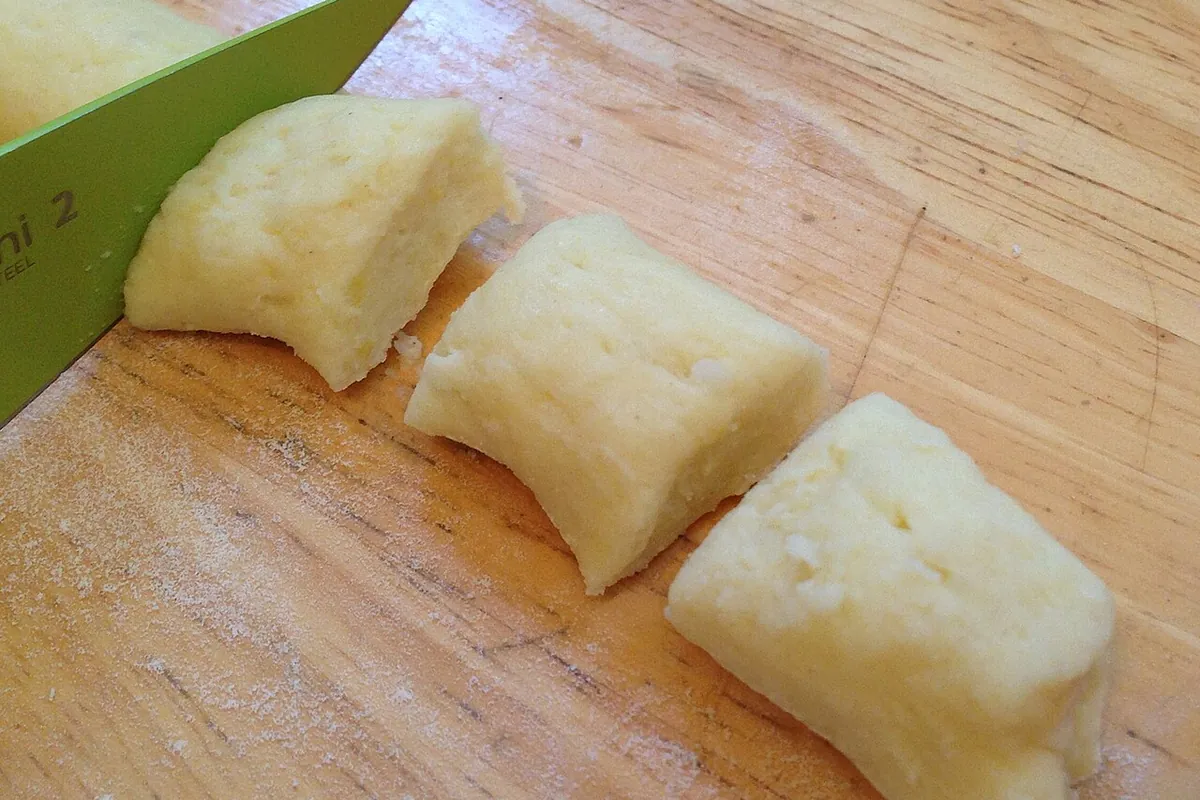
Once the dough passes the test, shaping goes quickly. Work with one piece of dough at a time and keep the rest covered with a clean towel so it does not dry out.
Roll the Ropes
Flour the counter lightly, not the dough. Roll each piece under your palms, moving your hands outward from the center, into an even rope about 3/4 inch thick. Use light pressure, because pressing hard packs the dough and makes dense gnocchi. Cut the rope into even 3/4-inch pieces so they all cook at the same speed.
Fork or Gnocchi Board
Ridges are optional, but they help. The grooves catch sauce, and the dimple from your thumb gives a thinner center that cooks evenly. Hold a fork with the tines pointing down at an angle. Press a piece against the tines with your thumb and roll it down and off. A wooden gnocchi board does the same thing with grooves cut into the wood.
Why You Should Boil a Test Piece
Potatoes vary from batch to batch, so the same amount of flour can give a different dough each time. A test piece tells you whether the dough works before you shape the whole batch.
How to Test
While you mix, keep a small pot of salted water at a gentle boil. Shape one gnocchi and drop it in. A good test piece keeps smooth edges, floats within a couple of minutes and tastes tender and well seasoned, not chewy or pasty.
Reading the Result
If the piece falls apart or turns ragged, knead in 1 to 2 tablespoons of flour, or a little beaten egg, and test again. If it is tough or dense, the dough already has too much flour. You cannot take flour out, but you can stop adding more and handle the rest of the dough lightly. If it tastes flat, sprinkle a pinch more salt over the dough and fold it in.
How Long to Cook Gnocchi
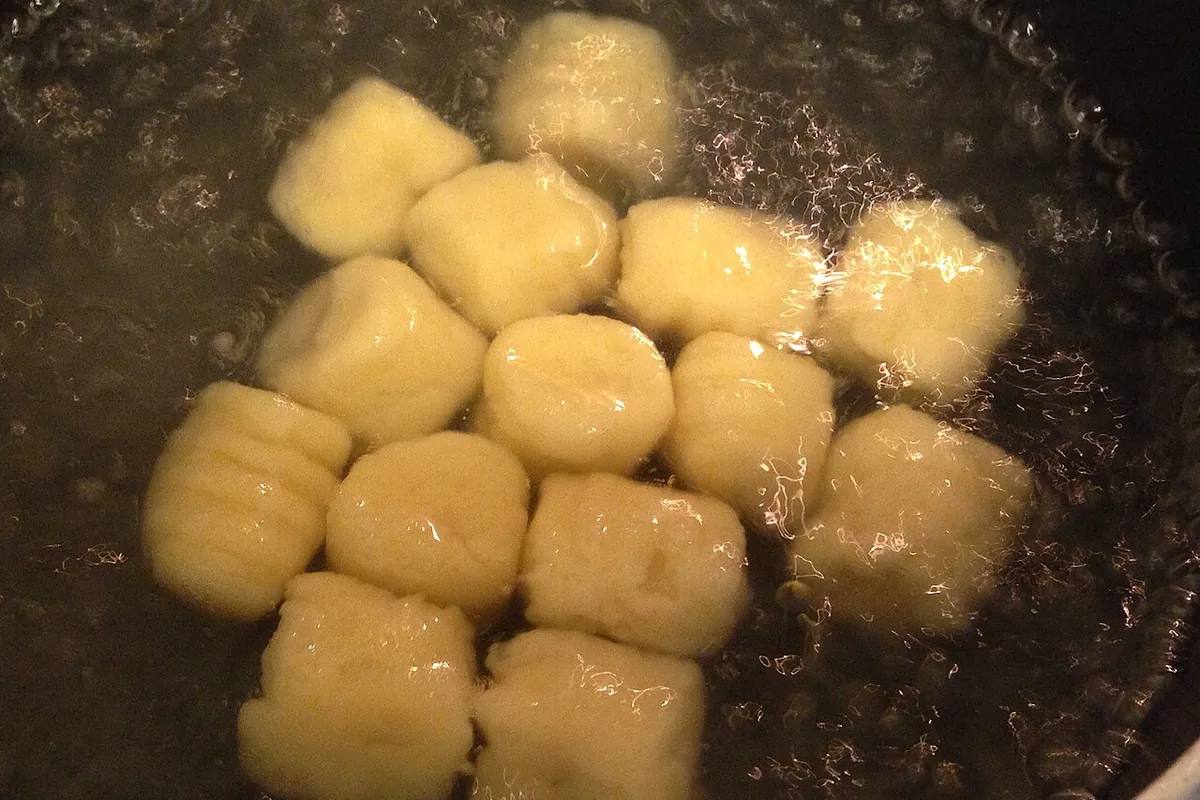
Fresh gnocchi cook fast. Most float within 1 to 2 minutes and are done 30 to 60 seconds later. Use a large pot with plenty of water, so the temperature does not drop too far when the gnocchi go in.
The Float Test
Gnocchi sink when they first go in, then rise to the surface as they cook. Floating is a good signal, but it is not the only one. Give them another 30 to 60 seconds after they rise, then lift one out and taste it. It should be tender all the way through, with no raw, floury center.
Cook in Batches
Add only as many gnocchi as will float in a single layer, roughly a quarter of the batch at a time in a large pot. Keep the water at a steady, gentle boil rather than a hard rolling boil, which can knock soft gnocchi apart.
Pan-Fried Gnocchi
Boiled gnocchi are soft and pillowy. Pan-frying them afterward adds a golden, lightly crisp outside while the center stays tender. It is the best way to serve gnocchi with a simple butter sauce.
How to Pan-Fry After Boiling
- Boil and drain. Cook the gnocchi as above and spread them on a sheet pan for a minute or two, so surface water steams off. Wet gnocchi spatter and will not brown.
- Heat the pan. Warm 2 to 3 tablespoons of butter, olive oil or a mix in a large nonstick or cast-iron skillet over medium-high heat.
- Fry in one layer. Add the gnocchi without crowding. Leave them alone for 2 to 3 minutes until the bottoms turn golden, then turn them and cook 1 to 2 minutes more.
- Season and serve. Finish with a pinch of salt, black pepper and grated Parmesan.
Brown Butter and Sage
This classic pairing takes about 5 minutes. Melt 4 tablespoons of butter in the skillet over medium heat. Swirl until the foam settles and the milk solids turn golden brown and smell nutty. Add 8 to 10 fresh sage leaves and let them crisp for about 30 seconds, then toss in the boiled gnocchi. Finish with Parmesan.
Gnocchi Troubleshooting
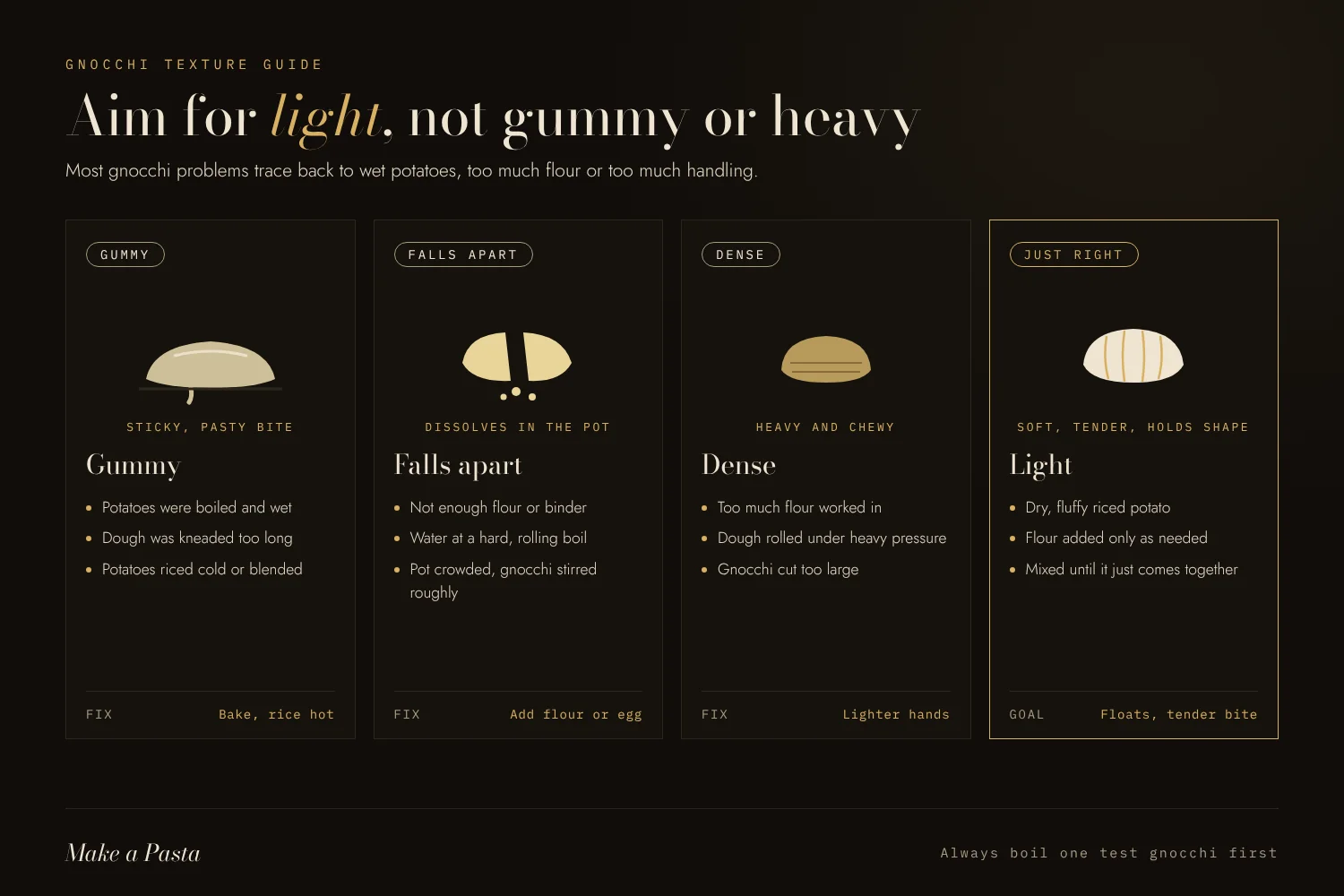
Gnocchi problems usually come from the potatoes, the flour or the handling. Use this table to find the cause.
| Problem | Likely cause | Fix |
|---|---|---|
| Gummy or pasty | Boiled, wet potatoes; overmixed dough; potato worked in a processor | Bake the potatoes, rice them hot and mix only until the dough holds |
| Falling apart in the pot | Too little flour or binder; a hard boil; wet potatoes | Test a piece first; add 1 to 2 tablespoons flour or a little egg; keep the boil gentle |
| Dense and heavy | Too much flour; dough kneaded or rolled with heavy pressure | Add flour in stages, stop at slightly tacky and roll with light hands |
| Chewy or rubbery | Gluten built by long kneading; bread flour | Mix briefly and use all-purpose flour |
| Dough too sticky to roll | Potato still steaming; waxy potatoes | Let the riced potato dry; dust the counter lightly with flour |
| Raw, floury center | Pulled too soon; pieces cut too large | Cook 30 to 60 seconds after they float; cut 3/4-inch pieces |
| Stuck together on the tray | Piled up or not floured enough | Space them on a floured pan; cook or freeze promptly |
Best Sauces for Gnocchi
Potato gnocchi have a mild flavor and a soft bite, so they suit light butter sauces and richer ones alike. Toss them with the sauce right after cooking, with a splash of the cooking water to help it cling.
Butter and Cheese Sauces
Brown butter and sage is the classic. For something quicker, the sauce from our garlic butter pasta works with gnocchi in place of spaghetti. For a rich, melty coating, try our cheese sauce for pasta, then slide the sauced gnocchi under the broiler for a golden top.
Tomato Sauces
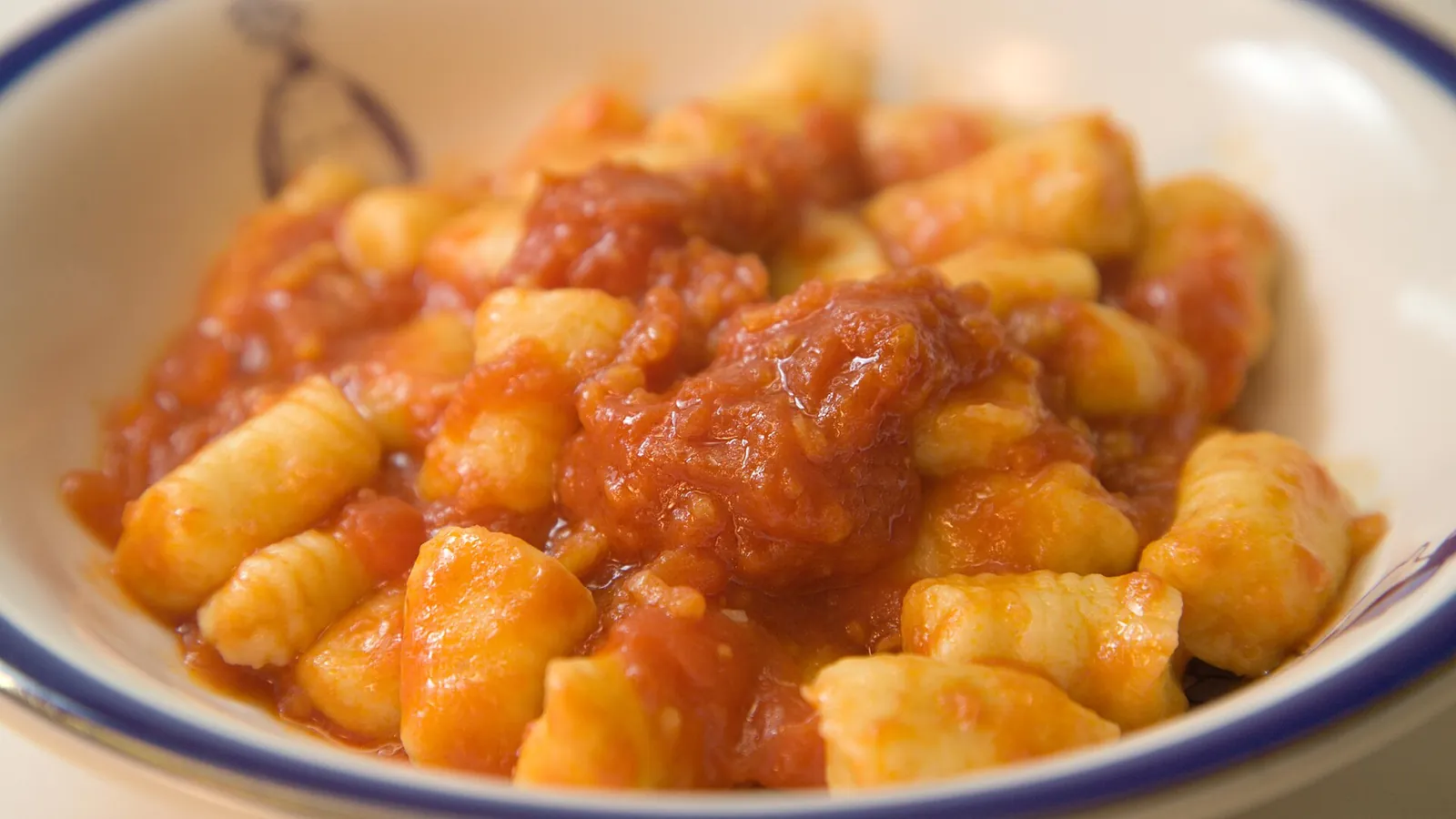
Gnocchi with tomato sauce, as in the photo at the top, is a simple Italian favorite. Our slow-simmered homemade spaghetti sauce is a good match. For a creamy pink sauce, toss gnocchi in the sauce from our vodka pasta.
Pesto and Cream Sauces
Basil pesto clings well to ridged gnocchi. Use the pesto from our pesto pasta and loosen it with a little cooking water. For a mild, family-friendly bowl, our creamy pasta sauce has five variations that all suit gnocchi.
Looking for more ideas? Browse our full collection of pasta recipes.
How to Freeze and Store Homemade Gnocchi
Uncooked gnocchi do not keep well in the fridge. The potato releases moisture as they sit, and the dumplings turn sticky and soft. For anything beyond same-day cooking, freeze them.
How to Freeze Gnocchi
- Freeze them flat first. Arrange shaped, uncooked gnocchi on a floured sheet pan in a single layer, not touching. Freeze until firm, about 1 to 2 hours.
- Then bag them. Move the frozen gnocchi to a freezer bag or airtight container, press out the air and label it with the date.
- Cook from frozen. Drop them straight into boiling salted water. Do not thaw them first, or they turn mushy and stick together.
- Use them within a few months. Food kept frozen at 0°F stays safe, but it slowly loses moisture and flavor. Cook frozen gnocchi within a few months for the best texture.
Storing Cooked Gnocchi
Refrigerate cooked, sauced gnocchi within 2 hours in a shallow airtight container. USDA advises eating leftovers within 3 to 4 days and reheating them to 165°F (74°C). Pan-frying leftovers in butter brings back some texture.
Homemade Gnocchi Nutrition
These figures are approximate. They were calculated from ingredient values in the USDA’s FoodData Central database, based on 4 servings of plain gnocchi before any sauce or butter. The estimate uses 680 g of baked potato flesh, 170 g of all-purpose flour and 1 large egg. Flour for dusting adds a little more. Sodium is not listed because it depends on the salt in the dough and the cooking water.
| Nutrient | Amount | Main sources |
|---|---|---|
| Calories | About 330 | Potato and flour |
| Protein | About 9 g | Flour, potato and egg |
| Carbohydrate | About 69 g | Potato and flour |
| Fat | About 2 g | Egg |
| Saturated fat | About 0.5 g | Egg |
| Fiber | About 4 g | Potato and flour |
| Potassium | About 730 mg | Potato |
The sauce changes the numbers the most. Each tablespoon of butter adds about 100 calories, based on USDA values.
Homemade Gnocchi FAQs
What are the best potatoes for homemade gnocchi?
Russet potatoes are the best choice. They are high in starch and low in moisture, so they bake up dry and fluffy and need less flour. Yukon Gold also works, with a little extra flour. Avoid waxy red or fingerling potatoes, which make a wetter dough and denser gnocchi.
Should I bake or boil potatoes for gnocchi?
Bake them. Boiling lets the potatoes absorb water, so the dough needs more flour and the gnocchi turn out heavier. Baking whole russets at 400°F for 50 to 70 minutes cooks the flesh while steam escapes. If you must boil, keep the skins on and let the potatoes steam dry before peeling.
Do you need egg in gnocchi?
No. Gnocchi can be made with only potato, flour and salt. The egg works as a binder, so it makes the dough more forgiving and less likely to fall apart. Without egg, the gnocchi can be slightly lighter, but you need dry potatoes, gentle handling and a test piece before shaping the batch.
Why are my homemade gnocchi gummy?
Gummy gnocchi usually come from wet potatoes or overworked dough. Boiled potatoes hold extra water, and heavy mixing or a food processor bursts starch granules and releases sticky starch. Bake russets, rice them while hot, let the steam escape and mix only until the dough holds together.
How do you know when gnocchi are done?
Gnocchi sink when they go into the water and float to the surface as they cook. Once they float, give them another 30 to 60 seconds, then taste one. A cooked gnocchi is tender all the way through with no raw, floury center. Fresh gnocchi usually take 2 to 3 minutes in total.
Can you freeze homemade gnocchi?
Yes. Freeze uncooked gnocchi on a floured sheet pan in a single layer until firm, then move them to a freezer bag. Cook them straight from frozen in boiling salted water without thawing, since thawed gnocchi turn soft and sticky. Frozen gnocchi take a little longer to float than fresh ones.
The recipe
Homemade Potato Gnocchi
Light, fluffy potato gnocchi made with baked russet potatoes, a little flour and an optional egg, mixed gently, shaped with ridges and boiled until they float. Serves 4.
Ingredients
Instructions
- Bake the potatoes. Heat the oven to 400°F. Scrub the potatoes, prick them a few times with a fork and bake them directly on the rack for 50 to 70 minutes, until a knife slides into the center with no resistance.
- Rice while hot. Halve the potatoes, scoop out the flesh and press it through a ricer onto a clean counter. Spread it out and let it steam for 10 to 15 minutes, until warm but no longer steaming.
- Weigh and season. Weigh out about 1 1/2 pounds (680 g) of riced potato and sprinkle it evenly with the salt.
- Mix the dough. Make a well in the potato, add the egg and sprinkle about 1 cup (128 g) of the flour over the top. Cut it in with a bench scraper, then press gently into a soft dough. Add more flour only if it sticks to your hands.
- Test a piece. Boil one gnocchi in a small pot of salted water. If it falls apart, work in 1 to 2 tablespoons more flour and test again.
- Shape the gnocchi. Roll the dough into ropes about 3/4 inch thick and cut them into 3/4-inch pieces. Roll each piece down a floured fork or gnocchi board. Set them on a floured sheet pan, not touching.
- Boil. Cook the gnocchi in batches in a large pot of gently boiling salted water. Once they float, cook them 30 to 60 seconds more, then lift them out with a slotted spoon.
- Sauce or pan-fry. Toss the gnocchi with warm sauce and a splash of the cooking water, or brown them in butter in a skillet for 2 to 3 minutes per side. Serve with Parmesan.
Notes
Egg-free gnocchi: leave out the egg, mix very gently and always boil a test piece. Freezing: freeze uncooked gnocchi on a floured tray until firm, then bag them and cook from frozen without thawing. Cooked leftovers keep for 3 to 4 days in the fridge; reheat them to 165°F (74°C). Approximate nutrition per serving of plain gnocchi, calculated from USDA ingredient data: about 330 calories, 9 g protein, 69 g carbohydrate and 2 g fat.