In this guide
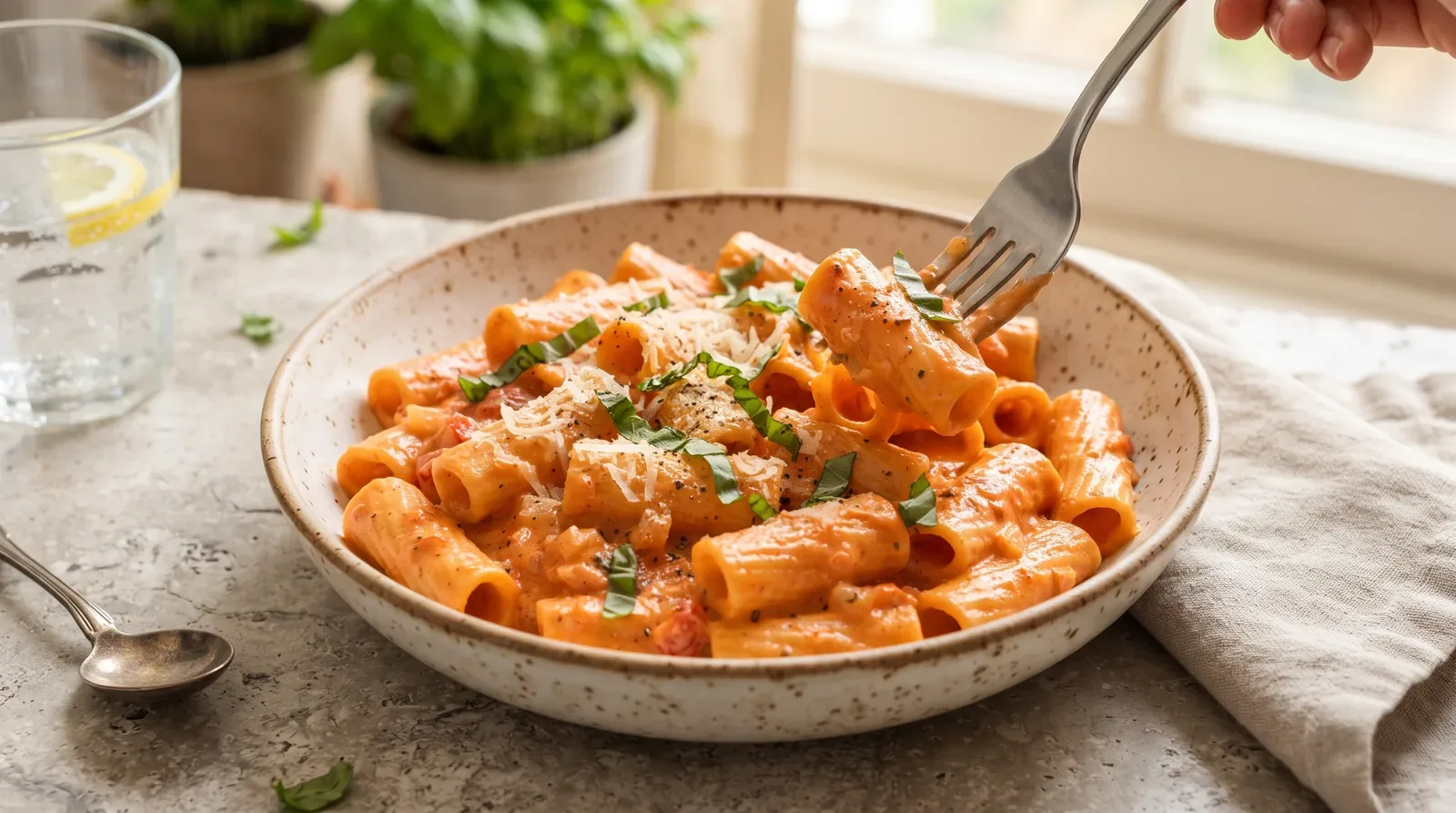
Pink sauce pasta sits right between a bright marinara and a rich cream sauce. Tomatoes give it tang and color, cream softens the acidity, and the two blend into a smooth, blush-colored sauce that coats pasta beautifully. In Italian it is often called salsa rosa, and it is one of the fastest comfort dinners you can make.
This version adds a few small steps that make a big difference. Toasting the tomato paste deepens the flavor. A little Parmesan gives the sauce body. Starchy pasta water makes it glossy, so it clings to every piece of penne instead of sliding off.
Below you will find the method in six stages, a guide to tomato-to-cream ratios, dairy swaps, add-ins and a troubleshooting table. The printable recipe at the end serves four and takes about 20 minutes.
| Question | Short answer |
|---|---|
| What is pink sauce? | A blend of tomato sauce and cream, also called rosa or salsa rosa. |
| Best ratio? | About 2 parts tomato to 1 part cream for a classic blush color. |
| Key flavor step? | Toast the tomato paste in the pan until it turns brick red. |
| Best pasta? | Penne, rigatoni or fusilli, which trap the creamy sauce. |
| Total time? | About 20 minutes, one pot and one skillet. |
What Is Pink Sauce?
Pink sauce is simply tomato sauce enriched with cream. The cream turns the red sauce pink and gives it a velvety texture. The name changes from place to place, but the idea stays the same.
Rosa sauce in Italian cooking
In Italian, rosa means pink. Salsa rosa usually refers to a tomato and cream sauce for pasta. Some Italian cooks also use the name for a cold sauce of mayonnaise and ketchup served with seafood, so do not be surprised if you see both online.
Pink sauce vs vodka sauce
Vodka sauce is a close cousin. It adds a splash of vodka to the tomato and cream base, which sharpens the flavor slightly and helps the sauce taste more rounded. Pink sauce leaves the vodka out. If you would like to try the vodka version, our vodka pasta includes a no-vodka option, too.
Pink sauce in Indian home cooking
In India, “pink sauce pasta” is a popular cafe and home dish. It is often made by mixing a tomato sauce with a white bechamel sauce, sometimes with vegetables and chili flakes. The result is similar, but a little thicker and milder. Our white sauce pasta shows how to make the bechamel half of that version.
How to Make Pink Sauce Pasta Step by Step
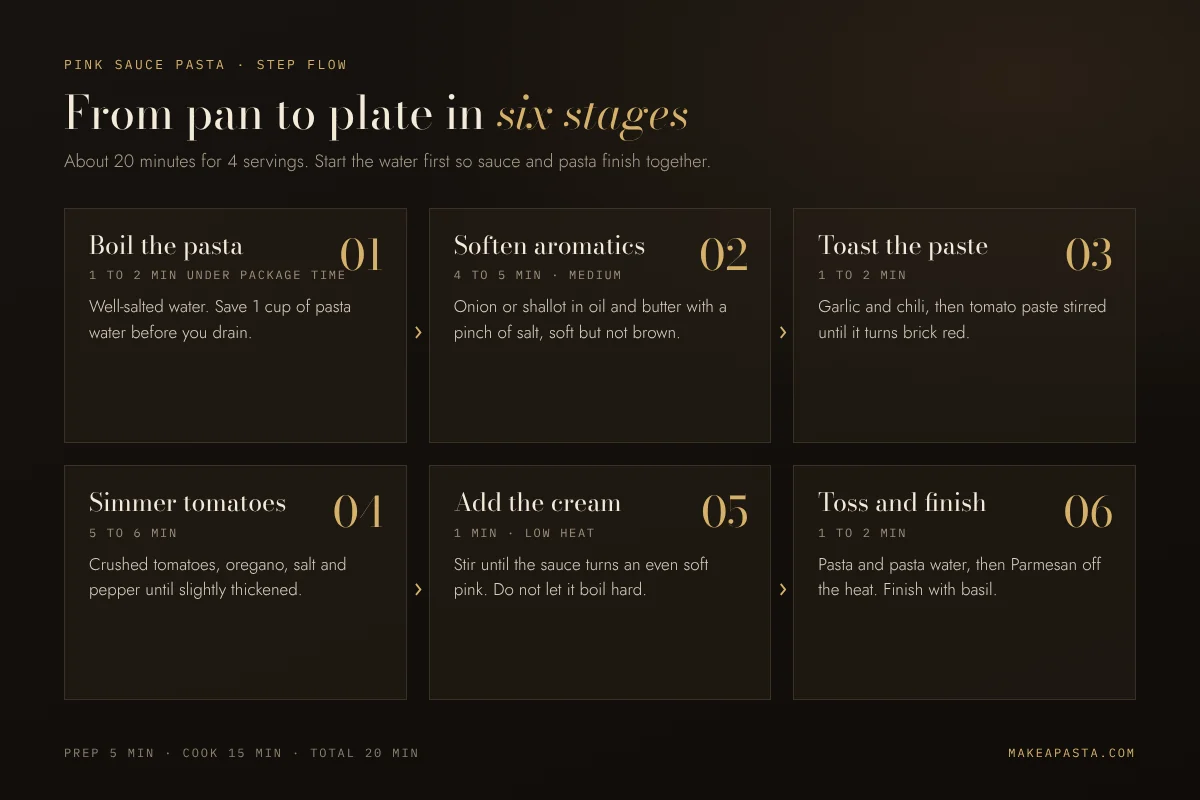
Put the water on first. The sauce takes about the same time as the pasta, so they finish together.
- 01
Stage 1: Boil the pasta
Cook the pasta in well-salted water for 1 to 2 minutes less than the package time. It will finish in the sauce. Save 1 cup of pasta water before you drain.
- 02
Stage 2: Soften the aromatics
Warm the olive oil and butter in a large skillet over medium heat. Add the onion or shallot with a pinch of salt and cook for 4 to 5 minutes until soft and see-through, but not brown.
- 03
Stage 3: Toast the tomato paste
Add the garlic and pepper flakes for 30 seconds. Stir in the tomato paste and cook it for 1 to 2 minutes, stirring often, until it darkens from bright red to brick red. This step adds a deep, savory flavor.
- 04
Stage 4: Simmer the tomatoes
Add the crushed tomatoes, oregano, salt and pepper. Simmer for 5 to 6 minutes until the sauce thickens slightly. Taste it. Add a small pinch of sugar only if the tomatoes taste very sharp.
- 05
Stage 5: Add the cream
Turn the heat to low and pour in the cream. Stir until the sauce turns an even soft pink. Warm it through for a minute, but do not let it boil hard.
- 06
Stage 6: Toss with pasta and Parmesan
Add the pasta and 1/4 cup of pasta water and toss for 1 to 2 minutes. Take the pan off the heat, add the Parmesan and toss until the sauce is glossy. Loosen with more pasta water if needed, then finish with basil.
Getting the Tomato to Cream Ratio Right
The ratio of tomato to cream decides the color, flavor and richness of the sauce. Change it to suit your taste.

Light pink: 1 part tomato to 1 part cream
This version is pale, mild and very creamy. It tastes close to an Alfredo with a hint of tomato. It works well for kids and for anyone who finds tomato sauces too acidic.
Classic pink: 2 parts tomato to 1 part cream
This is the ratio in the recipe card. The sauce is a soft blush color with a clear tomato flavor and a silky texture. It is balanced enough for almost any pasta and topping.
Deep rosa: 3 parts tomato to 1 part cream
This version is red-orange with just a touch of richness. It tastes more like a creamy marinara. It is the lightest of the three and great when you want tomato to lead. For a tomato-forward sauce with even less cream, see our creamy tomato pasta.
Choosing the Tomatoes
Canned tomatoes are the best choice for this sauce. They are picked ripe and give steady results all year.
| Tomato | Texture | Notes |
|---|---|---|
| Crushed tomatoes | Smooth with small bits | The best all-round choice; used in the recipe |
| Passata (strained tomatoes) | Silky smooth | Gives the smoothest pink sauce |
| Whole peeled tomatoes | Chunky | Crush by hand or blend; simmer a little longer |
| Marinara from a jar | Smooth, seasoned | Quick shortcut; reduce the salt and skip the oregano |
| Fresh tomatoes | Watery, variable | Use only in peak summer; peel and simmer longer |
Using tomato paste alone
If you have no canned tomatoes, you can make a quick pink sauce with tomato paste, water and cream. Our guide to pasta sauce from tomato paste explains how to build the base in 15 minutes.
Taming acidity
Some canned tomatoes taste sharper than others. Cream already softens acidity, so add sugar only if needed, and only a small pinch. A small knob of butter at the end also rounds out a sharp sauce.
Dairy Options and Swaps
Heavy cream gives the richest, most stable pink sauce, but it is not the only choice.
| Swap | Result | Tip |
|---|---|---|
| Heavy cream | Rich, silky, stable | Easiest choice; will not curdle |
| Half-and-half | Lighter, slightly thinner | Keep heat low; add 1 tablespoon of Parmesan more |
| Whole milk plus cream cheese | Creamy and lighter | Whisk 2 tablespoons of cream cheese into 2/3 cup milk |
| Mascarpone | Very rich and smooth | Use 1/3 cup and stir in off the heat |
| Coconut milk | Dairy-free, slightly sweet | Use full-fat; finish with lemon and nutritional yeast |
Why sauces curdle
Milk and light cream can split when they meet hot, acidic tomato sauce. Higher-fat dairy is more stable. If you use a lighter option, lower the heat before adding it and stir constantly. Never let the sauce boil hard after the dairy goes in.

Add-Ins and Variations
The basic pink sauce is a great base. Add protein and vegetables to make it a full meal.
Chicken pink sauce pasta
Season bite-size chicken breast pieces with salt, pepper and paprika. Brown them in the skillet first, set them aside, then build the sauce in the same pan. Return the chicken with the pasta.
Shrimp rosa
Sear peeled shrimp for 1 to 2 minutes per side, remove them and make the sauce. Add them back at the end so they stay tender. A squeeze of lemon brightens the dish.
Vegetable pink sauce pasta
Sauté sliced mushrooms, diced bell pepper or zucchini before the onion. Stir baby spinach into the finished sauce until it wilts. Peas and sweet corn are popular in Indian-style versions.
Spicy rosa
Add 1/2 teaspoon of Calabrian chili paste or a pinch more pepper flakes with the tomato paste. The cream keeps the heat gentle and warm rather than sharp.
Troubleshooting Pink Sauce
| Problem | Likely cause | Fix |
|---|---|---|
| Sauce curdled or grainy | Dairy too lean or heat too high | Use cream, add it on low heat and never boil hard |
| Too thin | Tomatoes not reduced | Simmer longer before adding cream, or add more Parmesan |
| Too thick | Pasta absorbed the sauce | Loosen with hot pasta water a tablespoon at a time |
| Too acidic | Sharp canned tomatoes | Add a pinch of sugar, a little butter or more cream |
| Bland | Not enough salt or toasting | Toast the paste well, salt the water and season to taste |
Reheating leftovers
Pink sauce thickens in the fridge as the pasta soaks it up. Reheat portions in a pan over low heat with a splash of water or milk, stirring until creamy again. Microwave in short bursts and stir between each one.
Approximate Nutrition
These are estimates for one of four servings, made with heavy cream.
| Nutrient | Amount |
|---|---|
| Calories | About 620 |
| Protein | About 18 g |
| Fat | About 29 g |
| Carbohydrates | About 75 g |
| Fiber | About 5 g |
| Sodium | About 630 mg |
Pink Sauce Pasta FAQs
What is pink sauce made of?
Pink sauce is made of tomato sauce and cream, usually with onion, garlic, tomato paste, herbs and Parmesan. The cream turns the red sauce pink and makes it smooth and velvety.
Is pink sauce the same as vodka sauce?
They are very similar. Vodka sauce adds a splash of vodka to the tomato and cream base, which sharpens and rounds the flavor. Pink sauce, or rosa sauce, leaves the vodka out.
Can I make pink sauce without heavy cream?
Yes. Use half-and-half, or whole milk with 2 tablespoons of cream cheese, for a lighter sauce. Keep the heat low so it does not curdle. Full-fat coconut milk works for a dairy-free version.
Why did my pink sauce curdle?
Lean dairy such as milk can split when it meets hot, acidic tomatoes. Use heavy cream, or lower the heat before adding lighter dairy, and never let the sauce boil hard after the dairy goes in.
What pasta is best for pink sauce?
Short tubes and spirals like penne, rigatoni and fusilli hold the creamy sauce best. Long pasta like fettuccine or spaghetti also works if you toss it well with pasta water.
How do I make pink sauce thicker?
Simmer the tomatoes a few minutes longer before adding the cream, and stir in a little more Parmesan at the end. Tossing the pasta in the sauce with a splash of starchy pasta water also helps it cling.
Final Thoughts
The rule to remember
Pink sauce pasta is fast, but a few small steps make it great. Toast the tomato paste until brick red, simmer the tomatoes briefly, then add the cream on low heat. Finish the pasta in the pan with Parmesan and pasta water, so the sauce turns glossy. Adjust the tomato to cream ratio to suit your taste, and you have a dinner you can make on any night. On a slower day, try a deeper tomato base from our homemade spaghetti sauce and finish it with cream the same way.
The recipe
Pink Sauce Pasta
A 20-minute pink sauce pasta for four: onion and garlic, toasted tomato paste, crushed tomatoes and heavy cream simmered into a creamy rosa sauce with Parmesan, basil and pasta water, tossed with penne.
Ingredients
Instructions
- Bring a large pot of salted water to a boil and cook the pasta for 1 to 2 minutes less than the package time. Save 1 cup of pasta water, then drain.
- While the water heats, warm the olive oil and butter in a large skillet over medium heat. Add the onion with a pinch of salt and cook for 4 to 5 minutes until soft and translucent.
- Add the garlic and pepper flakes and cook for 30 seconds. Stir in the tomato paste and cook for 1 to 2 minutes, stirring, until it darkens to brick red.
- Add the crushed tomatoes, oregano, salt and pepper. Simmer for 5 to 6 minutes, stirring now and then, until slightly thickened. Taste and add the sugar only if the sauce is sharp.
- Lower the heat to low and pour in the cream. Stir until the sauce turns an even pink and warm it through for 1 minute without boiling hard.
- Add the drained pasta and 1/4 cup of pasta water and toss over medium-low heat for 1 to 2 minutes. Take the pan off the heat, add the Parmesan and toss until glossy, adding more pasta water if needed.
- Taste for salt and pepper, scatter with basil and serve with extra Parmesan.
Notes
Lighter version: use half-and-half or whole milk with 2 tablespoons of cream cheese in place of the heavy cream, and keep the heat low so it does not curdle. Dairy-free: use full-fat coconut milk or cashew cream and finish with nutritional yeast. For a spicier rosa, add 1/2 teaspoon of Calabrian chili paste with the tomato paste. Leftovers keep 3 to 4 days in the fridge; reheat gently with a splash of water or milk. Nutrition is approximate: about 620 calories, 29 g fat, 75 g carbohydrates, 5 g fiber and 18 g protein per serving.