
In this guide
Baked feta pasta became famous for a simple reason: it is almost too easy. You put a block of feta in a dish, surround it with cherry tomatoes and olive oil, and roast it until everything turns soft and jammy. Stir it together with pasta and you have a creamy, tangy tomato sauce with almost no work.
The original is good, but it has a few weak spots. The sauce can turn grainy or oily, the flavor can feel one-note, and the feta often comes out pale. This version fixes each of those. It adds shallot and lemon for depth, uses a short broil for color, and stirs in starchy pasta water so the sauce stays silky.
Below you will find the method in six stages, the upgrades that make the biggest difference, a feta buying guide, add-ins and a troubleshooting table. The printable recipe at the end serves four.
| Question | Short answer |
|---|---|
| Which feta? | A block packed in brine, ideally sheep’s milk or a sheep and goat blend. |
| Oven temperature? | 400°F (200°C) for 30 to 35 minutes, plus an optional 2 to 3 minute broil. |
| Biggest upgrade? | Starchy pasta water, which turns the feta into a smooth sauce instead of crumbs. |
| Other upgrades? | Shallot, chili, lemon zest and juice, fresh basil and a handful of spinach. |
| Total time? | About 45 minutes, mostly hands-off oven time. |
Where the Viral Feta Pasta Came From
The dish started in Finland, where a recipe for “uunifetapasta,” which means oven-baked feta pasta, became a hit on a Finnish food blog in 2019. In early 2021 it spread around the world on TikTok, and home cooks everywhere were roasting blocks of feta.
Why it caught on
The method needs one dish, few ingredients and no real skill. Roasting does the work that a pan sauce usually needs: it concentrates the tomatoes, softens the garlic and melts the cheese. The result looks dramatic on video and tastes much better than the effort suggests.
Where the original falls short
Feta is salty and tangy but not a smooth melting cheese. Without enough liquid, it can turn grainy or break into oily curds when stirred. The original also leans on just tomatoes, garlic and feta, so the flavor can taste flat after a few bites. These are easy fixes.
How to Make Baked Feta Pasta Step by Step
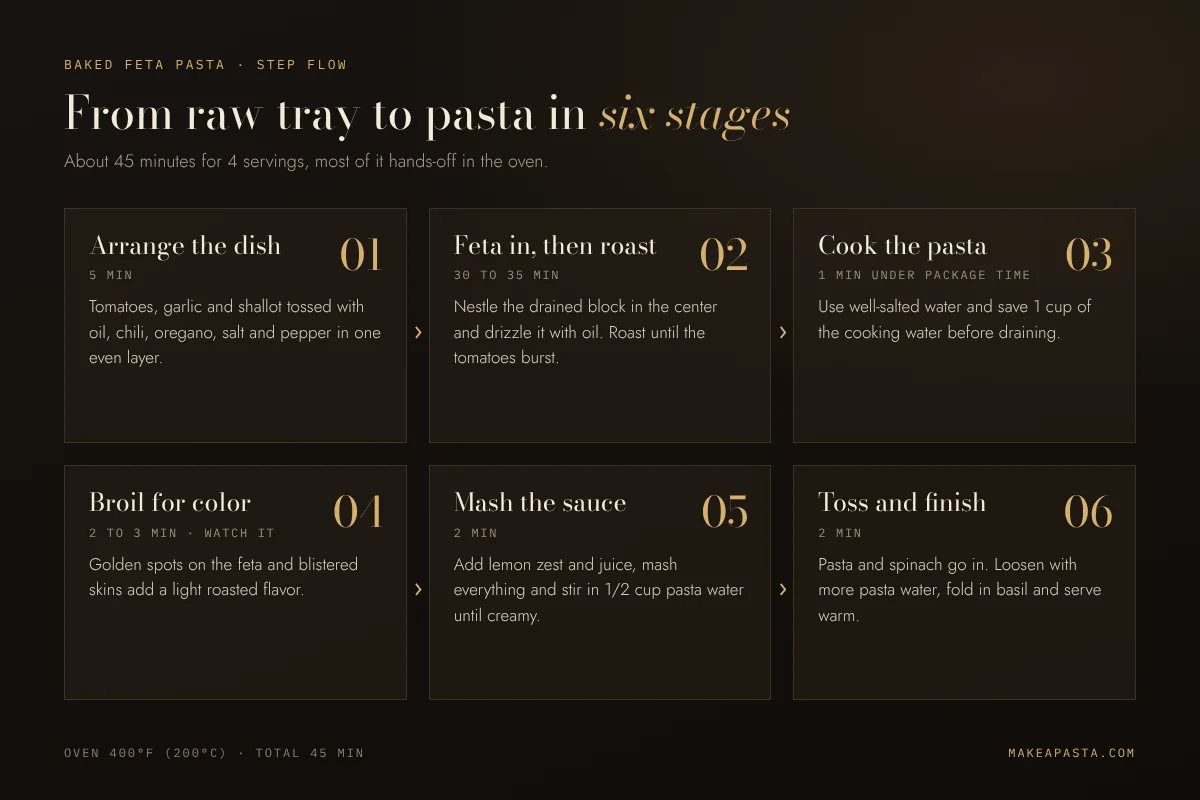
Start the oven first. The pasta cooks while the dish roasts, so everything finishes at about the same time.
- 01
Stage 1: Arrange the dish
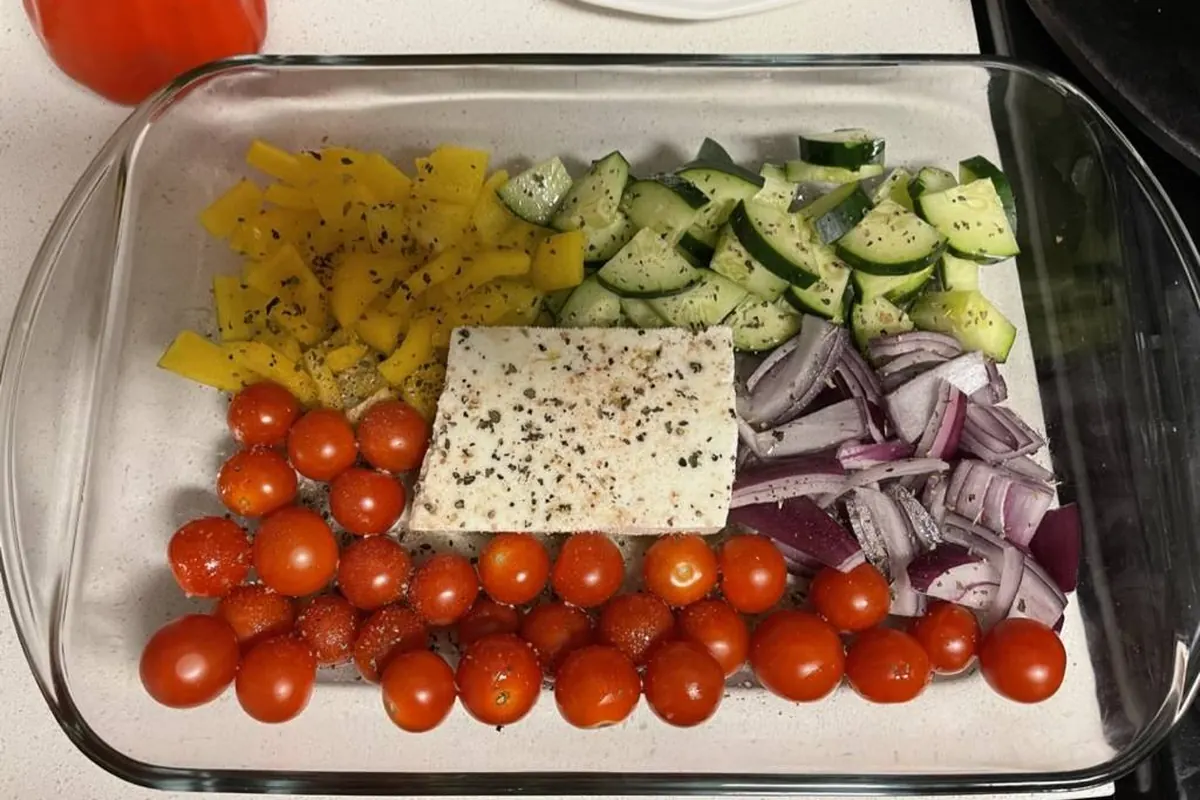
Heat the oven to 400°F (200°C). Toss the tomatoes, smashed garlic and sliced shallot in a 9 by 13 inch dish with most of the olive oil, the pepper flakes, oregano, salt and pepper. Spread them in one even layer so they roast, not steam.
- 02
Stage 2: Add the feta and roast
Nestle the drained block of feta in the center. Drizzle it with the last of the oil and season the top. Roast for 30 to 35 minutes, until the tomatoes have burst and slumped and the feta is soft all the way through.
- 03
Stage 3: Cook the pasta
While the dish roasts, cook the pasta in well-salted water for 1 minute less than the package time. Save 1 cup of the cooking water before you drain it. That water is the key to a smooth sauce.
- 04
Stage 4: Broil for color
For the last 2 to 3 minutes, switch the oven to broil. Stay close and watch. You want golden spots on the feta and a few blistered tomato skins, which add a light, savory roasted flavor.
- 05
Stage 5: Mash and stir the sauce
Take the dish out and add the lemon zest and juice. Mash the feta, garlic and tomatoes with a fork, then stir in 1/2 cup of pasta water. Keep stirring until the sauce turns creamy and blush-orange.
- 06
Stage 6: Toss and finish
Add the pasta and the spinach, if using, and stir until the leaves wilt and the sauce coats every piece. Add more pasta water as needed. Fold in torn basil, taste for salt and serve warm.
The Upgrades That Make It Better
These changes keep the spirit of the viral recipe but fix its weak spots. You can use all of them or pick a few.
Shallot and more garlic
A sliced shallot roasts down until sweet and jammy. Four smashed garlic cloves turn soft enough to mash straight into the sauce. Together they add depth that tomatoes and feta alone cannot give.
Lemon zest and juice
Feta and roasted tomatoes are rich and salty. A teaspoon of lemon zest and a tablespoon of juice cut through that richness and make the sauce taste fresh. Add them after roasting so the flavor stays bright.
A short broil
Feta does not brown much at 400°F. A 2 to 3 minute broil at the end gives it golden edges and a slightly toasty taste. Watch it closely, because the broiler works fast.
Pasta water for a silky sauce
This is the most important fix. Starchy pasta water helps the cheese, oil and tomato juice blend into one smooth sauce. Without it, the feta tends to stay crumbly and the oil sits on top. Add it a little at a time until the sauce looks creamy.
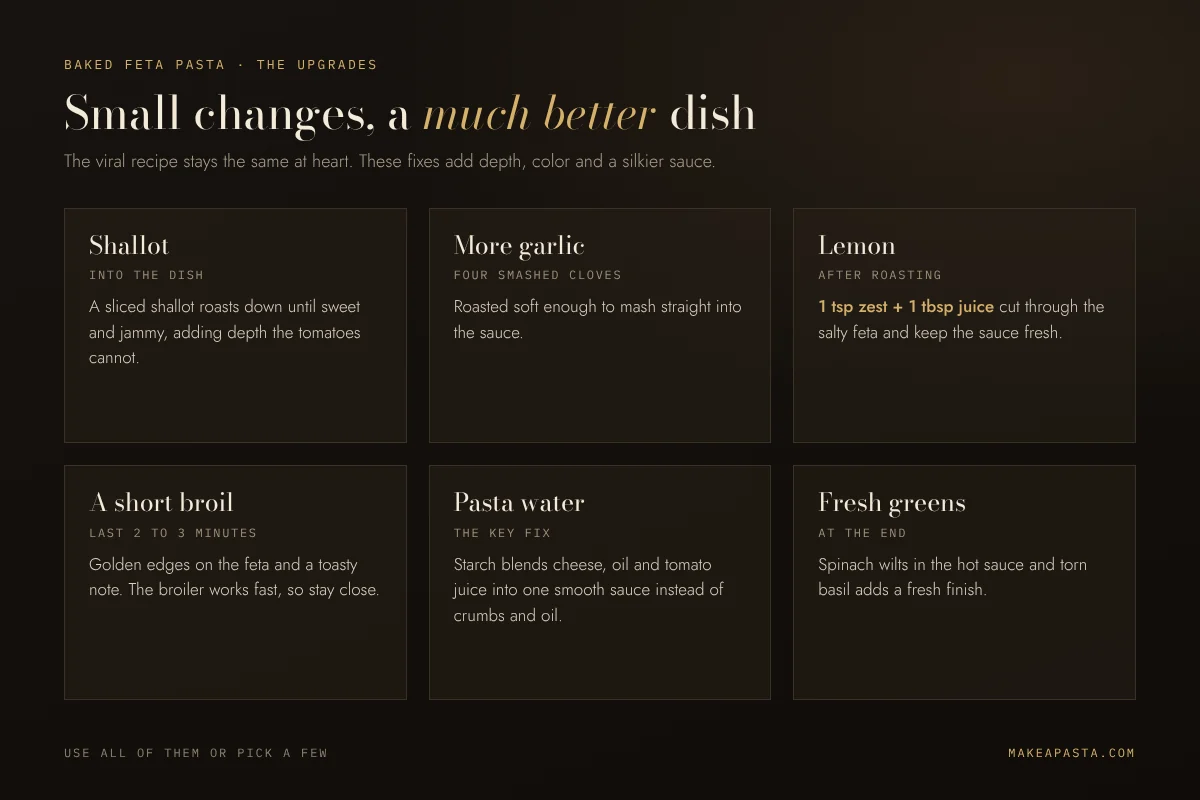
Fresh basil and greens
Roasting dulls the herbs, so add fresh basil at the end. A couple of handfuls of baby spinach wilt in the hot pasta and add color without extra work. If you love herby sauces, our pesto pasta shows how far fresh basil can go.
Choosing the Right Feta
The type of feta changes the sauce more than any other ingredient. Here is how the common options compare.
| Feta type | Flavor | How it melts |
|---|---|---|
| Greek sheep’s milk feta in brine | Tangy, rich, slightly peppery | Soft and creamy; the best choice |
| Sheep and goat blend in brine | Tangy and balanced | Creamy and smooth |
| Cow’s milk feta block | Mild, less tangy | Melts well but tastes milder |
| Pre-crumbled feta | Drier, often saltier | Stays grainy; avoid for this dish |
Why block feta in brine works best
Feta stored in brine stays moist and soft, so it turns creamy in the oven. Pre-crumbled feta is drier and usually coated with anti-caking agents, which stop it melting smoothly. Buy the block, drain it and pat it dry just before it goes in the dish.
Controlling the salt
Feta is salty, and so is the pasta water. Taste the sauce before adding any extra salt at the end. If your feta is very salty, rinse the block quickly under cold water before baking.
Best Pasta Shapes
Short shapes with ridges, curls or hollows hold the chunky sauce best.
| Pasta | Why it works |
|---|---|
| Cavatappi | Spiral tubes trap sauce and bits of tomato |
| Rigatoni | Wide ridged tubes hold the creamy sauce inside |
| Penne | Easy to find and sturdy |
| Orecchiette | Small cups catch the tomato pieces |
| Gluten-free short pasta | Works well; cook to the low end of the package time |
Cook it slightly firm
Because the pasta is stirred into a hot sauce and sits for a minute, cook it 1 minute short of the package time. It will finish softening in the dish without turning mushy.
Add-Ins and Variations
The base dish is easy to change. Add these after roasting unless noted.
Add protein
Stir in shredded rotisserie chicken, cooked shrimp or a drained can of chickpeas. Chickpeas can also roast in the dish with the tomatoes, where they turn slightly crisp.
Add more vegetables
Roast sliced zucchini, red bell pepper or red onion alongside the tomatoes. Leave space between the pieces so they roast instead of steam. Kalamata olives or capers add a briny lift.
Swap the cheese
Goat cheese gives a softer, tangier sauce. Boursin or another herb cheese melts very creamily. A ball of fresh mozzarella torn over the top in the last 5 minutes adds stretch. For a fully smooth cheese sauce, see our guide to cheese sauce for pasta.
Out of season tomatoes
Cherry and grape tomatoes are good all year, which is one reason this dish works in winter. For a deeper, richer version, try our creamy tomato pasta, which builds a similar blush sauce on the stove.
Troubleshooting Baked Feta Pasta
| Problem | Likely cause | Fix |
|---|---|---|
| Grainy sauce | Not enough liquid, or pre-crumbled feta | Stir in more hot pasta water; use block feta next time |
| Oily sauce | Too much oil and too little starch | Add pasta water and stir hard until it blends |
| Too salty | Salty feta plus salted water | Add lemon juice, more tomatoes or unsalted pasta water |
| Watery sauce | Tomatoes crowded or underroasted | Roast longer in a wider dish so juices reduce |
| Bland | Not enough aromatics or acid | Add lemon, pepper flakes, garlic and fresh basil |
Making it ahead
Baked feta pasta tastes best fresh, while the sauce is warm and loose. Leftovers firm up in the fridge. Reheat them in a pan with a splash of water, or eat them cold as a feta pasta salad.
Approximate Nutrition
These are estimates for one of four servings without the optional add-ins.
| Nutrient | Amount |
|---|---|
| Calories | About 600 |
| Protein | About 18 g |
| Fat | About 31 g |
| Carbohydrates | About 60 g |
| Fiber | About 4 g |
| Sodium | About 950 mg |
Baked Feta Pasta FAQs
What kind of feta is best for baked feta pasta?
Use a block of feta packed in brine, ideally Greek sheep’s milk feta or a sheep and goat blend. It turns soft and creamy in the oven. Avoid pre-crumbled feta, which is drier and coated with anti-caking agents, so it stays grainy.
Why is my baked feta pasta grainy?
Feta needs liquid to become a smooth sauce. Stir in hot pasta water a little at a time and keep mixing until it turns creamy. Pre-crumbled feta and underbaked feta also cause a grainy texture.
What temperature should I bake feta pasta at?
Bake it at 400°F (200°C) for 30 to 35 minutes, until the tomatoes burst and the feta is soft throughout. For golden color, broil for the last 2 to 3 minutes and watch closely.
Can I make baked feta pasta without cherry tomatoes?
Cherry or grape tomatoes work best because they burst and release sweet juice. Large tomatoes cut into chunks will work, but they release more water, so use a wider dish and roast a little longer.
Can I add chicken or shrimp to baked feta pasta?
Yes. Stir in cooked shredded chicken or cooked shrimp at the end with the pasta. Raw shrimp can go into the dish for the last 6 to 8 minutes of roasting until pink and opaque.
How long does baked feta pasta keep?
Leftovers keep for 3 to 4 days in a covered container in the fridge. Reheat gently in a pan with a splash of water to loosen the sauce, or serve it cold as a pasta salad.
Final Thoughts
The rule to remember
The viral baked feta pasta deserves its fame, and a few small changes make it even better. Use block feta in brine, give the tomatoes room to roast, and add shallot, lemon and fresh basil for depth. Most of all, stir in starchy pasta water so the feta becomes a silky sauce. For another easy tomato base, our homemade spaghetti sauce is worth a slow Sunday.
The recipe
Baked Feta Pasta
An improved take on the viral baked feta pasta for four: block feta roasted with cherry tomatoes, garlic, shallot and chili, broiled for color, then stirred with lemon, basil and pasta water into a silky sauce.
Ingredients
Instructions
- Heat the oven to 400°F (200°C). Put the tomatoes, garlic and shallot in a 9 by 13 inch baking dish. Add most of the olive oil, the pepper flakes, oregano, salt and pepper and toss.
- Nestle the drained feta in the center. Drizzle the rest of the olive oil over the cheese and sprinkle it with a little more oregano and pepper.
- Roast for 30 to 35 minutes, until the tomatoes burst and the feta is soft and pale gold at the edges.
- While the dish roasts, cook the pasta in salted water for 1 minute less than the package time. Scoop out 1 cup of pasta water, then drain.
- For more color, switch the oven to broil for the last 2 to 3 minutes and watch closely until the feta and tomato skins have a few golden spots.
- Take the dish out. Add the lemon zest and juice and mash the garlic, feta and tomatoes with a fork. Stir in 1/2 cup of pasta water until the sauce turns creamy and pink-orange.
- Add the pasta and spinach, if using, and stir until the spinach wilts and the sauce coats the pasta. Loosen with more pasta water as needed. Fold in the basil, taste for salt and serve warm.
Notes
Use block feta packed in brine, not pre-crumbled feta, which contains anti-caking agents and does not melt smoothly. For a milder sauce, swap half the feta for a 4-ounce log of goat cheese or a ball of fresh mozzarella torn on top. Leftovers keep 3 to 4 days in the fridge; reheat with a splash of water or eat cold as a pasta salad. Nutrition is approximate: about 600 calories, 31 g fat, 60 g carbohydrates, 4 g fiber and 18 g protein per serving.