
In this guide
- Why Your Spaghetti Sauce Is Thin
- 7 Ways to Thicken Spaghetti Sauce
- Spaghetti Sauce Thickening Methods Compared
- Common Thickening Mistakes to Avoid
- How to Thicken Spaghetti Sauce in a Slow Cooker, Meat Sauce or Jar
- How Thick Should Spaghetti Sauce Be?
- Storing and Reheating Thickened Sauce
- Thickening Spaghetti Sauce FAQs
- The Best Way to Thicken Spaghetti Sauce
- Quick Method Card
The fastest way to thicken spaghetti sauce is to simmer it uncovered in a wide pan for 20 to 45 minutes, stirring often, until the extra water cooks off. If you are short on time, a spoonful of tomato paste or a small cornstarch slurry will do the job in under 5 minutes. Both routes keep the tomato flavor bright instead of dulling it.
Thin sauce is a common complaint with any homemade spaghetti sauce. It is easy to fix once you know where the water came from.
Below are 7 ways to thicken spaghetti sauce, with exact amounts, timings and storage tips.
Why Your Spaghetti Sauce Is Thin
Runny sauce comes down to too much water and too little time to drive it off.
- Fresh tomatoes. Ripe tomatoes are roughly 94 to 95 percent water. A sauce made from fresh fruit needs a longer cook than one made from canned.
- A short simmer. Ten minutes warms the sauce but does not reduce it. Most tomato sauces need at least 20 to 30 minutes to lose noticeable volume.
- A lid on the pot. A covered pot traps steam. The water drips back in, so the sauce never thickens.
- Watery canned tomatoes. Some brands pack tomatoes in thin juice rather than puree.
- Wet pasta. Poorly drained pasta sheds water and leaves a pink puddle.
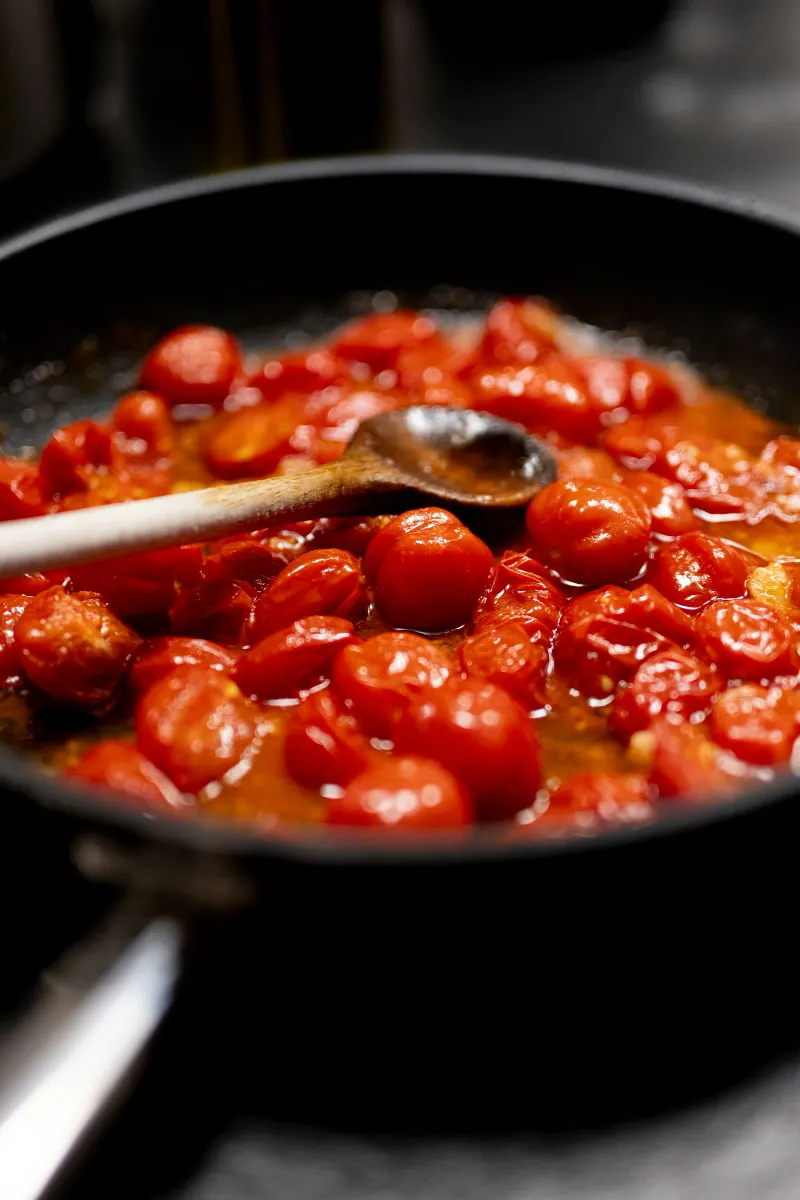
7 Ways to Thicken Spaghetti Sauce
Reduction and tomato paste build flavor. Starches and cheese mainly add body, so save them for quick rescues.
1. Simmer Uncovered to Reduce
Reduction is the classic fix. As water evaporates, the tomato sugars, acids and savory compounds concentrate.
- Move the sauce to your widest pan. A 12-inch skillet exposes far more surface than a tall stockpot.
- Hold a gentle simmer over medium-low heat. A hard boil splatters and scorches.
- Leave the lid off. Stir every 5 minutes, scraping the bottom so the sugars do not burn.
- Cook for 20 to 60 minutes, depending on how thin you started. Most batches of 4 to 6 cups thicken well in 30 to 45 minutes.
Season at the end, because salt concentrates as the sauce reduces.
2. Stir in Tomato Paste
Tomato paste is tomatoes already cooked down to a concentrate, so it adds body and deeper flavor at once. Use 1 to 2 tablespoons (about 16 to 32 g) for every 3 to 4 cups of sauce.
Fry it first in a teaspoon of olive oil for 1 to 2 minutes, until it darkens a shade and smells sweet. That browning removes the raw, tinny edge. Stir it in and simmer for 5 minutes.
3. Use Pasta Water and Finish the Pasta in the Sauce
This fixes the watery plate at the source. Pasta sheds starch into its cooking water, and that starch helps fat and liquid bind into a glossy coating.
- Cook the spaghetti about 1 to 2 minutes short of the package time.
- Scoop out 1 cup (240 ml) of the starchy cooking water before draining.
- Add the pasta straight to the simmering sauce.
- Toss over medium heat for 1 to 2 minutes, adding pasta water 2 tablespoons at a time, until the sauce clings to every strand.
The pasta soaks up liquid and releases more starch as it finishes. Cooking it in 2 quarts of water per pound makes the water even starchier. The same move makes vodka pasta silky rather than oily.
4. Add a Cornstarch Slurry
A slurry is the quickest true thickener. Cornstarch has roughly twice the thickening power of flour, has no taste of its own, and works in 1 to 2 minutes. Use 1 tablespoon cornstarch (about 8 g) mixed with 2 tablespoons cold water for every 2 to 3 cups of sauce.
Always mix cornstarch with cold water first; dry starch dropped into hot sauce forms lumps that will not dissolve. Pour the slurry in while stirring, then hold the sauce at a gentle simmer for 1 to 2 minutes. Starch granules start to swell around 140°F and finish thickening near the boil, so the sauce must bubble briefly to work fully.
Arrowroot alternative: arrowroot powder works the same way at about the same amount. It thickens at a lower heat, gives a clearer finish and holds up better in the freezer. It turns slimy with dairy, though, so skip it in cream sauces.

5. Make a Quick Roux With Butter and Flour
Flour thickens more gently than cornstarch and gives a soft, velvety body. Cooking it in fat first is the key, because raw flour tastes pasty.
Melt 1 tablespoon butter (14 g) in a small pan. Whisk in 1 tablespoon all-purpose flour (8 g) and cook, stirring, for 1 to 2 minutes until it smells nutty. Ladle in about 1/2 cup of hot sauce and whisk smooth, then stir that mixture back into the pot. This amount thickens 2 to 3 cups of sauce. Simmer for at least 5 minutes so the flour taste cooks out.
A roux suits meat sauces and is the base of many a creamy pasta sauce.
6. Stir in Grated Parmesan or Pecorino
Hard aged cheese thickens and seasons at once. Add 1/4 to 1/2 cup (about 20 to 40 g) of finely grated Parmesan or Pecorino Romano per 4 cups of sauce.
Take the pan off the heat first. Stir the cheese in a handful at a time. High heat makes cheese proteins clump and squeeze out fat, which leaves strings and an oily film. Cheese is salty, so taste before adding more salt. This trick also rescues a loose fettuccine Alfredo.
7. Blend in Vegetables or Add Breadcrumbs
Stir in 1/2 cup of mashed or blended cooked vegetables per 4 cups of sauce. Roasted red pepper, carrot, butternut squash and white beans all work. You can also use an immersion blender to puree a third of the sauce itself, which thickens it with no new ingredients.
Or add fine dry breadcrumbs: 2 tablespoons per 2 cups of sauce and simmer for 5 minutes. They soak up liquid and disappear into the sauce.
For cream-based sauces, a little extra heavy cream, simmered for 3 to 5 minutes, adds body. An egg yolk tempered with a ladle of warm sauce and stirred in off the heat also works.
Spaghetti Sauce Thickening Methods Compared
| Method | Time | Flavor Effect | Best For | Ratio |
|---|---|---|---|---|
| Simmer and reduce | 20 to 60 min | Deeper, sweeter | Any tomato sauce | No additions |
| Tomato paste | 5 to 7 min | Richer tomato taste | Marinara, meat sauce | 1 to 2 tbsp per 3 to 4 cups |
| Pasta water and finishing | 2 min | Neutral, glossy | Every pasta dish | 2 tbsp at a time, up to 1 cup |
| Cornstarch slurry | 2 to 3 min | Neutral | Last-minute fixes | 1 tbsp + 2 tbsp water per 2 to 3 cups |
| Butter and flour roux | 7 to 10 min | Mild, slightly rich | Meat and creamy sauces | 1 tbsp each per 2 to 3 cups |
| Parmesan or Pecorino | 1 to 2 min | Salty, savory | Finishing, cream sauces | 1/4 to 1/2 cup per 4 cups |
| Vegetables or breadcrumbs | 5 min | Sweeter, earthier | Chunky and family sauces | 1/2 cup puree or 2 tbsp crumbs |
Common Thickening Mistakes to Avoid
- Too much starch. Adding a second and third slurry turns sauce gluey and dull. Add one dose, wait 2 minutes, then judge.
- Boiling cornstarch too long. Long, hard boiling and heavy stirring break the swollen starch granules, and the sauce thins out again. Simmer 1 to 2 minutes, then lower the heat.
- Raw flour taste. Flour stirred in dry, or not simmered long enough, tastes like paste. Cook it in fat first and simmer for at least 5 minutes.
- Scorching. Tomato sugars burn on the pan bottom. Keep the heat low and scrape as you stir.
How to Thicken Spaghetti Sauce in a Slow Cooker, Meat Sauce or Jar
Slow Cooker Sauce
Slow cookers trap moisture. Remove the lid for the last 1 to 2 hours on high, or prop it open with a wooden spoon. For a faster fix, stir in a cornstarch slurry and cook on high for 15 to 20 minutes, since slow cookers rarely reach a full boil.
Meat Sauce
Brown the meat well and drain excess fat before adding tomatoes. Tomato paste and a long uncovered simmer suit meat sauce best.
Jarred Sauce
Pour store-bought sauce into a wide skillet and simmer uncovered for 10 to 15 minutes. A tablespoon of fried tomato paste and a handful of Parmesan make it taste closer to scratch. You can find more ideas in our pasta recipes collection.

How Thick Should Spaghetti Sauce Be?
Good spaghetti sauce coats the back of a spoon and clings to pasta without pooling.
- Spoon test. Dip a spoon and run your finger across the back. The line should hold for a few seconds.
- Pan test. Drag a spoon across the bottom of the pan. The sauce should leave a clear trail that slowly closes.
Remember that sauce thickens as it cools and after it meets the pasta. Stop just before it looks perfect in the pot. Lighter sauces, such as pesto pasta, are meant to be looser and rely on pasta water instead.
Storing and Reheating Thickened Sauce
Refrigerate sauce within 2 hours of cooking, in shallow airtight containers. Under FoodSafety.gov guidance, cooked sauces with meat or vegetables keep for 3 to 4 days in the fridge. Frozen, they hold best quality for about 2 to 3 months.
Your thickening method matters for freezing. Sauces thickened by reduction, tomato paste or pureed vegetables freeze and thaw well. Cornstarch-thickened sauce freezes poorly: as it thaws, the starch can turn spongy and weep water. For freezing, thicken by reduction, or freeze it thin and add a slurry after reheating.
Reheat sauce to 165°F all the way through, loosening it with a splash of water if needed.
Thickening Spaghetti Sauce FAQs
What is the quickest way to thicken spaghetti sauce?
A cornstarch slurry is the fastest option. Mix 1 tablespoon cornstarch with 2 tablespoons cold water, stir it into 2 to 3 cups of simmering sauce, and cook for 1 to 2 minutes. Tomato paste is nearly as fast and adds more flavor than starch does.
Does simmering spaghetti sauce make it thicker?
Yes. Simmering uncovered lets water evaporate, which thickens the sauce and concentrates its flavor. Use a wide pan, keep the heat at a gentle simmer, and stir every few minutes. Most batches thicken in 20 to 45 minutes. Keeping the lid on traps steam and stops the sauce from reducing.
Can I use flour instead of cornstarch to thicken sauce?
Yes, but you need about twice as much flour, and it must be cooked. Make a roux with equal parts butter and flour, cook it for 1 to 2 minutes, then whisk in hot sauce. Simmer at least 5 minutes afterward so the raw flour flavor disappears.
Why is my spaghetti sauce watery on the plate?
Water usually comes from wet pasta that was not finished in the sauce. Drain the pasta well, then toss it in the simmering sauce for 1 to 2 minutes with a little starchy pasta water. The starch binds the liquid so the sauce clings instead of pooling.
Does tomato paste thicken spaghetti sauce?
Yes. Tomato paste is a concentrated tomato product, so it adds body and deeper flavor at once. Use 1 to 2 tablespoons for every 3 to 4 cups of sauce. Fry it in a little oil for 1 to 2 minutes first to remove its raw, metallic taste.
Can I freeze sauce thickened with cornstarch?
You can, but the texture often suffers. Cornstarch gels tend to turn spongy and release water after thawing. For sauces you plan to freeze, thicken by reduction or tomato paste instead. Another option is to freeze the sauce thin and add a fresh slurry when you reheat it.
The Best Way to Thicken Spaghetti Sauce
Start with an open pan and time, because reduction gives the best flavor. Add tomato paste for fast depth, and always finish the pasta in the sauce. Keep cornstarch, roux, cheese and vegetables for quick rescues.
Quick method
Thicken Sauce With a Cornstarch Slurry
A fast, flavor-neutral fix for thin tomato or meat sauce in about 5 minutes.
Ingredients
Instructions
- Heat the sauce. Bring the sauce to a gentle simmer in a wide pan over medium heat.
- Make the slurry. In a small bowl, stir the cornstarch into the cold water until completely smooth.
- Stir it in. Pour the slurry into the sauce in a thin stream while stirring constantly.
- Simmer briefly. Let the sauce bubble gently for 1 to 2 minutes until glossy and thickened.
- Check and season. Do the spoon test, then taste and adjust the salt before serving.
Notes
If it is still thin after 2 minutes, add a half batch of slurry. Avoid long, hard boiling, which can thin the sauce again.