In this guide
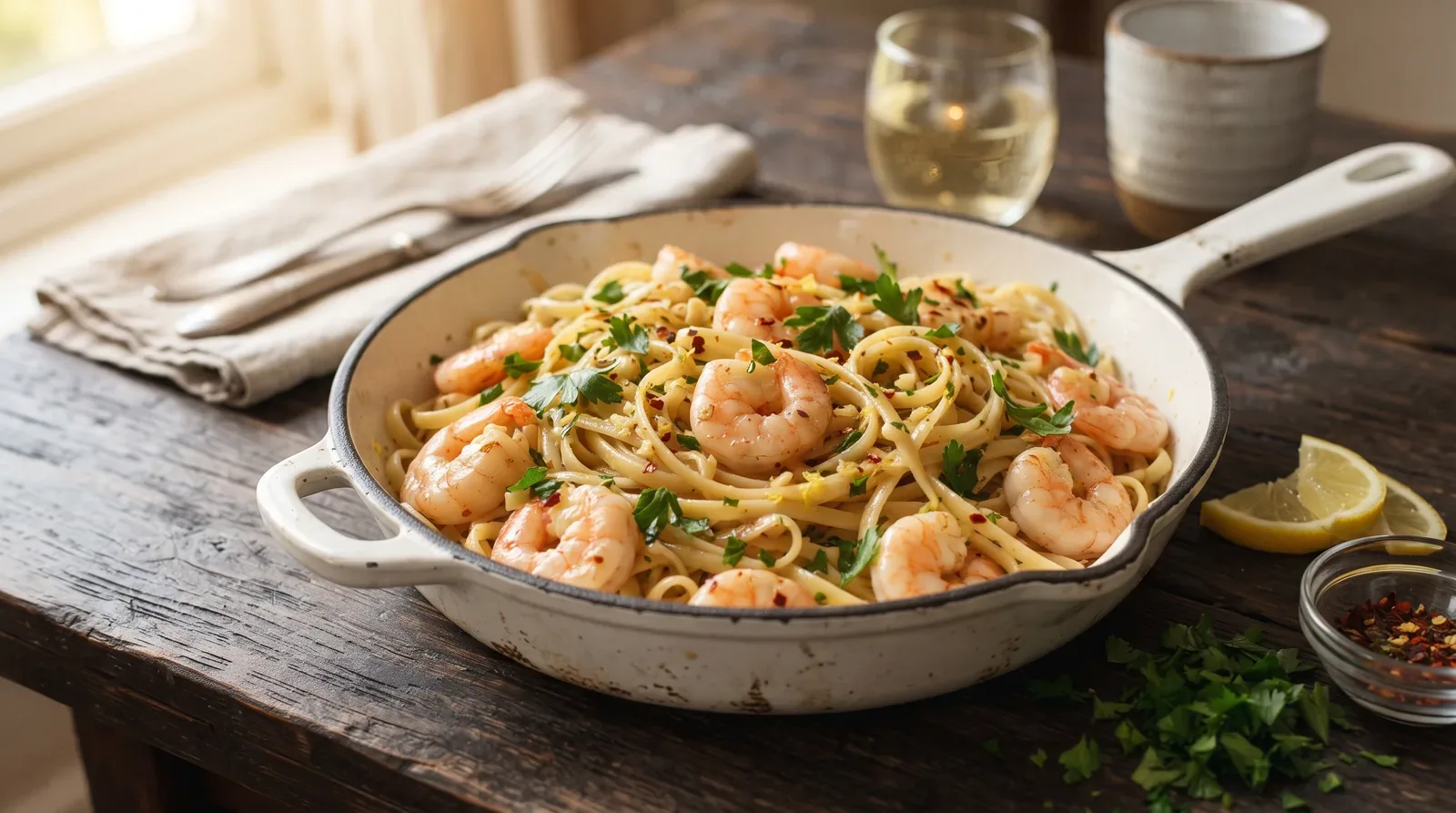
Shrimp scampi pasta is one of those dishes that tastes far more special than the effort it takes. Shrimp sear in olive oil, garlic and shallot soften in the same pan, white wine lifts the browned bits, and cold butter turns it all into a glossy, lemony sauce. Toss in linguine and dinner is ready in about 30 minutes.
The trick is timing. Shrimp overcook in seconds, garlic burns quickly, and butter sauces split if they get too hot. This guide shows you how to manage all three, so the shrimp stay tender and the sauce clings to every strand.
You will find the method in six stages, a shrimp buying guide, wine choices and swaps, variations and a troubleshooting table. The printable recipe at the end serves four.
| Question | Short answer |
|---|---|
| Which shrimp? | Large, 21 to 25 or 26 to 30 per pound, peeled and deveined. Dry them well. |
| Which wine? | A dry, crisp white you would drink, such as Pinot Grigio or Sauvignon Blanc. |
| Key technique? | Sear shrimp briefly, remove them, build the sauce, then add cold butter off the heat. |
| Which pasta? | Linguine is classic. Spaghetti, angel hair or bucatini also work. |
| Total time? | About 30 minutes, start to finish. |
What Is Shrimp Scampi?
In Italy, scampi are langoustines, small lobster-like shellfish. Italian-American cooks often used shrimp instead and kept the old name, so “shrimp scampi” became the name of a dish rather than an ingredient. Today it means shrimp cooked with garlic, butter or olive oil, white wine and lemon, often served over pasta.
Scampi vs garlic shrimp pasta
A plain garlic shrimp pasta relies mostly on olive oil and garlic. Scampi adds two more layers: white wine for acidity and depth, and butter for a rounded, silky sauce. If you want the faster, simpler cousin, our garlicky shrimp pasta is ready in 20 minutes.
The balance of the sauce
The sauce is a small emulsion of wine, lemon, pasta water and butter. Starch from the pasta water holds the butter and liquid together. When the balance is right, the sauce looks glossy and coats the pasta without pooling on the plate.
How to Make Shrimp Scampi Pasta Step by Step
Have every ingredient chopped and measured before the pasta goes in the water. Once the shrimp hit the pan, the cooking moves fast.
- 01
Stage 1: Dry and season the shrimp
Pat the shrimp very dry with paper towels. Wet shrimp steam instead of sear and leave a watery pan. Season them with salt and pepper just before cooking.
- 02
Stage 2: Start the pasta
Cook the linguine in well-salted water for 2 minutes less than the package time. It will finish cooking in the sauce. Scoop out 1 cup of pasta water before you drain, because that starchy water is what makes the sauce glossy.
- 03
Stage 3: Sear the shrimp, then remove them
Heat 2 tablespoons of olive oil over medium-high heat. Lay the shrimp in one layer and leave them alone for 1 to 2 minutes until the undersides turn pink with golden spots. Flip and cook 30 to 60 seconds more, then move them to a plate. They should still look a little translucent in the center.
- 04
Stage 4: Soften the garlic and shallot
Lower the heat to medium. Add the rest of the oil and 1 tablespoon of butter, then the sliced garlic, shallot and pepper flakes. Stir for 1 to 2 minutes until the garlic is fragrant and pale gold. Brown garlic tastes bitter, so pull the pan off the heat if it colors too fast.
- 05
Stage 5: Deglaze with wine
Pour in the wine and scrape the pan with a wooden spoon. Simmer for 2 to 3 minutes until the wine reduces by about half and the sharp alcohol smell fades.
- 06
Stage 6: Toss, emulsify and serve
Add the pasta, lemon juice and 1/2 cup of pasta water. Toss over medium heat for 1 to 2 minutes. Take the pan off the heat, add the cold butter and toss until glossy. Return the shrimp with their juices, add the zest and parsley, toss and serve.

Choosing and Preparing Shrimp
Good scampi starts at the seafood counter. Most shrimp sold in the US have been frozen at some point, even if they sit thawed on ice. Buying them frozen often means fresher shrimp, because you control the thawing.
Shrimp sizes and counts
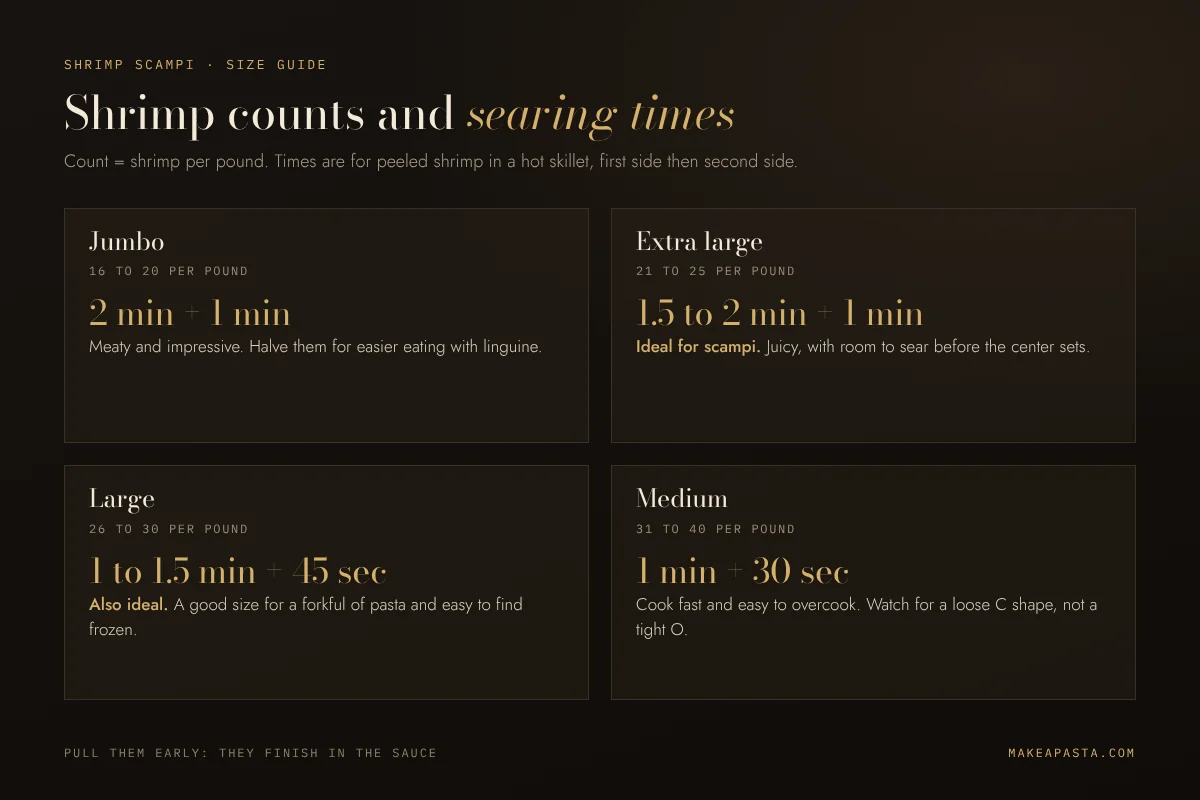
Shrimp are sold by count, which is the number per pound. A lower number means bigger shrimp. For scampi, large shrimp in the 21 to 25 or 26 to 30 range are ideal. They are big enough to stay juicy and small enough to eat with a forkful of pasta.
Peeled, deveined and tail-on or tail-off
Buy shrimp that are already peeled and deveined to save time. Tails look nice on a restaurant plate but are awkward to eat with pasta, so remove them for a family dinner. If your shrimp still have the dark vein along the back, cut a shallow slit and lift it out with the tip of a knife.
How to thaw frozen shrimp
The best way is overnight in the fridge. For a quick thaw, put the shrimp in a sealed bag and submerge it in a bowl of cold water for 15 to 20 minutes, changing the water once. Never use hot water, which starts cooking the outside. Dry the shrimp well after thawing.
How to tell when shrimp are done
Shrimp are done when the flesh turns pearly and opaque and they curl into a loose C shape. A tight O shape means they are overcooked. The FDA guide to serving seafood safely notes that cooked shrimp flesh should be pearly and opaque. Because they finish in the hot sauce, pull them from the pan slightly early.
The Wine, the Butter and the Lemon
These three ingredients give scampi its flavor. Small changes in each one can make the sauce taste flat or bright, thin or silky.
Picking a white wine
Choose a dry, crisp white you would happily drink. Pinot Grigio, Sauvignon Blanc and unoaked Chardonnay all work well. Avoid sweet wines like Moscato, which make the sauce taste sugary, and heavily oaked wines, which can taste bitter when reduced.
Cooking without wine
Replace the wine with low-sodium chicken broth, seafood stock or vegetable broth. Add an extra teaspoon of lemon juice to replace the acidity. The sauce will taste a little rounder and less sharp, but still very good.
Why the butter goes in cold and off the heat
Cold butter melts slowly and blends with the pasta water into a creamy emulsion. If you add it to a boiling pan, the fat separates and the sauce turns oily. Take the pan off the heat, add the cubes and keep tossing until they disappear. For more on this simple sauce, see our garlic butter pasta.
Lemon zest and juice
Juice adds sharp acidity, while zest adds a floral lemon aroma without extra sourness. Using both gives a fuller lemon flavor. Add the zest at the very end so its oils stay fresh.
Best Pasta for Shrimp Scampi
Long strands are traditional because they carry a thin sauce well. Here is how the common choices compare.
| Pasta | Texture | Notes |
|---|---|---|
| Linguine | Flat, slightly wide | The classic pick. Holds the sauce and pairs well with shrimp |
| Spaghetti | Round, medium | Easy to find; works just as well |
| Angel hair | Very thin | Cooks in 2 to 3 minutes; toss quickly so it does not clump |
| Bucatini | Thick, hollow | Hearty and fun; needs a little more sauce |
| Orzo | Small rice shape | Makes a creamy, risotto-like scampi |
Cooking the pasta in time
Start the pasta before the shrimp, so both finish together. Because the linguine finishes in the skillet, cook it 2 minutes short of the package time. That way it is perfectly al dente when you serve, not soft.
Variations
The base recipe takes well to a few changes. Keep the core method and adjust the add-ins.
Creamy shrimp scampi
Add 1/3 cup of heavy cream after the wine reduces and simmer for 1 minute. Use only 2 tablespoons of butter at the end. The sauce becomes richer and a little thicker.
Tomato and spinach scampi
Add 1 cup of halved cherry tomatoes with the garlic and let them soften. Fold in two handfuls of baby spinach with the pasta. The tomatoes add sweetness and color.
Lighter olive oil scampi
Skip the butter and use 5 tablespoons of good olive oil in total. Toss hard with pasta water to emulsify. It tastes lighter and a little more like a coastal Italian dish.
Lemony scampi with herbs
Add a tablespoon of capers and swap half the parsley for basil or chives. For an even brighter lemon flavor, look at the sauce method in our lemon pasta.
Troubleshooting Shrimp Scampi
| Problem | Likely cause | Fix |
|---|---|---|
| Rubbery shrimp | Cooked too long | Sear briefly, remove, and return only at the end |
| Bitter sauce | Garlic browned or burned | Cook garlic on medium, pull it at pale gold |
| Greasy, split sauce | Butter added over high heat | Add a splash of hot pasta water off the heat and toss hard |
| Thin, watery sauce | Shrimp not dried or wine not reduced | Dry shrimp well and reduce wine by half |
| Bland flavor | Not enough salt or acid | Add salt, more lemon juice and a pinch of zest |
Rescuing a broken sauce
If the sauce looks oily and separate, do not panic. Take the pan off the heat, add 2 to 3 tablespoons of hot pasta water and toss quickly. The starch pulls the fat and liquid back together within a few seconds.
Approximate Nutrition
These are estimates for one of four servings. They will vary with your shrimp, pasta and butter.
| Nutrient | Amount |
|---|---|
| Calories | About 640 |
| Protein | About 39 g |
| Fat | About 24 g |
| Carbohydrates | About 66 g |
| Fiber | About 3 g |
| Sodium | About 700 mg |
Shrimp Scampi Pasta FAQs
What is the difference between shrimp scampi and garlic shrimp pasta?
Shrimp scampi adds white wine and butter to the garlic and olive oil base. The wine brings acidity and depth, and the butter makes the sauce silky. Garlic shrimp pasta is simpler and usually leans on olive oil alone.
Can I make shrimp scampi without wine?
Yes. Use the same amount of low-sodium chicken broth, seafood stock or vegetable broth, and add an extra teaspoon of lemon juice to replace the acidity. The sauce will be a little milder but still bright.
Can I use frozen shrimp for scampi?
Frozen shrimp work very well. Thaw them overnight in the fridge, or seal them in a bag and submerge it in cold water for 15 to 20 minutes. Pat them completely dry before searing so they brown instead of steam.
How do I keep the shrimp from getting rubbery?
Sear the shrimp for just 1 to 2 minutes per side and remove them while the centers are still slightly translucent. Add them back at the very end, off the heat, so the hot sauce finishes them gently.
Why is my scampi sauce oily?
The butter probably went into a pan that was too hot, so the fat separated. Take the pan off the heat, add a few tablespoons of hot pasta water and toss quickly. The starch will bring the sauce back together.
What should I serve with shrimp scampi pasta?
Crusty bread or garlic bread is great for the sauce. A simple green salad, roasted asparagus or steamed broccoli adds something fresh. A glass of the same white wine you cooked with is a natural match.
Final Thoughts
The rule to remember
Shrimp scampi is all about short, confident cooking. Dry the shrimp, sear them briefly and take them out. Build the garlic and wine sauce in the same pan, then finish it off the heat with cold butter and pasta water. Return the shrimp at the end, and every forkful will be tender, glossy and bright with lemon.
The recipe
Shrimp Scampi Pasta
Restaurant-style shrimp scampi for four: large shrimp seared in olive oil, sliced garlic and shallot, dry white wine, lemon and cold butter emulsified with pasta water, tossed with linguine.
Ingredients
Instructions
- Pat the shrimp very dry with paper towels and season with the salt and pepper. Bring a large pot of salted water to a boil.
- Add the linguine to the boiling water and cook for 2 minutes less than the package time. Before draining, scoop out 1 cup of pasta water.
- While the pasta cooks, heat 2 tablespoons of the olive oil in a large skillet over medium-high heat. Add the shrimp in a single layer and sear for 1 to 2 minutes per side until pink and just opaque. Move them to a plate; they will finish cooking later.
- Lower the heat to medium. Add the remaining olive oil and 1 tablespoon of the butter. Add the garlic, shallot and red pepper flakes and cook for 1 to 2 minutes, stirring, until fragrant and pale gold.
- Pour in the white wine and scrape up the browned bits. Simmer for 2 to 3 minutes until reduced by about half.
- Add the drained linguine, the lemon juice and 1/2 cup of pasta water. Toss over medium heat for 1 to 2 minutes until the pasta is al dente and the liquid turns slightly syrupy.
- Take the pan off the heat. Add the remaining 3 tablespoons of cold butter and toss until it melts into a glossy sauce. Return the shrimp and any juices, add the lemon zest and parsley and toss for 30 seconds. Loosen with more pasta water if needed, taste for salt and serve right away.
Notes
No wine: replace it with 1/2 cup of low-sodium chicken or seafood broth plus 1 extra teaspoon of lemon juice. Frozen shrimp: thaw overnight in the fridge or in a bowl of cold water for 15 to 20 minutes, then dry well. Shrimp are cooked when the flesh is pearly and opaque and they curl into a loose C shape. Leftovers keep 2 to 3 days in the fridge; reheat gently in a pan with a splash of water so the shrimp do not toughen. Nutrition is approximate: about 640 calories, 24 g fat, 66 g carbohydrates, 3 g fiber and 39 g protein per serving.