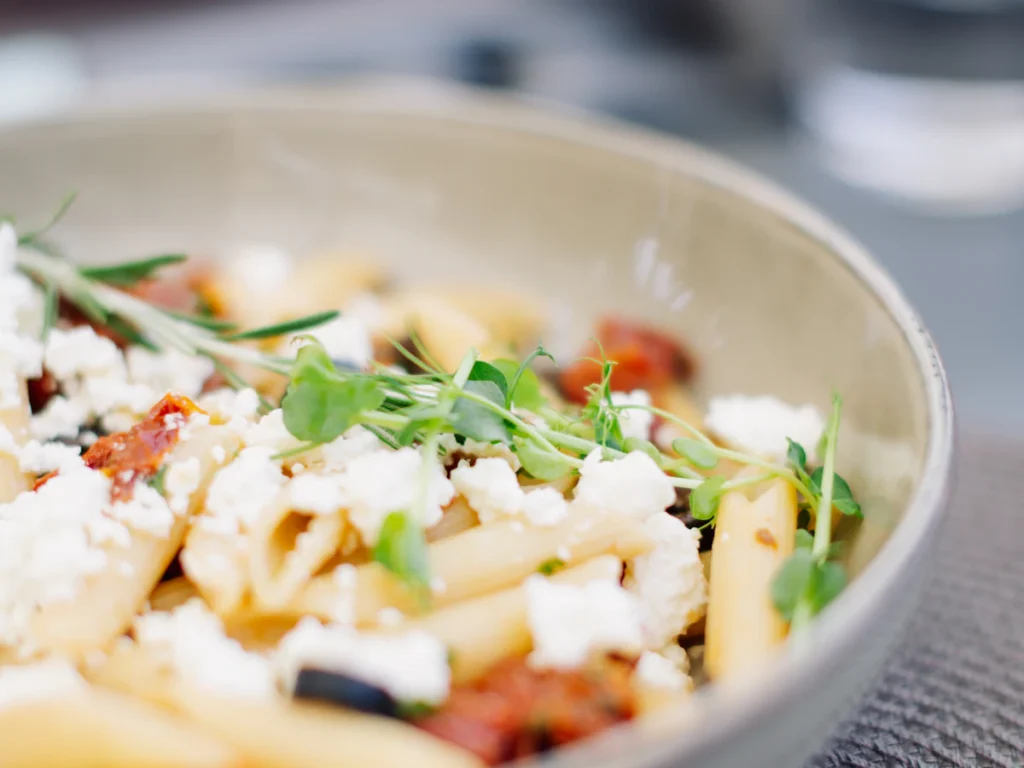
In this recipe
- Recipe at a Glance: Yield, Times and Equipment
- Ingredients List With Exact Quantities
- Best Pasta Shapes for Pasta Salad
- How to Cook Pasta Al Dente for Salad
- Why You Should Rinse Pasta for Cold Salad
- Homemade Italian Vinaigrette Recipe
- Choosing the Mix-Ins: Meats and Cheese
- Choosing the Mix-Ins: Vegetables and Briny Extras
- How to Assemble Italian Pasta Salad Step by Step
- Why Pasta Salad Dries Out
- Make-Ahead Timeline for Parties and Meal Prep
- Storage and Food Safety Rules
- Easy Variations and Substitutions
- Nutrition Notes Per Serving
- Pasta Salad FAQs
- Printable Recipe Card
This pasta salad recipe makes a bright, tangy Italian pasta salad with spiral pasta, cured meat, mozzarella and crisp vegetables. It tastes great on day one and still tastes fresh and lively on day four.
The flavor comes straight from the Italian deli counter: salami, pepperoni, olives and pepperoncini. A homemade vinaigrette made with olive oil, red wine vinegar and oregano ties everything together neatly without any mayonnaise at all.
Serve this cold pasta salad at a potluck, a cookout or a weekday lunch. It works as a hearty side dish next to grilled chicken or burgers, or as a complete meal on its own.
Recipe at a Glance: Yield, Times and Equipment
This batch makes about 12 cups, or 10 servings of roughly 1 1/4 cups each. That yield easily feeds a hungry family for several lunches or covers a medium party buffet without any extra scaling.
Plan for 20 minutes of prep time and 10 minutes of cook time, plus a 30-minute rest. The total time is about one hour, and most of that time is hands-off while flavors soak in.
You need a large pot that holds at least 5 quarts, a colander for draining, and a big mixing bowl. A whisk or lidded jar, a sharp knife and a cutting board finish the list.
Ingredients List With Exact Quantities
For the salad, use 1 pound (454 g) of dried rotini, 4 ounces (115 g) of Genoa salami, 2 ounces (55 g) of pepperoni and 8 ounces (225 g) of mozzarella pearls, drained before use.
Add 2 cups (300 g) cherry tomatoes, half an English cucumber, 1/2 cup (60 g) red onion, 3/4 cup (100 g) kalamata olives and 1/2 cup (70 g) pepperoncini. Finish with fresh parsley and basil.
Dressing needs 2/3 cup (150 g) extra-virgin olive oil, 1/3 cup (80 g) red wine vinegar, 2 teaspoons Dijon mustard, 2 teaspoons dried oregano, 1/4 cup (20 g) Parmesan and 1 1/2 teaspoons kosher salt.
Best Pasta Shapes for Pasta Salad
Pick a short pasta with spirals, cups or ridges. Those nooks and crannies trap dressing and small bits of herbs, so every forkful tastes seasoned. Long noodles like spaghetti tangle and clump once they cool.
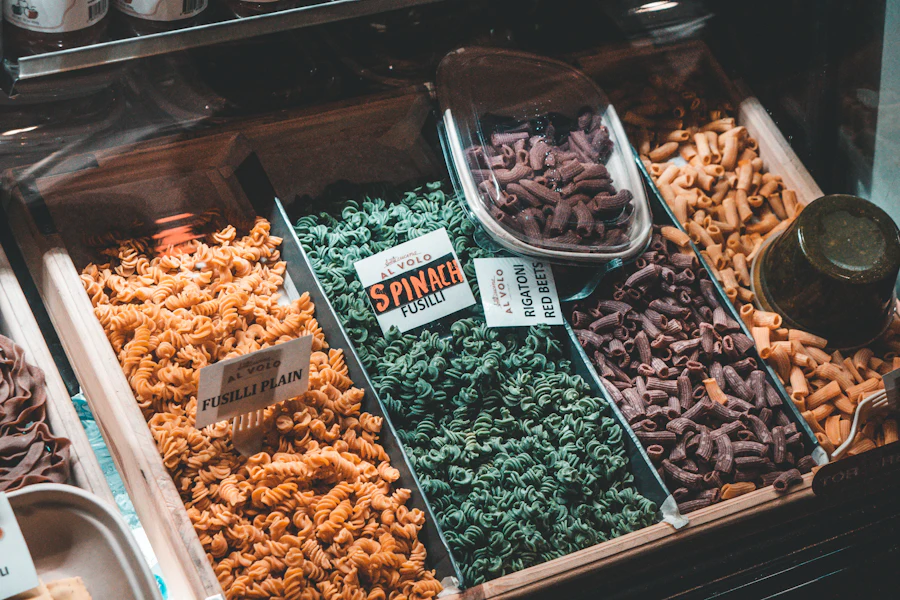
Rotini and fusilli are the very top choices because their tight twists hold the most vinaigrette. Farfalle looks pretty on a buffet, penne suits chunky mix-ins, and radiatori grabs dressing with its ruffled, radiator-like fins.
Choose bronze-cut pasta when you can find it. Its rough, matte surface grips dressing better than slick, Teflon-extruded pasta. Skip tiny orzo for this version, because it gets lost among large salami and mozzarella pieces.
| Shape | Why it works (or not) | Verdict |
|---|---|---|
| Rotini and fusilli | Tight twists hold the most vinaigrette | Top choice |
| Radiatori | Ruffled, radiator-like fins grab dressing | Great |
| Farfalle | Looks pretty on a buffet | Good |
| Penne | Suits chunky mix-ins | Good |
| Orzo | Gets lost among large salami and mozzarella pieces | Skip for this version |
| Spaghetti and long noodles | Tangle and clump once they cool | Skip |
How to Cook Pasta Al Dente for Salad
Bring 4 to 6 quarts of water to a rolling boil in a covered pot. Use at least 4 quarts per pound, so the pasta moves freely and the temperature recovers quickly after adding it.
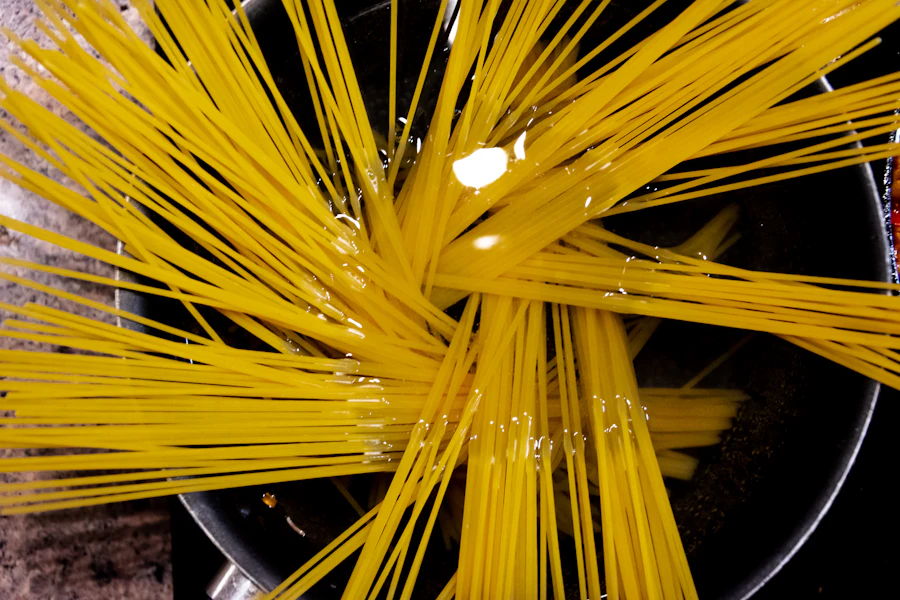
Make salted water with 1 tablespoon (about 15 g) of kosher salt per 4 quarts. This is your only chance to season the pasta itself. Unsalted pasta always tastes flat, even under a well-seasoned dressing.
Cook to the low end of the package time, then run a taste test. Aim for al dente with a tender center. Cold pasta firms through starch retrogradation, so never stop while it feels chalky.
Why You Should Rinse Pasta for Cold Salad
Rinsing is right for cold salads, even though you should never rinse pasta for hot sauces. A quick cold water rinse halts carryover cooking, so the pasta keeps the bite you tasted at the stove.
Rinsing also washes away loose surface starch. Left on, that starch turns the cooled pasta sticky and gummy. The spirals then glue together in clumps that the dressing simply cannot reach or coat very evenly.
Shake the colander hard and drain thoroughly, because trapped water dilutes the dressing. For best results, spread the pasta on a sheet pan for five minutes so excess surface moisture evaporates before you dress it.
Homemade Italian Vinaigrette Recipe
A homemade Italian dressing tastes brighter than bottled versions and costs less. Use a 2:1 ratio of oil to acid. That proportion stays punchy after chilling but still coats the pasta without tasting sharply sour.
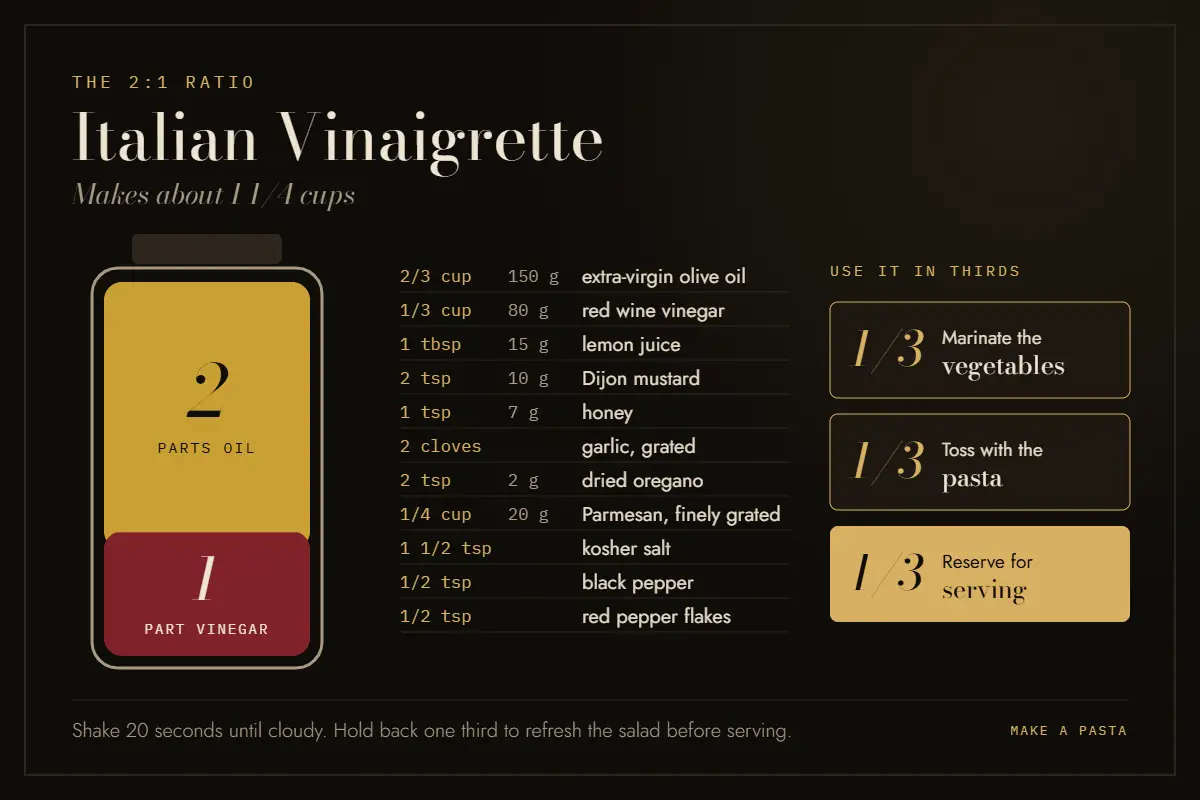
Put the oil, vinegar, 1 tablespoon lemon juice, Dijon, 1 teaspoon honey, 2 grated cloves of garlic, oregano, 1/2 teaspoon red pepper flakes, salt and 1/2 teaspoon black pepper into a clean lidded jar together.
Shake the mason jar for 20 seconds until the dressing turns cloudy. The mustard and Parmesan help hold a loose emulsion. This recipe makes about 1 1/4 cups, and one third stays back for later.
Choosing the Mix-Ins: Meats and Cheese
Use firm, cured meats that hold their texture in the fridge. Genoa salami or any hard salami works best. Cut the slices into quarters or thin strips so each piece fits neatly on a fork.
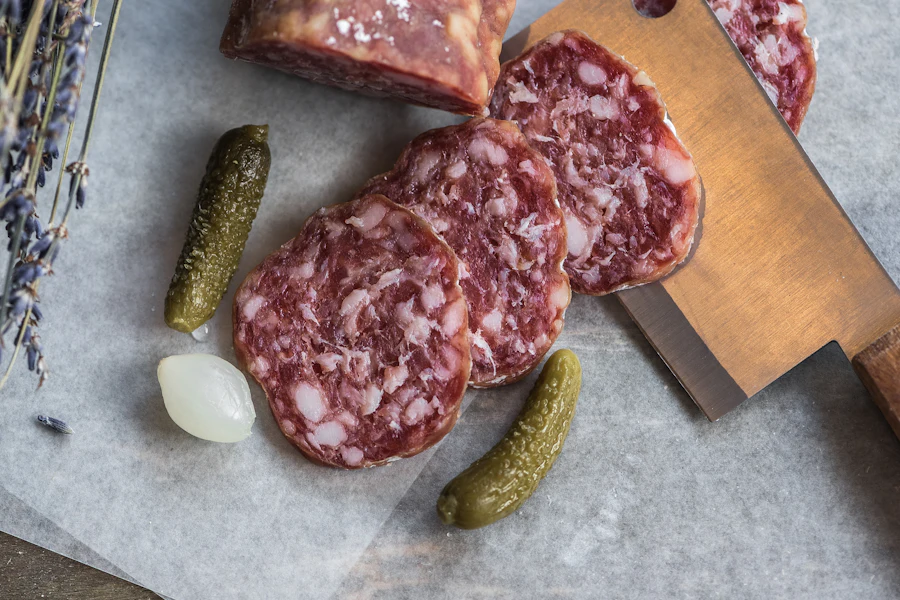
Add pepperoni for a smoky, slightly spicy note. Mini pepperoni slices save chopping time. Cured meats are salty, so they raise the sodium of each serving. Taste the finished salad before adding any extra salt.
For cheese, choose fresh mozzarella in small balls. Pearls are tiny, while ciliegine are cherry-sized and need halving. Cubed aged provolone adds sharper flavor and holds its shape well for several days in the fridge.
Choosing the Mix-Ins: Vegetables and Briny Extras
Halve 2 cups of cherry tomatoes so they soak up dressing. Seed and dice half an English cucumber, which has thin skin and small seeds. Thinly slice a quarter of a large red onion too.
Briny items carry the classic deli flavor. Slice pepperoncini into rings, then halve pitted kalamata olives. Buttery green Castelvetrano olives make a milder swap for anyone who finds kalamatas a little too strong or salty.
Optional extras add color and texture. Quartered marinated artichoke hearts, jarred roasted red peppers and a diced bell pepper all hold up well for days. Keep the total mix-ins to roughly 6 cups for balance.
How to Assemble Italian Pasta Salad Step by Step
- 01
Step one: while the pasta cooks, put the sliced onion, tomatoes, cucumber, olives and pepperoncini in the bowl. Add one third of the dressing and let them marinate for 10 minutes to soften the onion.
- 02
Step two: add the drained pasta, salami, pepperoni and mozzarella. Pour in the second third of dressing and toss with a large serving spoon until every spiral looks glossy. Cut anything oversized into bite-sized pieces.
- 03
Step three: rest the salad for 30 minutes in the fridge. Just before serving, fold in chopped fresh basil and flat-leaf parsley, add the reserved dressing, then season to taste with salt, pepper or vinegar.
Why Pasta Salad Dries Out
Cooked pasta keeps soaking up liquid long after it cools. Its swollen starch granules pull oil and vinegar inside, so the salad that looked glossy at noon can look dull and dry by dinner time.
Some liquid also escapes through evaporation in an uncovered bowl. Meanwhile chilled flavors taste muted, because cold temperatures dull both salt and aroma. The acidity fades too, as vinegar soaks into the pasta and cheese.
The fix is simple: reserve dressing before you start. Hold back one third in a sealed jar. Because the pasta always absorbs dressing, that fresh splash restores shine, tang and seasoning right before you serve.
Make-Ahead Timeline for Parties and Meal Prep
This salad is ideal for make-ahead cooking. Up to 24 hours ahead, cook and rinse the pasta, mix the dressing, chop the vegetables and combine everything except the herbs and the reserved third of dressing.
Store the assembled salad in an airtight container in the fridge. Keep the reserved dressing in its own jar. On the day of serving, rest the jar for 10 minutes so solidified olive oil liquefies.
Right before serving, stir in the herbs and the reserved dressing to refresh the salad. For weekday meal prep, portion it into lidded containers and pack a small lidded cup of dressing with each lunch.
| When | What to do |
|---|---|
| Up to 24 hours ahead | Cook and rinse the pasta, mix the dressing, chop the vegetables and combine everything except the herbs and reserved dressing |
| Day of serving | Rest the reserved dressing jar for 10 minutes so solidified olive oil liquefies |
| Right before serving | Stir in the herbs and the reserved dressing to refresh the salad |
Storage and Food Safety Rules
Follow official USDA food safety guidance: bacteria multiply fastest in the danger zone between 40°F and 140°F. Under the 2-hour rule, refrigerate all perishable food within two hours, or within one hour above 90°F outdoors.
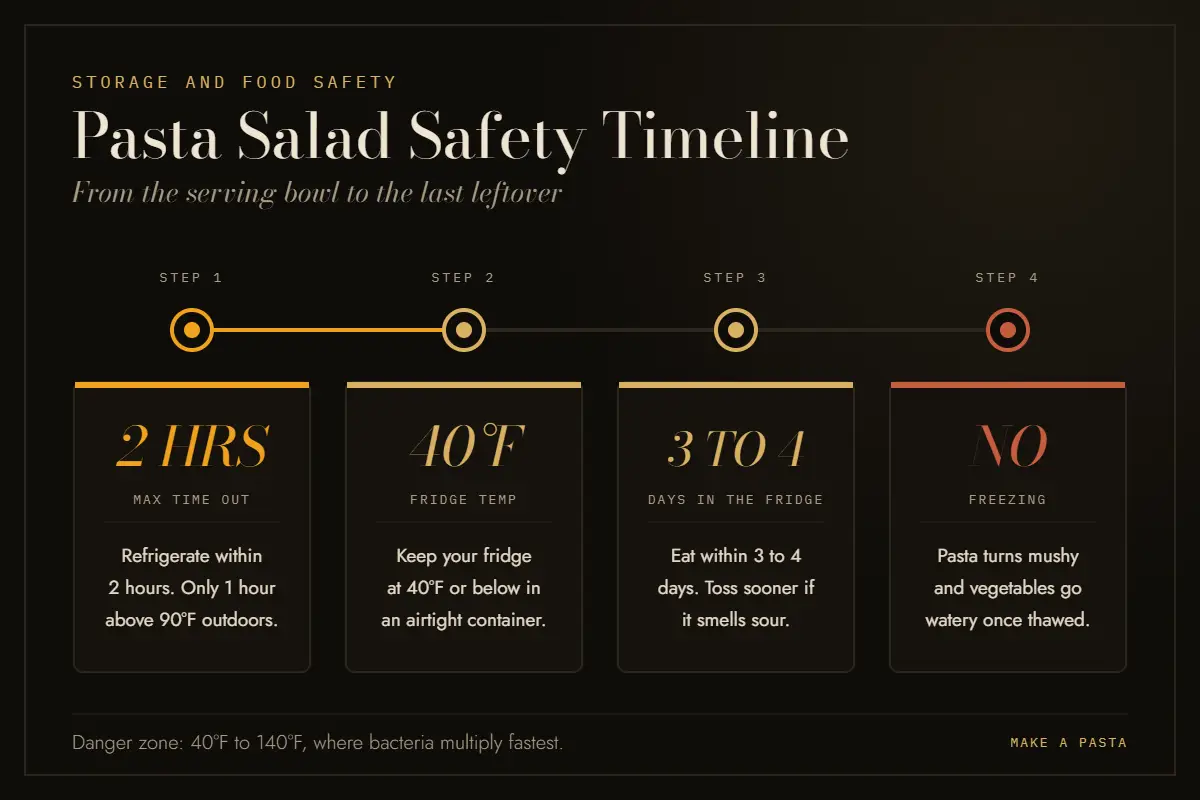
Keep your refrigerator at 40°F or below. Federal charts list macaroni-type salads at 3 to 4 days, and most cooks get 3-5 days from this oil-based version. Discard it sooner if anything ever seems off.
For picnics, carry the salad in a cooler packed with ice packs. Cured meat and cheese are perishable, and careless handling can cause foodborne illness. The 4 Steps to Food Safety guide covers the basics.
Easy Variations and Substitutions
For a vegetarian version, drop the meats and add a 15-ounce (425 g) can of rinsed chickpeas for protein. For Greek pasta salad, swap mozzarella for crumbled feta and add extra cucumber and kalamata olives.
Cheese tortellini turns this into a richer, heartier dinner salad. Shredded rotisserie chicken adds lean protein. A few spoonfuls of basil pesto whisked into the vinaigrette, plus chopped sun-dried tomatoes, create a deeper, herb-forward flavor.
Use gluten-free pasta made from corn and rice blends, cooking it one minute less, since it softens faster. Craving a warm pasta night instead? Pair rotini with our homemade spaghetti sauce for a family dinner.
Nutrition Notes Per Serving
Each 1 1/4-cup serving lands somewhere near 450 calories, an estimate based on standard ingredient labels. Two ounces of dry pasta supply about 200 calories, and each tablespoon of olive oil adds roughly 120 calories.
Most carbohydrates come from the pasta, while salami, pepperoni and mozzarella supply most of the protein and saturated fat. Vegetables add color, crunch and some fiber, but the dish remains a fairly rich, filling meal.
To lighten it, use whole wheat pasta for extra fiber, double the vegetables and halve the meats. Watch portion size too: a 1-cup scoop as a side keeps calories moderate at a busy summer cookout.
Pasta Salad FAQs
Should You Rinse Pasta for Pasta Salad?
Yes, you should rinse pasta for any cold pasta salad. Cold water helps stop the cooking at exactly the right moment and washes away loose surface starch that would otherwise make the cooled pasta sticky.
Rinse only until the pasta feels cool or at room temperature, not icy. Drain it very well afterward, because water left clinging to the spirals thins the vinaigrette and makes the whole salad taste watery.
Skip rinsing only if you plan to serve warm pasta tossed with dressing right away. In that case, the surface starch helps the dressing cling, much like it helps a hot tomato sauce coat spaghetti.
How Long Does Italian Pasta Salad Last in the Fridge?
Italian pasta salad lasts 3 to 4 days in the fridge, matching the federal cold food storage chart for pasta-type salads. An oil-based version often holds up to 5 days when stored and handled carefully.
Its shelf life depends on clean handling and a fridge set at 40°F or below. Always serve it with a clean spoon. Return it to the fridge immediately after serving rather than leaving it out.
Watch closely for signs of spoilage before eating any leftovers. A sour smell, a slimy film on the pasta or meat, or fuzzy mold anywhere means the whole batch should go in the trash immediately.
Can You Freeze Pasta Salad?
No, you should not freeze this pasta salad. The freezer ruins its texture completely. Cooked pasta quickly turns soft and mushy, while fresh mozzarella becomes crumbly and loses its creamy, milky bite after thawing out.
Raw vegetables suffer the most damage. Water inside cucumbers and tomatoes forms ice crystals that burst their cell walls. When you thaw the salad, those vegetables collapse and release liquid into the bowl and dressing.
The result is a watery, bland salad with limp vegetables. For a real head start, freeze only cooked chicken for a variation. Then make the pasta salad itself completely fresh within four days of serving.
Can You Make Pasta Salad the Night Before?
Yes, you can make pasta salad the night before, and it often tastes better. Resting overnight in the fridge lets the flavors meld, so garlic, oregano and vinegar season the pasta all the way through.
Plan for absorption by keeping extra dressing aside. By morning, the pasta will have soaked up much of the original vinaigrette. Then just a few tablespoons of reserved dressing bring back its glossy, fresh look.
For crisp vegetables, add the cucumber and herbs on serving day. Cucumber releases water as it sits, and basil leaves darken quickly. Everything else, including salami, cheese, olives and tomatoes, handles the overnight rest well.
Is Store-Bought Italian Dressing Okay for Pasta Salad?
Yes, a good store-bought dressing works perfectly fine and makes a quick, handy shortcut on busy weeknights. You will need one 16-ounce (473 ml) bottle, keeping about one third aside to refresh the salad later.
Read the ingredient labels before buying. Many bottled Italian dressings use soybean or canola oil instead of olive oil. Some also contain preservatives, gums and added sugar, which make the flavor sweeter and less bright.
Improve any bottle with three simple additions. Whisk in a splash of red wine vinegar, a pinch of dried oregano and some grated Parmesan. Those three additions push it much closer to homemade deli flavor.
How Long Can Pasta Salad Sit Out at a Picnic?
Pasta salad can sit out for 2 hours at a picnic or party. In hot weather above 90°F, that window shrinks to 1 hour. After that, discard it rather than returning it to the fridge.
On a buffet, nest the serving bowl inside a larger bowl of ice to keep it cold. Set out smaller portions and replace them with fresh, chilled salad from the fridge as the guests eat.
For travel, pack the salad in an insulated cooler with plenty of ice packs. Keep the cooler in the shade, open it rarely, and put leftovers back on ice as soon as people finish eating.
The recipe
Classic Italian Pasta Salad
A make-ahead Italian pasta salad with rotini, Genoa salami, mozzarella pearls and a homemade red wine vinaigrette. Makes about 12 cups.
Ingredients
Instructions
- Make the dressing. Add the olive oil, red wine vinegar, lemon juice, Dijon mustard, honey, garlic, oregano, red pepper flakes, salt, black pepper and Parmesan to a lidded jar. Shake for 20 seconds until cloudy. Set one third aside for serving.
- Cook the pasta. Bring 4 to 6 quarts of water to a rolling boil with 1 tablespoon kosher salt per 4 quarts. Cook the rotini to the low end of the package time, tasting until al dente with no chalky center.
- Marinate the vegetables. While the pasta cooks, combine the red onion, cherry tomatoes, cucumber, olives and pepperoncini in a large mixing bowl with one third of the dressing. Let them marinate for 10 minutes.
- Rinse and drain. Drain the pasta in a colander, rinse under cold water until cool, then shake off all excess water. Spread on a sheet pan for 5 minutes to dry the surface.
- Assemble. Add the pasta, salami, pepperoni and mozzarella pearls to the bowl. Pour in the second third of the dressing and toss until every piece is coated.
- Rest. Cover and refrigerate for at least 30 minutes, or up to 24 hours.
- Finish and serve. Just before serving, fold in the parsley and basil, add the reserved dressing, and season to taste with salt, pepper or a splash of vinegar. Refrigerate leftovers within 2 hours and eat within 3 to 4 days.
Notes
Keep the reserved third of the dressing in its own jar and add it just before serving. Refrigerate within 2 hours, eat within 3 to 4 days and do not freeze. For a vegetarian version, skip the meats and add a 15-ounce can of rinsed chickpeas.