
In this recipe
- Why This Cajun Chicken Pasta Works
- Ingredients for Cajun Chicken Pasta
- Homemade Cajun Seasoning Blend
- Chicken Breast or Thigh?
- The Right Pan and Pasta Shape
- How to Make Cajun Chicken Pasta in One Pan
- Chicken Food Safety and Doneness
- Heavy Cream and Lighter Swaps
- Variations: Shrimp, Andouille and Dairy-Light
- Common Cajun Chicken Pasta Mistakes
- Storage and Reheating
- Cajun Chicken Pasta Nutrition
- Cajun Chicken Pasta FAQs
- Printable Recipe Card
This Cajun chicken pasta is a spicy, creamy dinner for 4 made in one deep skillet. Seasoned chicken sears first, then bell peppers and onion soften in the drippings. The penne cooks right in the seasoned broth, and a splash of heavy cream with Parmesan turns what is left into a silky sauce. It takes about 45 minutes, including prep.
The seasoning is homemade. Eight pantry spices make about 3 tablespoons, and you control the salt and the heat. Use chicken breast for lean, tidy bites or thighs for juicier, more forgiving meat.
Below: the spice blend, how to choose the chicken and pan, a step-by-step one-pan method, safe cooking temperatures, lighter swaps for the cream, three variations, and how to store and reheat leftovers.
Why This Cajun Chicken Pasta Works
Most creamy pasta dishes need two pots: one for boiling the noodles and one for the sauce. Here everything happens in one pan, and that changes the flavor as well as the dishes.
- The pasta cooks in seasoned broth. Penne absorbs chicken broth, garlic and spice as it softens, so the noodles taste of the sauce all the way through.
- The starch stays in the pan. Pasta releases starch as it cooks. In a regular pot that starch goes down the drain. Here it thickens the broth into a creamy base before any cream goes in.
- The browned bits become the sauce. Searing the chicken leaves a golden layer on the pan. The broth lifts it off, adding a deep, roasted flavor.
- The chicken is cooked once and rested. It sears until done, waits on a plate, and goes back in only to warm through. It never sits in a bubbling sauce, so it stays tender.
The result is smoky, peppery and rich, with a gentle heat that builds as you eat. If you like this style of creamy, spiced chicken pasta, our rasta pasta takes the same idea in a Caribbean direction with jerk seasoning.
Ingredients for Cajun Chicken Pasta
For the chicken, use 1 pound (454 g) of boneless, skinless chicken breasts or thighs. Cut it into 1-inch pieces so it browns quickly and fits on a fork with the penne.
For the vegetables, use 1 red and 1 green bell pepper, cut into thin strips, plus 1 medium yellow onion and 4 garlic cloves. Onion, bell pepper and celery are the classic base of Cajun cooking. Celery is optional here, but a diced rib can go in with the peppers.
For the pasta and liquid, use 12 ounces (340 g) of dried penne and 3 1/2 cups (840 ml) of low-sodium chicken broth. Low-sodium broth matters. The liquid reduces as the pasta cooks, and regular broth can make the finished dish too salty.
For the sauce, use 3/4 cup (180 ml) of heavy cream and 1/2 cup (50 g) of finely grated Parmesan. Let the cream sit out while you prep so it is not fridge-cold when it hits the pan. Lighter options are covered in the cream swaps section below.
For cooking and finishing, use 1 tablespoon of olive oil, 1 tablespoon of butter and 2 sliced green onions or a little chopped parsley.
Homemade Cajun Seasoning Blend
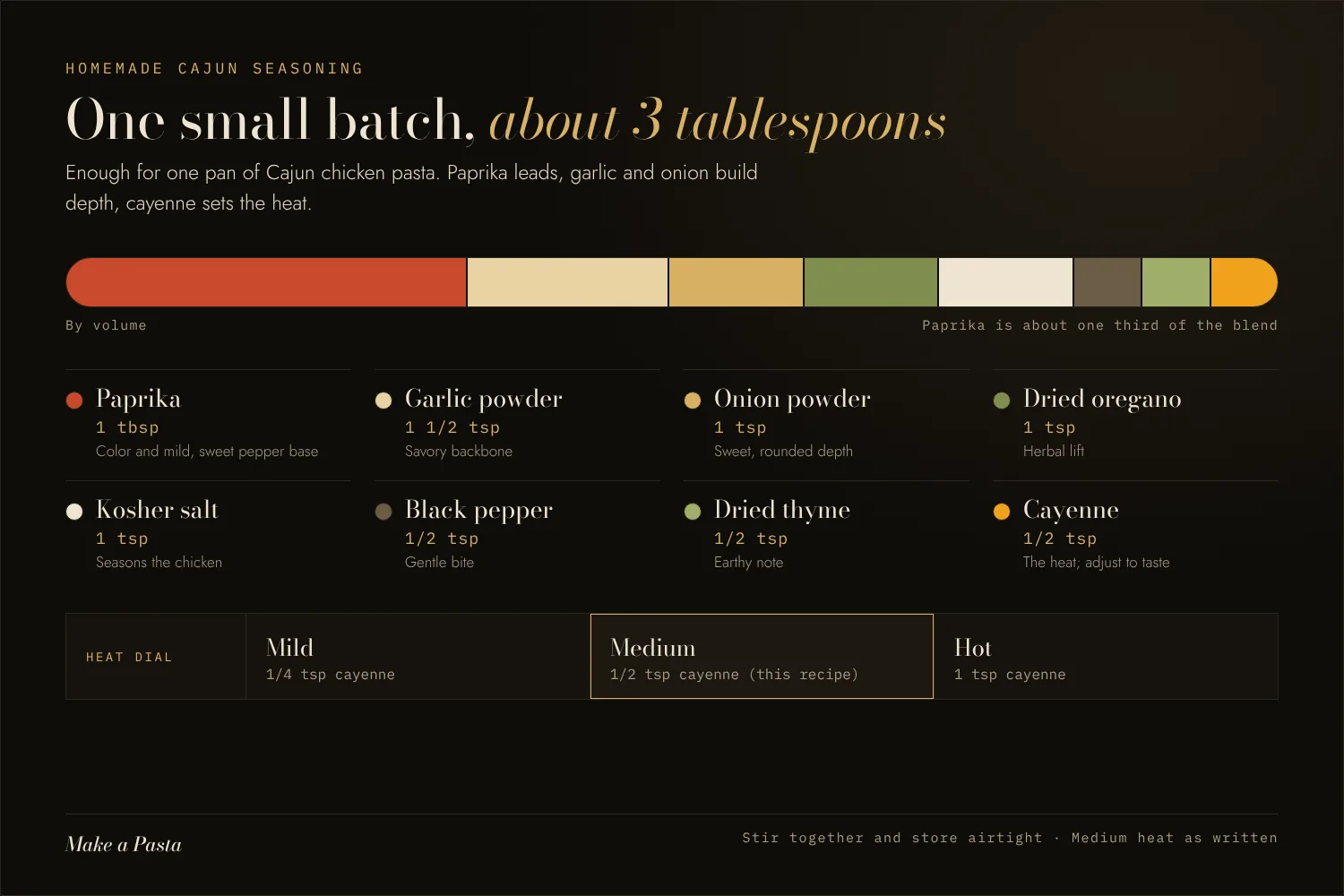
A homemade blend takes two minutes and beats most jars on freshness. It also lets you decide how much salt and heat go in. This batch makes about 3 tablespoons, which is exactly enough for one pan of Cajun chicken pasta.
| Spice | Amount | What it adds |
|---|---|---|
| Paprika (sweet or smoked) | 1 tablespoon | Deep red color and a mild, sweet pepper base |
| Garlic powder | 1 1/2 teaspoons | Savory backbone |
| Onion powder | 1 teaspoon | Rounded, slightly sweet depth |
| Dried oregano | 1 teaspoon | Herbal lift |
| Kosher salt | 1 teaspoon | Seasons the chicken and the broth |
| Black pepper | 1/2 teaspoon | Gentle bite |
| Dried thyme | 1/2 teaspoon | Earthy note |
| Cayenne pepper | 1/2 teaspoon | The heat; use 1/4 teaspoon for mild or 1 teaspoon for hot |
Stir everything together in a small bowl. Use 1 tablespoon on the chicken and the rest in the sauce. Smoked paprika gives a deeper, almost grilled flavor. Sweet paprika keeps it brighter.
To make a larger batch, multiply the amounts by four and store the blend in an airtight jar away from heat and light. Ground spices lose aroma over time, so make only what you will use in a few months.
Using store-bought Cajun seasoning
A jar works fine. Use about 2 1/2 to 3 tablespoons in total, but read the label first. Some brands list salt as the first ingredient, while others contain none. With a salty blend, skip the extra salt and taste the sauce before adding more. With a salt-free blend, add about 1 teaspoon of kosher salt.
Cajun or Creole seasoning?
The two are close cousins, and labels vary by brand. Cajun blends usually lean on paprika, garlic and cayenne. Creole blends often add more dried herbs, such as basil and oregano. Either one works in this recipe, so use what you have and adjust the cayenne to taste.
Chicken Breast or Thigh?
Both work well in Cajun chicken pasta. The choice comes down to texture and how much leeway you want while cooking.
| Cut | Texture | Sear time (1-inch pieces) | Best for |
|---|---|---|---|
| Breast | Lean, mild, tidy cubes | About 5 to 7 minutes | A lighter dish; dries out if overcooked |
| Thigh | Juicy, richer, more flavor | About 6 to 8 minutes | Forgiving timing; stays tender when reheated |
| Tenderloins | Lean, like breast | About 4 to 6 minutes | Quick prep; just slice into pieces |
Chicken thighs have a little more fat, which keeps them moist if they spend an extra minute in the pan. Per USDA FoodData Central values, swapping thighs for breasts in this recipe adds only about 2 grams of fat per serving.
Whichever cut you choose, cut the pieces the same size so they cook evenly. Pat them dry with paper towels before seasoning. Dry chicken browns; wet chicken steams and turns pale.
Do not rinse the raw chicken first. The USDA advises against washing raw poultry, because splashing water can spread bacteria to the sink, counters and nearby food. Rinsing does not remove bacteria anyway; cooking to the right temperature does.
The Right Pan and Pasta Shape
One-pan pasta needs a pan with room. Use a 12-inch skillet with sides at least 2 1/2 to 3 inches deep, a 5-quart braiser, or a wide Dutch oven. A shallow frying pan will overflow once the broth goes in, and a narrow pot stacks the pasta so it cooks unevenly.
For the pasta, short tubes and twists work best because they stir easily and sit under the liquid. Good choices include:
- Penne. The classic choice. Its ridges and hollow center trap the creamy sauce.
- Rigatoni. Wider tubes for a heartier bite. It may need a few extra minutes and an extra splash of broth.
- Rotini or cavatappi. The spirals catch bits of pepper and spice.
- Farfalle. Works well, though the thick centers cook more slowly than the edges.
Long pasta such as fettuccine or linguine is harder to cook in a skillet because it does not fit under the liquid until it softens. For Cajun chicken over fettuccine, boil the noodles separately and use the method from our fettuccine Alfredo for the sauce.
Check the package time before you start. This recipe assumes penne that cooks in about 11 to 13 minutes. Pasta often takes a minute or two longer in a simmering sauce than in a big pot of boiling water.
How to Make Cajun Chicken Pasta in One Pan
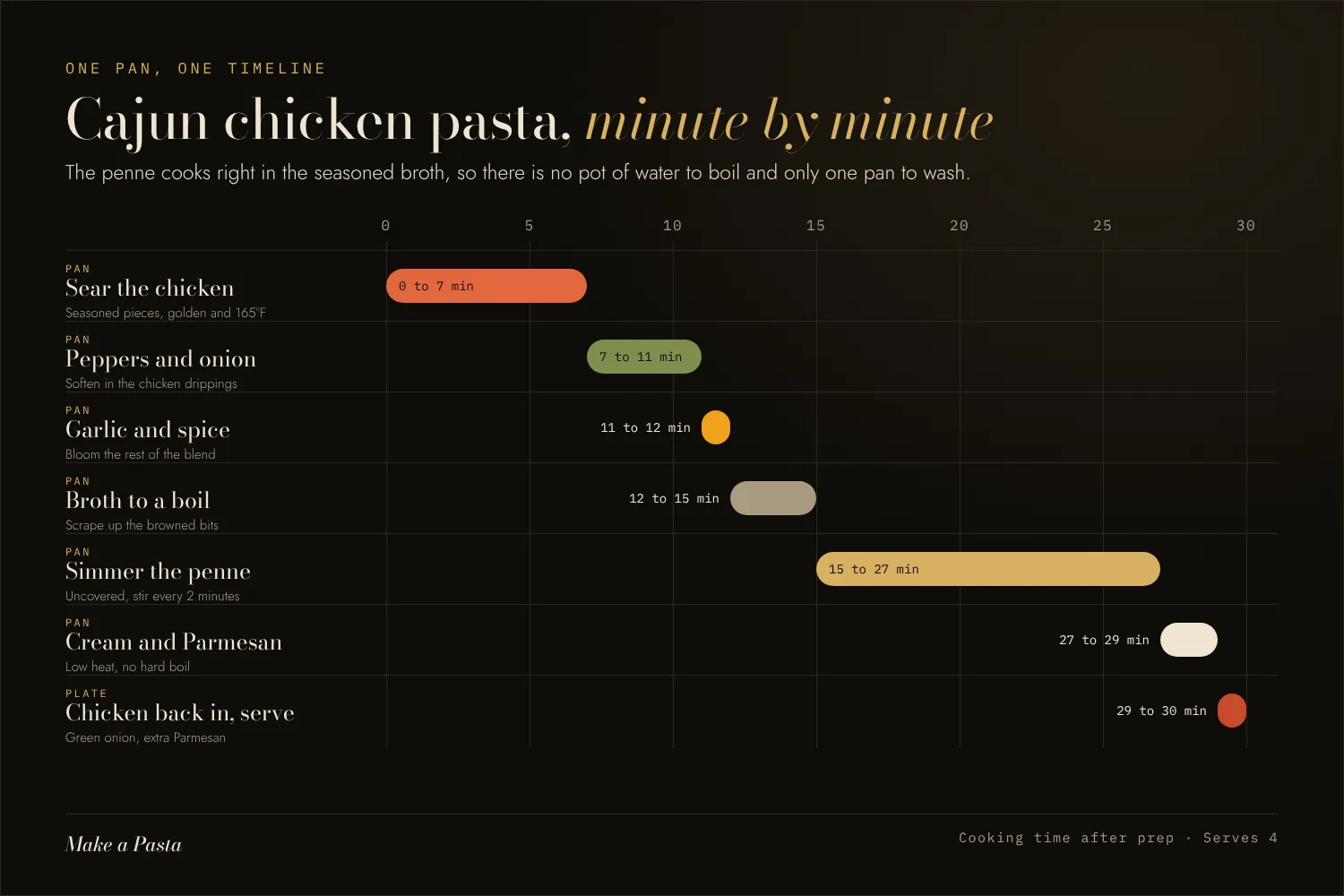
Prep takes about 15 minutes and cooking about 30. Get everything chopped and measured before you turn on the heat, because the steps follow each other quickly.
- 01
Mix the seasoning and prep
Stir the Cajun seasoning together in a small bowl. Pat the chicken dry, cut it into 1-inch pieces and toss it with 1 tablespoon of the blend. Dice the onion, slice the peppers into thin strips and mince the garlic. Wash your hands and the cutting board after handling the raw chicken.
- 02
Sear the chicken (0 to 7 minutes)
Heat the olive oil in a large, deep skillet over medium-high heat until it shimmers. Add the chicken in a single layer and leave it alone for 2 to 3 minutes to brown. Turn and cook for 3 to 4 minutes more, until golden and 165°F (74°C) in the thickest piece. Move it to a clean plate. Cook in two batches if it does not fit in one layer.
- 03
Soften the peppers and onion (7 to 11 minutes)
Lower the heat to medium and add the butter. Add the onion, bell peppers and a pinch of salt. Cook for about 4 minutes, stirring now and then, until the onion turns translucent and the pepper edges soften.
- 04
Bloom the garlic and spice (11 to 12 minutes)
Add the garlic and the rest of the Cajun seasoning. Stir for 30 to 60 seconds, until the spices smell toasty and coat the vegetables. Do not let them scorch; paprika turns bitter if it burns.
- 05
Add the broth (12 to 15 minutes)
Pour in the broth and scrape the bottom of the pan with a wooden spoon to lift the browned bits. Raise the heat and bring the broth to a boil.
- 06
Simmer the penne in the broth (15 to 27 minutes)
Stir in the penne and press it under the liquid. Adjust the heat to a lively simmer and cook uncovered for 12 to 14 minutes, stirring every 2 minutes so it does not stick. The pasta is ready when it is just tender and most of the broth has been absorbed into a thick, starchy sauce. If the pan looks dry before the pasta is done, add 1/4 cup of broth or water.
- 07
Stir in the cream and Parmesan (27 to 29 minutes)
Turn the heat to low. Stir in the cream and let it bubble very gently for 1 to 2 minutes, until the sauce coats the pasta. Take the pan off the heat and stir in the Parmesan a handful at a time.
- 08
Return the chicken and serve (29 to 30 minutes)
Add the chicken and any juices from the plate. Stir for about a minute, just until the chicken is hot. Taste and adjust the salt and cayenne. Scatter green onions over the top and serve right away with extra Parmesan.
Adding the Parmesan off the heat is what keeps the sauce smooth. Hard cheese can clump or turn grainy in a boiling sauce. For more on melting cheese into a sauce without lumps, see our cheese sauce for pasta.
Chicken Food Safety and Doneness
Chicken must be cooked through before it is safe to eat. The USDA safe minimum internal temperature for all poultry is 165°F (74°C), including breasts, thighs and ground chicken. The government’s safe minimum internal temperature chart lists the same number for leftovers and casseroles.
- Use a thermometer. Push an instant-read thermometer into the center of the thickest piece. Color alone is not a reliable test.
- Check more than one piece. Pieces near the edge of the pan cook more slowly. Test a couple from different spots.
- Keep raw and cooked apart. Put the seared chicken on a clean plate, not the board or plate that held it raw.
- Skip the rinse. Washing raw chicken spreads bacteria around the kitchen. Pat it dry with paper towels, throw them away and wash your hands.
Store raw chicken in the fridge at 40°F or below and cook it within 1 to 2 days of buying, or freeze it. The USDA’s chicken from farm to table guide also says never to thaw chicken on the counter. Thaw it in the fridge, in cold water or in the microwave.
| What you see | Inside | Temperature | What to do |
|---|---|---|---|
| Pale, wet surface | Pink and glossy | Below 165°F | Keep searing |
| Golden on two sides | White, juices run clear | 165°F (74°C) | Done; move to a clean plate |
| Dark, shrunken edges | Dry and stringy | Well above 165°F | Safe but dry; pull it sooner next time |
Heavy Cream and Lighter Swaps
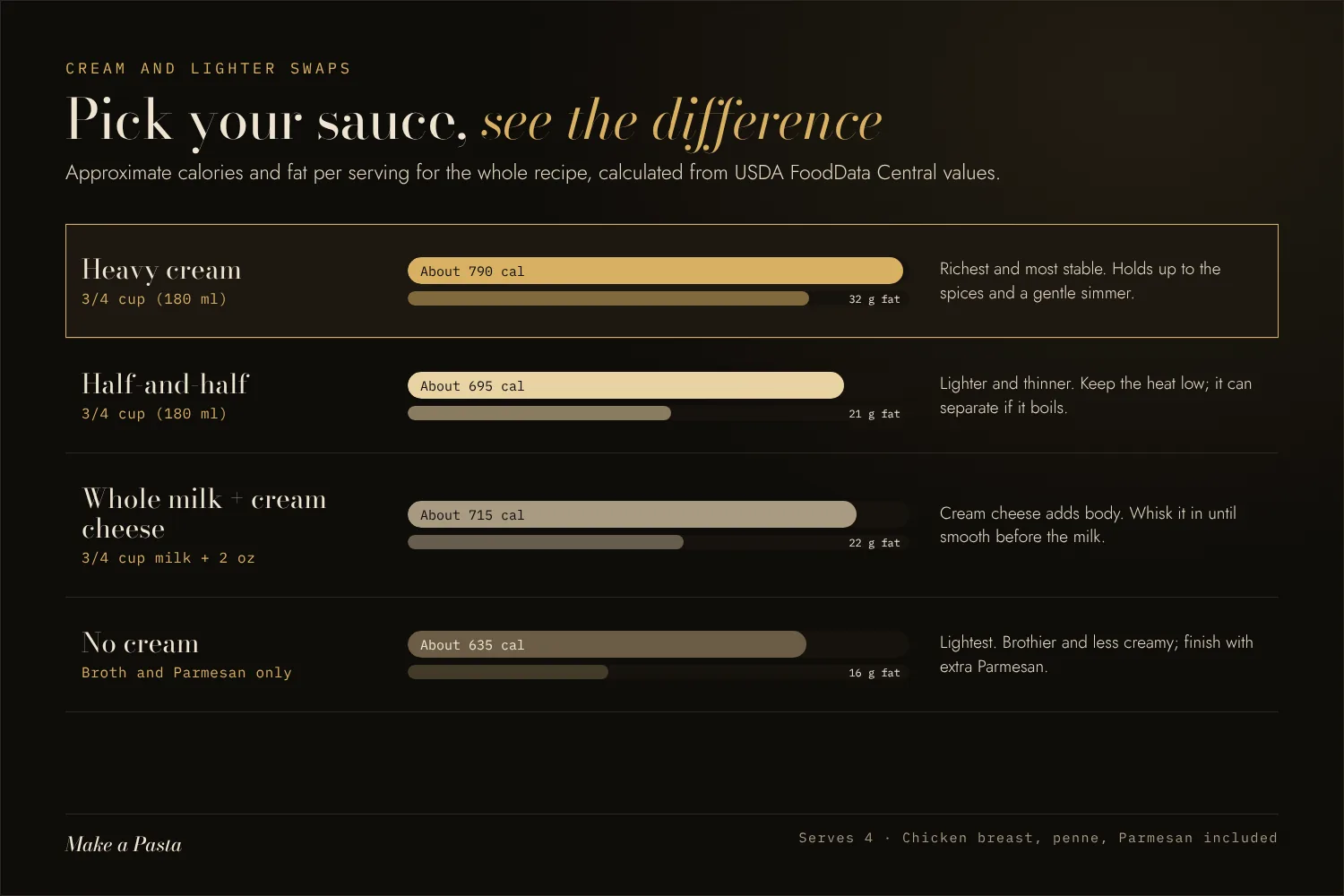
Heavy cream is the easiest choice for a creamy Cajun sauce. Its high fat content helps it stay smooth with the spices and a gentle simmer. If you want something lighter, three swaps work, each with a small trade-off.
- Half-and-half. Use the same 3/4 cup. The sauce will be thinner and lighter. Keep the heat on low after adding it and do not let it boil, because lower-fat dairy is more likely to separate.
- Whole milk and cream cheese. Stir 2 ounces (57 g) of softened cream cheese into the pasta until it melts, then add 3/4 cup of whole milk. The cream cheese gives body and helps the sauce hold together.
- No cream at all. Let the pasta absorb a little less broth, then finish with the Parmesan and an extra 1/4 cup of cheese. The sauce is brothier, but the starch still makes it cling.
The numbers in the chart are per serving for the whole dish, calculated from USDA FoodData Central values. Heavy cream adds about 150 calories and 16 grams of fat per serving. Half-and-half cuts that by more than half. For more ways to build a cream-based sauce, see our creamy pasta sauce guide.
Variations: Shrimp, Andouille and Dairy-Light
The base recipe is a template. Each version below keeps the one-pan method and the homemade Cajun seasoning.
Cajun Shrimp Pasta
Swap the chicken for 1 pound of large raw shrimp, peeled and deveined. Toss them with 1 tablespoon of the seasoning and sear for 1 to 2 minutes per side, until pink and just opaque. Set them aside and stir them back in at the very end so they stay tender. Our shrimp pasta explains shrimp sizes, thawing and doneness in detail. You can also use 1/2 pound each of chicken and shrimp.
Chicken and Andouille Sausage Pasta
Andouille is a smoked, spiced pork sausage common in Cajun cooking, and it adds a smoky depth. Slice 8 ounces into coins and brown them in the pan for 3 to 4 minutes before the chicken. Reduce the chicken to 12 ounces and the salt in the blend to 1/2 teaspoon, because the sausage is already salty. Andouille is usually sold smoked and fully cooked, but check the package. If yours is fresh, cook it to 160°F (71°C), the USDA minimum for pork sausage.
Dairy-Light Cajun Chicken Pasta
Skip the cream and Parmesan. Let the penne simmer until about 1/2 cup of liquid is left, then stir in 2 ounces of cream cheese for body, or simply finish with a squeeze of lemon and plenty of green onion. For a fully dairy-free version, cook the vegetables in olive oil instead of butter and use unsweetened plain oat or cashew cream. Taste for salt at the end, as dairy-free creams vary.
Other easy add-ins: a cup of halved cherry tomatoes with the peppers, a few handfuls of baby spinach stirred in with the cream, or sliced mushrooms with the onion. Find more weeknight ideas in our pasta recipes.
Common Cajun Chicken Pasta Mistakes
| Problem | Likely cause | Fix |
|---|---|---|
| Dry, chewy chicken | Seared too long, or simmered with the pasta | Pull it at 165°F and add it back only at the end |
| Pale chicken | Wet chicken or a crowded pan | Pat dry and sear in two batches |
| Bitter, burnt spice taste | Spices toasted over high heat | Lower the heat to medium and stir for under a minute |
| Pasta still hard, pan dry | Simmer too hard, or a wide pan | Add 1/4 cup broth at a time and lower the heat slightly |
| Thin, soupy sauce | Too much liquid left before the cream | Simmer 2 more minutes; the sauce thickens as it stands |
| Grainy or split sauce | Cheese added over high heat, or low-fat dairy boiled | Add cheese off the heat; keep lighter dairy below a boil |
| Too salty | Regular broth plus a salty store-bought blend | Use low-sodium broth and taste before adding salt |
| Too spicy | Too much cayenne | Stir in a splash of cream and extra Parmesan |
The most common problem is a sauce that looks too thin at first. Give it a minute or two off the heat. The pasta keeps absorbing liquid and the starch thickens as it cools slightly. For other ways to fix a loose sauce, see our guide on how to thicken spaghetti sauce.
Storage and Reheating
Cajun chicken pasta keeps well for a few days. Refrigerate leftovers within 2 hours of cooking, or within 1 hour if the room is above 90°F. Divide large batches into shallow airtight containers so they cool quickly. Eat them within 3 to 4 days.
The pasta keeps absorbing sauce in the fridge, so leftovers firm up. To reheat on the stove, warm a portion in a skillet over medium-low heat with 2 to 3 tablespoons of broth, milk or water, stirring until hot. In the microwave, cover the bowl, heat at medium power in 1-minute bursts and stir between each. Either way, reheat leftovers until they reach 165°F (74°C) in the center.
Freezing is safe, and the USDA notes that cooked chicken leftovers keep for about 4 months frozen for best quality. Cream sauces can turn grainy after thawing, though, and the pasta softens. If you plan to freeze it, leave out the cream and Parmesan, then stir them in fresh when you reheat. Thaw frozen portions overnight in the fridge.
To get ahead, mix the seasoning, slice the vegetables and cut the chicken up to a day early. Keep the raw chicken in a sealed container on the bottom shelf of the fridge.
Cajun Chicken Pasta Nutrition
These figures are approximate. They were calculated from USDA FoodData Central values for each ingredient, based on 4 servings with chicken breast and heavy cream. Sodium is not listed because it depends on your broth, your seasoning and how much salt you add.
| Nutrient | Amount | Main sources |
|---|---|---|
| Calories | About 790 | Pasta, cream and Parmesan |
| Protein | About 47 g | Chicken, pasta and Parmesan |
| Carbohydrate | About 79 g | Pasta |
| Fat | About 32 g | Heavy cream, Parmesan and butter |
| Fiber | About 6 g | Pasta, bell peppers and paprika |
This is a generous portion with 3 ounces of dry pasta per person. For a lighter plate, use half-and-half (about 695 calories and 21 g fat per serving), or serve 8 ounces of penne for 4 with a side salad. Values change with the brand of pasta and the size of your portions.
Cajun Chicken Pasta FAQs
What is Cajun chicken pasta made of?
Cajun chicken pasta is made with chicken pieces tossed in Cajun seasoning, bell peppers, onion and garlic, pasta such as penne, chicken broth, heavy cream and Parmesan. The Cajun seasoning is usually a blend of paprika, garlic powder, onion powder, dried herbs, black pepper and cayenne.
Is Cajun chicken pasta very spicy?
It is usually medium spicy, and you control the heat. In this recipe the heat comes from 1/2 teaspoon of cayenne in the seasoning blend. Use 1/4 teaspoon for a mild version or 1 teaspoon for a hot one. The cream and Parmesan also soften the heat.
Can I use store-bought Cajun seasoning?
Yes. Use about 2 1/2 to 3 tablespoons in total, with 1 tablespoon on the chicken and the rest in the sauce. Check the label first, because some blends are mostly salt. If yours is salty, skip any added salt and taste before seasoning.
Can I use chicken thighs instead of chicken breasts?
Yes. Boneless, skinless thighs work well and stay juicier than breasts. Cut them into 1-inch pieces and sear them for about 6 to 8 minutes, until they reach 165°F (74°C) in the thickest piece.
Can you cook pasta directly in the sauce?
Yes. That is how this one-pan method works. The penne simmers in seasoned broth for 12 to 14 minutes, absorbing flavor, and the starch it releases thickens the liquid into a creamy base. Stir every couple of minutes and add a splash of broth if the pan gets dry.
How do I keep the cream sauce from curdling?
Turn the heat to low before adding the cream, and keep the sauce at a gentle bubble rather than a hard boil. Add the Parmesan off the heat. Heavy cream is the most stable choice. Half-and-half and milk are more likely to separate, so never let them boil.
What temperature should chicken be for Cajun chicken pasta?
Cook the chicken to 165°F (74°C), the USDA safe minimum internal temperature for all poultry. Check the thickest piece with an instant-read thermometer before taking it out of the pan.
How long does Cajun chicken pasta last in the fridge?
Refrigerate leftovers within 2 hours in shallow airtight containers and eat them within 3 to 4 days. Reheat with a splash of broth or milk until hot all the way through, to 165°F (74°C).
The recipe
One-Pan Cajun Chicken Pasta
Seared Cajun chicken, bell peppers and penne cooked in seasoned broth and finished with cream and Parmesan, all in one pan. Homemade spice blend included. Serves 4.
Ingredients
Cajun seasoning
Instructions
- Make the seasoning. Stir the paprika, garlic powder, onion powder, oregano, salt, black pepper, thyme and cayenne together. Pat the chicken dry and toss it with 1 tablespoon of the blend.
- Sear the chicken. Heat the olive oil in a 12-inch deep skillet or 5-quart braiser over medium-high heat. Sear the chicken in a single layer for 5 to 7 minutes, turning once, until golden and 165°F (74°C) in the thickest piece. Move it to a clean plate.
- Cook the vegetables. Lower the heat to medium. Add the butter, onion, bell peppers and a pinch of salt and cook for about 4 minutes, until softened.
- Bloom the spices. Add the garlic and the rest of the Cajun seasoning. Stir for 30 to 60 seconds until fragrant, without letting the spices scorch.
- Add the broth. Pour in the broth, scrape up the browned bits from the bottom of the pan and bring to a boil.
- Cook the penne. Stir in the penne and press it under the liquid. Simmer uncovered for 12 to 14 minutes, stirring every 2 minutes, until the pasta is tender and most of the broth is absorbed. Add 1/4 cup of broth if it gets dry.
- Finish the sauce. Turn the heat to low and stir in the cream. Simmer gently for 1 to 2 minutes, then take the pan off the heat and stir in the Parmesan.
- Add the chicken and serve. Return the chicken and its juices and stir for about 1 minute, until hot. Taste for salt and heat, top with green onions and serve with extra Parmesan.
Notes
Use low-sodium broth, since the liquid reduces as the pasta cooks. If you use store-bought Cajun seasoning, use 2 1/2 to 3 tablespoons in total and skip the salt if the blend is salty. Chicken thighs work the same way and take a minute or two longer. For a lighter sauce, use half-and-half and keep it below a boil. Leftovers keep for 3 to 4 days in the fridge; reheat with a splash of broth to 165°F (74°C). Approximate nutrition per serving, calculated from USDA ingredient data: about 790 calories, 47 g protein, 79 g carbohydrate and 32 g fat. Values change with your pasta and portion size.