
In this recipe
- What Is White Sauce Pasta?
- Ingredients for White Sauce Pasta
- How to Make White Sauce Pasta
- Roux Ratio Chart: Thin, Medium and Thick
- Warm or Cold Milk for Bechamel?
- How to Fix Lumps and Control Thickness
- Cheese and Seasoning, Including Nutmeg
- Best Pasta Shapes for White Sauce
- Variations: Vegetable, Chicken and Indian-Style
- Storage and Reheating
- White Sauce Pasta FAQs
- Printable Recipe Card
White sauce pasta is pasta tossed in bechamel: butter and flour cooked into a roux, then whisked with milk until the sauce thickens. For 12 ounces of pasta you need 3 tablespoons of butter, 3 tablespoons of flour and 2 1/2 cups of milk, plus salt, pepper, nutmeg and a handful of Parmesan. It takes about 25 minutes from cold pot to plate.
The whole dish depends on one moment: the point where milk meets roux. Add the milk in stages, whisk into the corners of the pan, and the sauce stays smooth. Rush it, and you get lumps that no amount of stirring will fully dissolve.
Below: exact amounts, a roux ratio chart, a straight answer on warm versus cold milk, fixes for lumps and thickness, plus vegetable, chicken and Indian-style variations.
What Is White Sauce Pasta?
Bechamel is one of the classic French mother sauces. It is a milk sauce thickened with a roux, a cooked mixture of equal parts fat and flour. On its own it is mild, creamy and slightly sweet from the milk. Stir in cheese and it becomes a Mornay sauce, the base of most baked macaroni and cheese.
As a pasta sauce, bechamel sits between a light butter sauce and a heavy cream sauce. It is lighter than a classic fettuccine Alfredo, which relies on butter, cheese and often heavy cream, and it costs less to make because the body comes from flour and milk instead of cream.
It is also adjustable. Change the amount of roux or milk and you control the thickness, from a pourable coating to a thick binder for baked pasta. And because it tastes neutral, it carries cheese, vegetables, chicken or spices equally well.
Ingredients for White Sauce Pasta

For the roux, use 3 tablespoons (42 g) unsalted butter and 3 tablespoons (24 g) all-purpose flour. Unsalted butter lets you control the salt, which matters once the Parmesan goes in. Two minced garlic cloves are optional but add a gentle savory note.
For the liquid, use 2 1/2 cups (600 ml) whole milk. Whole milk gives the creamiest result. Two percent milk works, with a slightly thinner, less rich sauce. Skim milk makes a thin, flat sauce. If you want extra richness, swap 1/2 cup of the milk for heavy cream.
For seasoning, add 3/4 teaspoon kosher salt, 1/4 teaspoon freshly ground black or white pepper and 1/8 teaspoon freshly grated nutmeg. Finish with 1/2 cup (40 g) finely grated Parmesan.
For the pasta, plan on 12 ounces (340 g) of a short shape such as penne, fusilli or rigatoni. Keep about 1/2 cup of the starchy cooking water on hand to loosen the sauce at the end.
How to Make White Sauce Pasta
Put the pasta water on to boil before you start the sauce. A bechamel takes about 10 to 12 minutes, roughly the cooking time of most dried short pasta, so both finish together.
- 01
Make the roux
Melt the butter in a medium saucepan over medium-low heat. Add the garlic, if using, and stir for 30 seconds. Sprinkle in the flour and whisk constantly for 2 to 3 minutes. The paste will bubble, loosen slightly and smell faintly nutty. Keep it pale. A browned roux thickens less.
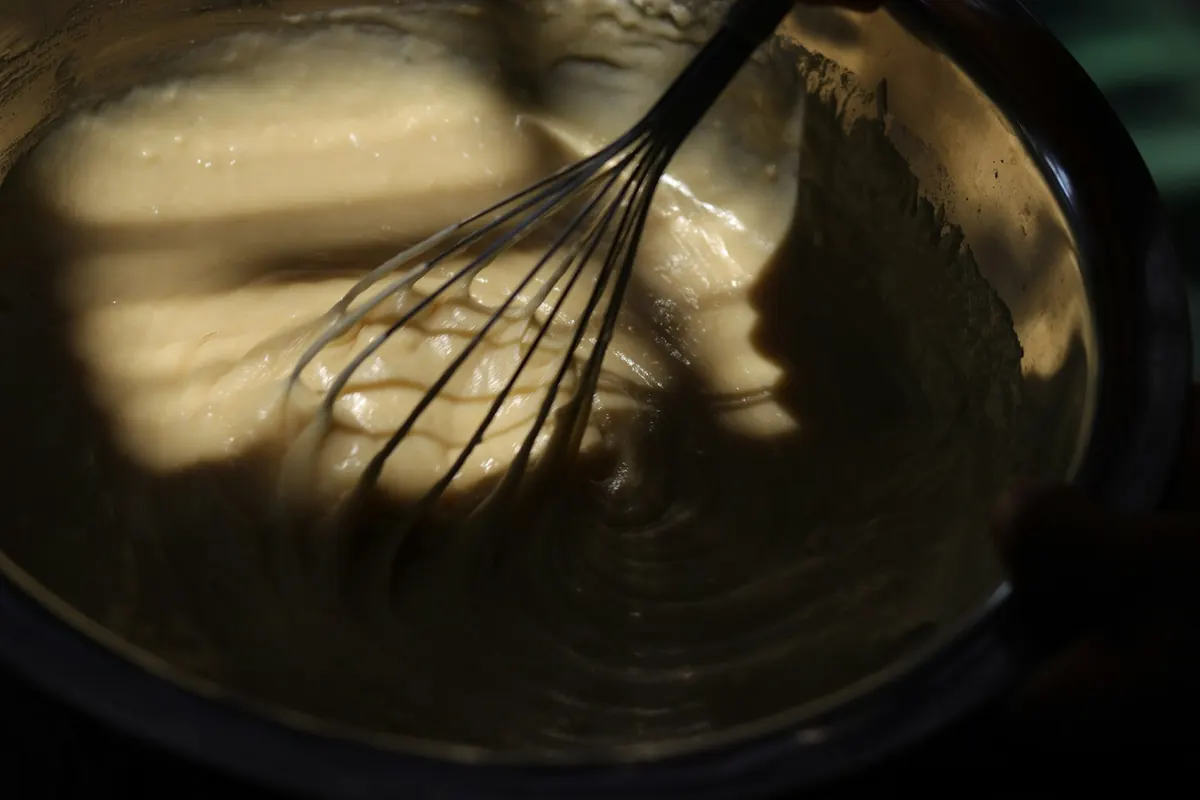
Cook the roux until it bubbles and smells nutty, but stop before it takes on color. Photo by Murphy Stay on Unsplash - 02
Add the first splash of milk
Pour in about 1/2 cup of the cold milk. The roux will seize into a thick paste almost immediately. Keep whisking until it is completely smooth, with no dry flour left in the corners. This first addition is where most lumps form or are prevented.
- 03
Whisk in the rest in stages
Add the remaining milk in three or four additions, whisking each one in fully before the next. Trace a figure eight across the base with a flat or balloon whisk, then run it around the edge where flour hides.
- 04
Simmer until it coats a spoon
Turn the heat to medium and stir until the sauce reaches a gentle simmer. Flour-thickened sauces reach full thickness only once they bubble. Simmer for 2 to 3 minutes, stirring often and scraping the bottom, until the sauce coats the back of a spoon and a line drawn through it holds its shape.
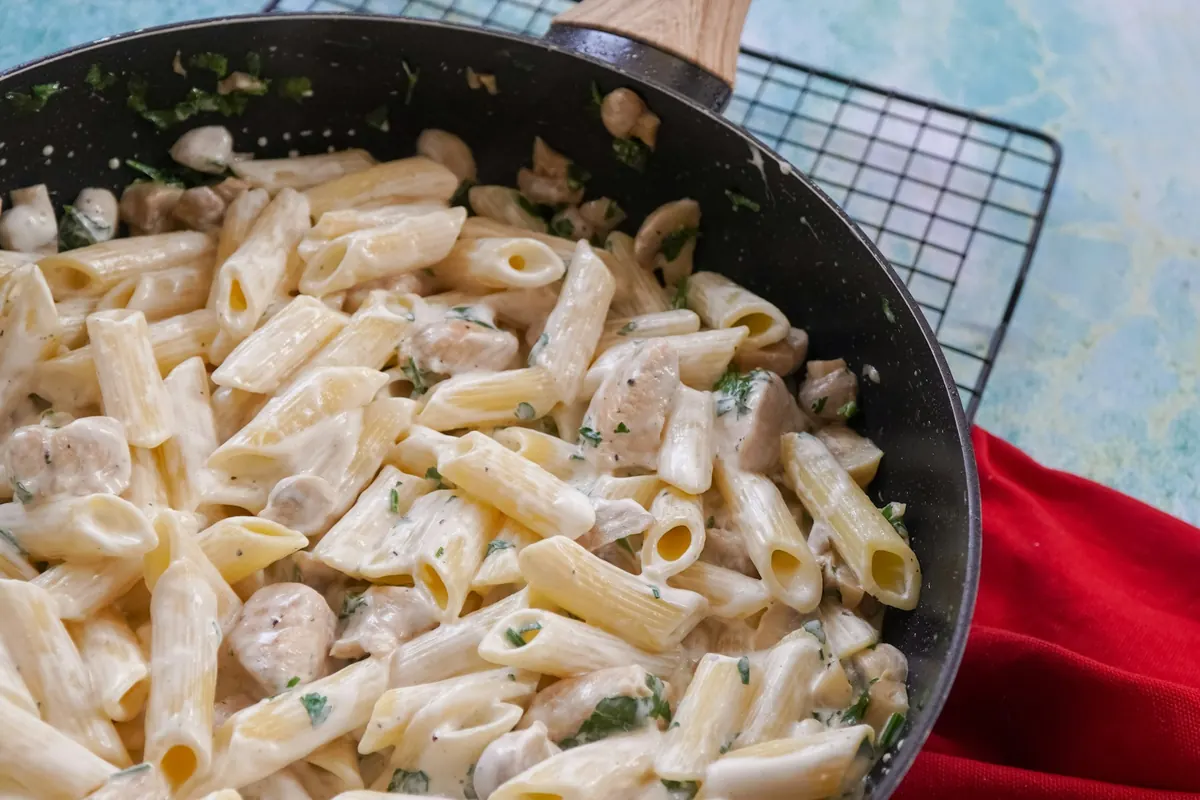
When the sauce coats a spoon and holds a clean line, it is ready for the pasta. Photo by Karolina Kolodziejczak on Unsplash - 05
Season, add cheese and toss
Take the pan off the heat. Stir in the salt, pepper and nutmeg, then the Parmesan a handful at a time. Add the drained pasta with a splash of pasta water and toss over low heat for 1 minute so the sauce settles into every ridge.
Adding the milk gradually and whisking each addition smooth is the single habit that prevents lumps. If the sauce tightens as it sits, loosen it with pasta water or milk 2 tablespoons at a time. Serve it slightly looser than seems right, because bechamel thickens as it cools.
Roux Ratio Chart: Thin, Medium and Thick
The thickness of a white sauce comes from the ratio of roux to milk. The standard home-cooking ratios are measured per 1 cup (240 ml) of milk, with equal amounts of butter and flour. Scale them up for larger batches.
| Sauce thickness | Butter | Flour | Best for |
|---|---|---|---|
| Thin | 1 tablespoon (14 g) | 1 tablespoon (8 g) | Cream soups, a light coating for vegetables |
| Medium | 2 tablespoons (28 g) | 2 tablespoons (16 g) | Pasta sauce, creamed dishes, Mornay sauce |
| Thick | 3 tablespoons (42 g) | 3 tablespoons (24 g) | Lasagna layers, baked pasta, binding fillings |
| Very thick | 4 tablespoons (56 g) | 4 tablespoons (32 g) | Croquettes, soufflé bases |
This recipe uses 3 tablespoons each of butter and flour with 2 1/2 cups of milk, which falls between thin and medium. That is deliberate: the Parmesan and the pasta both thicken it further, so it lands at a coating consistency on the plate.
For baked white sauce pasta, use 5 tablespoons each of butter and flour with the same 2 1/2 cups of milk.
Warm or Cold Milk for Bechamel?
Older recipes often say to heat the milk first. Others insist on cold. Both can make a smooth sauce; the difference is how forgiving each one is.
Flour thickens through starch granules that absorb liquid and swell as they heat. When very hot milk hits a hot roux, the granules on the outside of each clump swell almost at once and seal dry flour inside. Those sealed pockets are lumps. With cold or room-temperature milk, the starch has a few extra seconds to spread through the liquid before it starts to swell, so it disperses evenly.
A side-by-side kitchen test by America’s Test Kitchen found that cold or room-temperature milk gave smoother white sauce than hot milk, which produced more lumps with the same whisking. The tradeoff is time: cold milk takes a few minutes longer to come up to a simmer.
A practical rule that covers both camps: avoid combining a hot roux with hot milk. If you want to warm the milk, for example to infuse it with a bay leaf or a slice of onion, let the roux cool for a minute before you add it. Otherwise, use cold milk straight from the fridge, add it gradually and keep whisking.
How to Fix Lumps and Control Thickness
Almost every bechamel problem can be fixed in a few minutes.
| Problem | Likely cause | Fix |
|---|---|---|
| Small lumps | Milk added too fast, or flour stuck in the corners | Take the pan off the heat and whisk hard for 30 seconds, pressing lumps against the side |
| Stubborn lumps | Starch sealed around dry flour | Pour through a fine-mesh sieve, or blend for a few seconds with an immersion blender, then simmer 1 minute |
| Too thick | Too much roux, or reduced too long | Whisk in warm milk or pasta water 2 tablespoons at a time |
| Too thin | Not simmered long enough, or too little roux | Simmer 2 to 3 minutes more, or whisk in a paste of 1 teaspoon each soft butter and flour |
| Tastes floury | Roux or sauce undercooked | Simmer gently for 3 to 5 more minutes, stirring |
| Skin on top | Surface dried as the sauce sat | Whisk it back in, and press plastic wrap onto the surface if holding the sauce |
Thickness is easiest to judge with a spoon. Dip a wooden spoon in the sauce and run a finger across the back. If the line stays clean, the sauce is at medium thickness. If the sauce floods back over the line, it needs more time or more roux.
Remember that cheese and cooling both thicken white sauce, so stop a little short of the texture you want. The same reduce or add-a-paste logic used to thicken spaghetti sauce works here too, with the difference that bechamel scorches more easily, so keep the heat at medium or lower.
Cheese and Seasoning, Including Nutmeg
A plain bechamel is deliberately mild. Seasoning is what turns it into a sauce you want to eat by the forkful.
- Salt properly. Milk and flour need more salt than you expect. Start with 3/4 teaspoon, add the cheese, then taste and adjust.
- Nutmeg, lightly. Freshly grated nutmeg is the traditional bechamel seasoning. About 1/8 teaspoon for this batch adds warmth without tasting like dessert.
- White or black pepper. White pepper keeps the sauce visually clean and has a slightly earthier heat. Black pepper tastes brighter. Either is correct.
- Cheese off the heat. Add grated cheese after the pan comes off the burner. High heat can make cheese tighten and turn grainy or stringy.
- Choose a melting cheese. Parmesan adds savory depth. Gruyère gives a nutty, stretchy Mornay. Mild cheddar makes it closer to mac and cheese. For a mild pink sauce, stir in tomato sauce, or see our vodka pasta for a fuller tomato-cream version. Grate your own; pre-shredded cheese melts less smoothly.
- A bright finish. A squeeze of lemon juice lifts the richness, especially in vegetable versions.
If you want a richer, more cheese-forward sauce without flour, our creamy pasta sauce uses a cream base with five easy variations.
Best Pasta Shapes for White Sauce
Bechamel is smooth and clinging, so it suits shapes with hollows, ridges or twists that catch the sauce. Penne rigate, rigatoni, fusilli, farfalle, macaroni and conchiglie (shells) are all good choices.
Long pasta works too, with a looser sauce. Fettuccine and tagliatelle carry bechamel well, while thin spaghetti tends to clump. If you serve it with long noodles, thin the sauce with an extra 1/4 to 1/2 cup of milk or pasta water.
For baked dishes, choose sturdy tubes such as rigatoni or ziti and undercook them by 2 minutes. Browse more ideas in our pasta recipes.
Variations: Vegetable, Chicken and Indian-Style
The base sauce takes extra ingredients easily. Cook add-ins separately and fold them in with the pasta.
Vegetable White Sauce Pasta
Sauté 2 to 3 cups of chopped vegetables in a tablespoon of butter or olive oil until just tender: broccoli florets, mushrooms, zucchini, bell peppers, peas or spinach all work. Season them with a pinch of salt before folding them into the sauced pasta. Watery vegetables such as mushrooms and zucchini should be cooked until their liquid evaporates, or they will thin the sauce.
Chicken White Sauce Pasta
Cut 1 pound (454 g) boneless chicken breast or thighs into bite-size pieces, season with salt, pepper and garlic powder, and sear in a hot oiled skillet for 6 to 8 minutes until browned and cooked through to 165°F (74°C). Fold the chicken into the finished pasta. A handful of spinach wilted in the same pan makes it a complete meal. For a bolder, spicier chicken pasta, try our rasta pasta with jerk chicken.
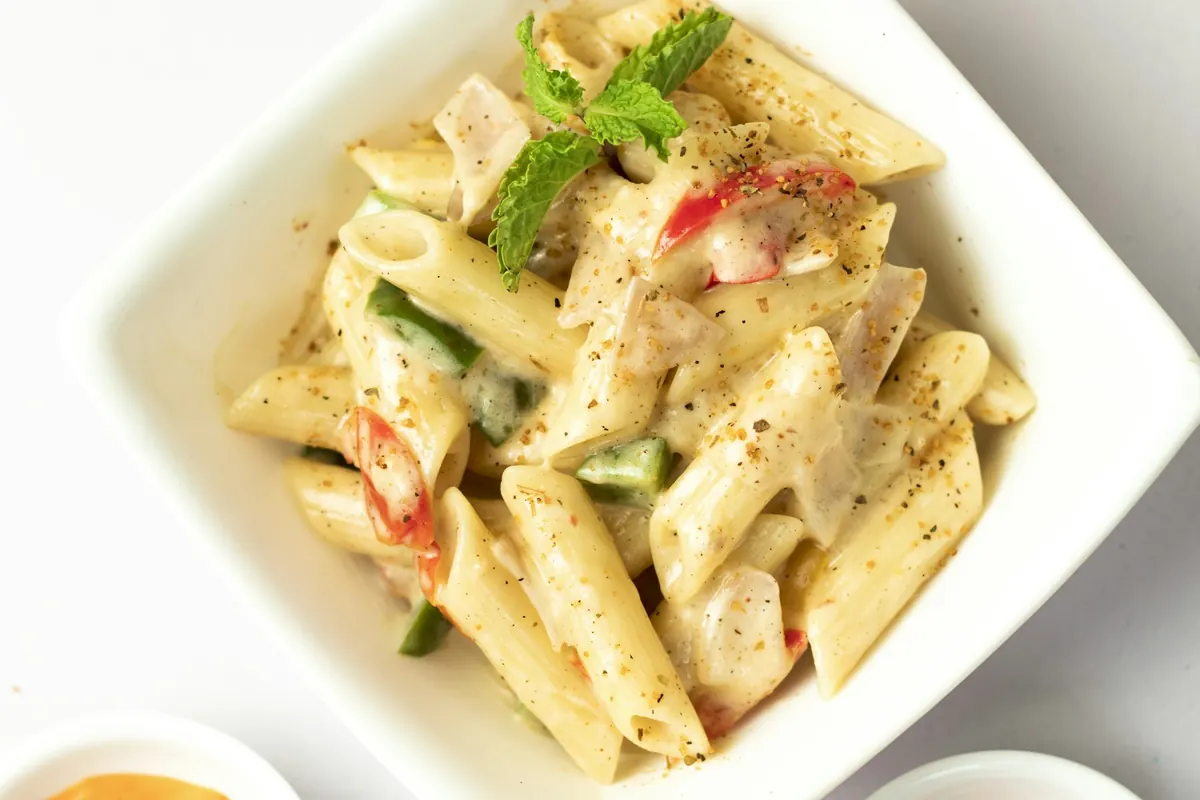
Indian-Style White Sauce Pasta
This popular street-food and home version layers spice and color onto the bechamel. Sauté 1 small chopped onion in butter, then add 1 cup of mixed vegetables such as sweet corn, diced carrot and red, green and yellow bell pepper (capsicum). Cook until crisp-tender. Season the white sauce with 1/2 to 1 teaspoon red chili flakes and 1 teaspoon dried oregano or Italian mixed herbs, and use mozzarella or processed cheese in place of Parmesan for a stretchier finish. Toss with penne and serve hot.
Storage and Reheating
Cool white sauce pasta and refrigerate it within 2 hours in an airtight container. It keeps for 3 to 4 days in the fridge, in line with USDA guidance on leftovers and food safety.
The sauce thickens a lot in the fridge as the starch sets. Reheat portions in a skillet over low heat with about 2 tablespoons of milk per serving, stirring until the sauce loosens and the pasta is hot all the way through, to 165°F (74°C). In the microwave, add the milk, cover and heat in 30-second bursts, stirring between each.
Bechamel on its own freezes reasonably well for up to 3 months, though it can look slightly grainy after thawing. Whisk it over low heat with a splash of milk to bring it back together. Sauced pasta does not freeze well, because the pasta turns soft and the sauce separates, so freeze the sauce alone if you are making it ahead.
White Sauce Pasta FAQs
What is white sauce pasta made of?
White sauce pasta is pasta tossed in bechamel, a sauce made from butter, flour and milk. The butter and flour are cooked into a roux, milk is whisked in until it thickens, and the sauce is seasoned with salt, pepper and nutmeg. Parmesan or another cheese is often stirred in at the end.
Should the milk be warm or cold for bechamel?
Either works if you add it gradually and whisk steadily. Cold or room-temperature milk is the easier choice at home because it gives the starch time to disperse before it swells, so it is less likely to lump. Hot milk poured quickly into a hot roux is the combination most likely to cause lumps.
How do I fix a lumpy white sauce?
Take the pan off the heat and whisk hard for 30 seconds, pressing lumps against the side of the pan. If lumps remain, pour the sauce through a fine-mesh sieve or blend it briefly with an immersion blender, then return it to low heat and simmer for 1 to 2 minutes.
What is the ratio of butter, flour and milk for white sauce?
For a medium white sauce, use 2 tablespoons butter and 2 tablespoons flour per 1 cup of milk. Use 1 tablespoon of each per cup for a thin sauce and 3 tablespoons of each for a thick sauce. This recipe uses 3 tablespoons each with 2 1/2 cups of milk for a pourable pasta sauce.
Why does my white sauce taste like flour?
The roux or the sauce was not cooked long enough. Cook the butter and flour together for 2 to 3 minutes before adding milk, then let the finished sauce simmer gently for at least 2 minutes after it thickens. That time cooks out the raw, pasty flavor.
Can I make white sauce pasta without cheese?
Yes. Bechamel is a complete sauce on its own. Season it well with salt, black or white pepper and a little nutmeg, and finish it with a knob of butter or a squeeze of lemon for brightness. Cheese makes it richer but is not required.
How do I reheat white sauce pasta without it getting dry?
Reheat it in a skillet over low heat with a splash of milk, about 2 tablespoons per serving, stirring until it loosens and is hot all the way through. The sauce thickens as it cools, so it almost always needs extra liquid. Heat leftovers to 165°F (74°C).
The recipe
Creamy White Sauce Pasta
Pasta in a smooth, lump-free bechamel made with butter, flour, milk, Parmesan and a pinch of nutmeg. Serves 4.
Ingredients
Instructions
- Start the pasta. Bring a large pot of salted water to a boil and cook the pasta until 1 minute short of the package time. Reserve 1 cup of pasta water before draining.
- Make the roux. Melt the butter in a medium saucepan over medium-low heat. Add the garlic, if using, and stir for 30 seconds. Whisk in the flour and cook, whisking constantly, for 2 to 3 minutes until the paste bubbles and smells nutty but stays pale.
- Add the milk gradually. Pour in about 1/2 cup of the cold milk and whisk until completely smooth. Add the rest in three or four additions, whisking each one in fully and reaching into the corners of the pan.
- Simmer until thickened. Raise the heat to medium and keep stirring until the sauce comes to a gentle simmer. Simmer for 2 to 3 minutes until it coats the back of a spoon and the raw flour taste is gone.
- Season and add cheese. Take the pan off the heat. Stir in the salt, pepper and nutmeg, then add the Parmesan a handful at a time until melted.
- Toss and serve. Add the drained pasta to the sauce with a splash of pasta water and toss over low heat for 1 minute. Loosen with more pasta water if needed, taste for salt and serve with parsley and extra Parmesan.
Notes
For a thicker sauce for baked pasta, use 5 tablespoons each of butter and flour with the same 2 1/2 cups of milk. If lumps form, whisk off the heat or strain the sauce. Leftovers keep for 3 to 4 days in the fridge. Estimated nutrition per serving, including pasta, is about 550 calories, 20 g protein, 76 g carbohydrate and 18 g fat, based on 4 servings. Values change with your milk, cheese and pasta.