
In this guide
Tortellini are small rings of fresh pasta wrapped around a savory filling. They come from Emilia-Romagna, where Bologna and Modena both claim them, and they are one of the most loved filled pastas in Italy. Making them at home takes time, but each step is simple, and the result is far better than any packet.
This guide covers everything: a silky egg dough, a ricotta and Parmesan filling, the classic fold, cooking times, freezing and serving. You do not need special tools beyond a rolling pin, although a pasta machine makes the job faster.
Below you will find the dough method, three filling options, a six-step shaping guide, cooking and freezing rules, sauces and a troubleshooting table. The printable recipe at the end makes about 90 to 100 tortellini.
| Question | Short answer |
|---|---|
| Dough ratio? | 100 g of flour per large egg. This recipe uses 300 g flour and 3 eggs. |
| How thin? | About 1 mm, thin enough to see the shadow of your hand through the sheet. |
| Square size? | 2 inches (5 cm) for home cooking; smaller for traditional broth tortellini. |
| Filling per piece? | About 1/2 teaspoon. Too much filling makes them burst. |
| Cooking time? | 2 to 4 minutes fresh, 1 to 2 minutes longer from frozen. |
What Are Tortellini?
Tortellini are a type of pasta ripiena, or filled pasta. A small square or circle of egg dough is folded over the filling, then wrapped into a ring. Their shape is often compared to a navel, and local legend in Emilia-Romagna ties it to the goddess Venus.
Tortellini vs tortelloni
Tortelloni are larger, often 2 to 3 inches across, and are usually filled with ricotta and greens. Traditional tortellini are much smaller and filled with meat. At home, many cooks make a middle size with a ricotta filling, which is what this recipe does.
Tortellini vs ravioli
Ravioli are flat and sealed on all sides, usually square or round. Tortellini are folded and wrapped, so they have more dough at the folded ring and less filling. If you prefer the flat shape, our homemade ravioli guide uses a very similar dough.
The Bologna tradition
In Bologna, tortellini are a festive dish, often served in capon or chicken broth at Christmas. A reference recipe for the classic meat filling was registered with the Bologna Chamber of Commerce in 1974. It calls for pork loin, prosciutto, mortadella, Parmigiano Reggiano, egg and nutmeg.
Making the Egg Pasta Dough
The dough is the same rich egg dough used for most fresh pasta in northern Italy. The rule of thumb is 100 g of flour per large egg.
Flour choices
Italian 00 flour gives a very smooth, silky dough. All-purpose flour works well too and makes a slightly chewier pasta. Some cooks mix in a little semolina for extra bite, but keep it under a quarter of the total so the dough stays easy to roll thin.
Mixing and kneading
Mound the flour on a clean board, make a deep well and crack the eggs into it. Beat them with a fork, slowly pulling in flour from the inner wall. When the dough gets thick, use your hands and a bench scraper to bring it together. Knead for 8 to 10 minutes, until it is smooth, springy and no longer sticky.
Resting the dough
Wrap the dough and let it rest for 30 minutes at room temperature. Resting relaxes the gluten, so the dough rolls thin without springing back. You can rest it for up to a day in the fridge, but let it come back to room temperature before rolling.
The Filling
A good filling is thick, smooth and well seasoned. It should hold its shape on a spoon, because a wet filling leaks and makes the dough soggy.
Ricotta, Parmesan and mortadella
This filling is quick and needs no cooking. Drained whole-milk ricotta gives creaminess, Parmigiano Reggiano adds savory depth and an egg yolk binds it. A little finely chopped mortadella or prosciutto adds the cured pork flavor of the Bologna original. Nutmeg and a touch of lemon zest round it out.
Drain the ricotta well
Ricotta holds a lot of whey. Set it in a fine sieve over a bowl for at least 30 minutes, or overnight in the fridge. Drier ricotta makes a firmer filling that is easier to portion and less likely to burst during cooking.
Other fillings
The classic Bologna filling uses cooked pork loin, prosciutto, mortadella, Parmesan, egg and nutmeg, all ground very fine. A mushroom filling uses finely chopped sautéed mushrooms with ricotta and thyme. A spinach filling uses well-squeezed cooked spinach with ricotta and Parmesan.

How to Shape Tortellini Step by Step
Work with one piece of dough at a time and keep the rest wrapped. Fresh pasta dries quickly, and dry edges will not seal.
- 01
Step 1: Roll the dough thin
Flatten one quarter of the dough and run it through the widest setting of a pasta machine. Fold it in thirds and roll again, twice. Then thin it one setting at a time until it is about 1 mm thick. By hand, roll until you can see the shadow of your hand through the sheet.
- 02
Step 2: Cut squares
Trim the edges and cut the sheet into 2-inch (5 cm) squares with a sharp knife or a fluted cutter. For tiny broth tortellini, cut 1 1/4-inch (3 cm) squares and use less filling.
- 03
Step 3: Add the filling
Place about 1/2 teaspoon of filling in the center of each square. A small piping bag or two teaspoons make this quick. Leave a clear border so the edges can seal.
- 04
Step 4: Fold into a triangle
Fold one corner over to the opposite corner to make a triangle. Press around the filling to push out air, then press the edges firmly to seal. If the dough feels dry, mist it very lightly with water first.
- 05
Step 5: Wrap around your finger
Hold the triangle with the long folded edge toward your fingertip. Wrap it around your finger so the two bottom corners meet behind it.
- 06
Step 6: Pinch and finish
Pinch the two corners together firmly so they overlap and stick. Slide the tortellino off your finger and fold the top point back slightly. Set it on a floured tray and repeat.

Shaping from circles
You can also cut 2 1/2-inch (6 cm) circles. Fold each into a half-moon, seal the edge, then wrap it around your finger and pinch the ends together. Circles make a rounder tortellino with a softer edge.
How long does shaping take?
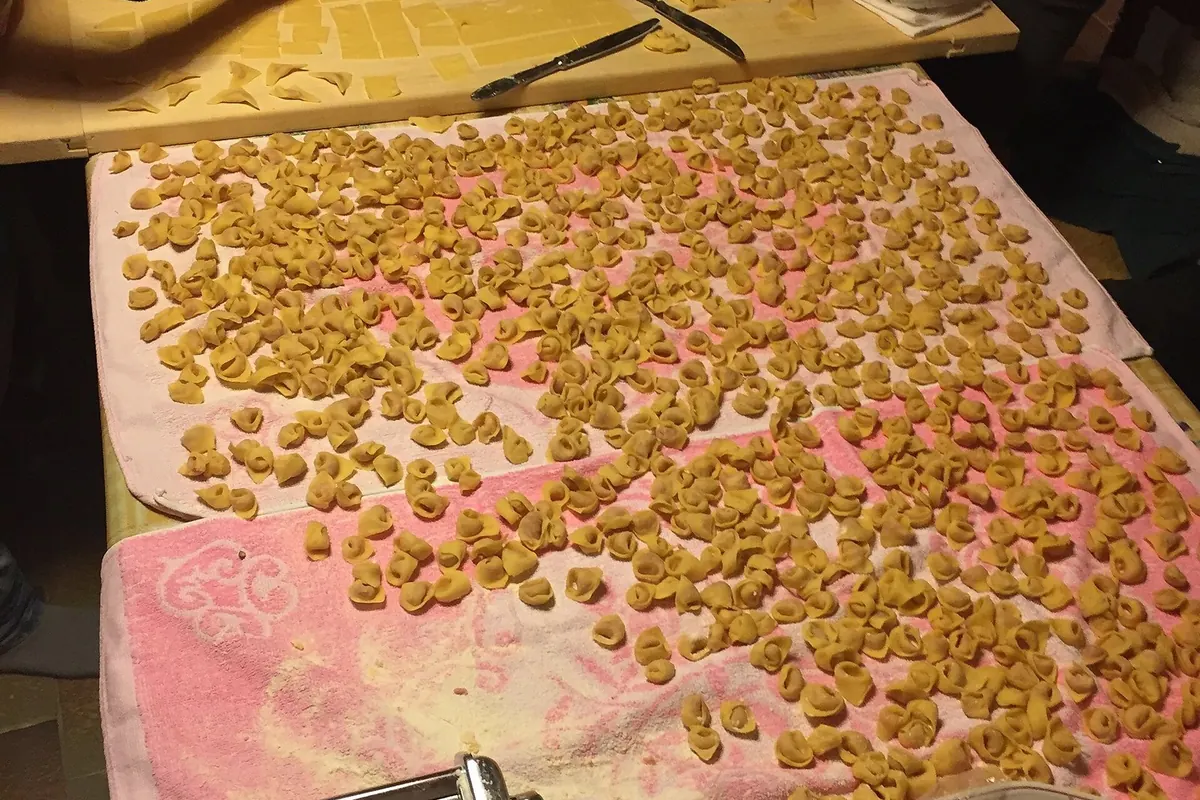
Shaping 90 to 100 tortellini takes most home cooks about an hour, and it gets faster as you go. Shaping with a friend or family member halves the time, and it is a traditional way to spend a holiday afternoon in Bologna.
How to Cook Tortellini
Fresh tortellini cook quickly. The key is a gentle boil, because a hard rolling boil can knock them open.
Cooking times
Cook fresh tortellini in a large pot of salted water at a gentle boil for 2 to 4 minutes. They are done when they float and the folded edge is tender. Taste one to check. Frozen tortellini need 1 to 2 minutes more and should go straight into the water without thawing.
| Type | Cooking time | Signs they are done |
|---|---|---|
| Fresh, just shaped | 2 to 3 minutes | Float and edges are tender |
| Fresh, dried 1 hour | 3 to 4 minutes | Float and the thick fold is cooked |
| Frozen homemade | 4 to 6 minutes | Float; the fold is tender with no raw taste |
| In simmering broth | 3 to 5 minutes | Float; broth turns slightly cloudy |
Cooking in broth
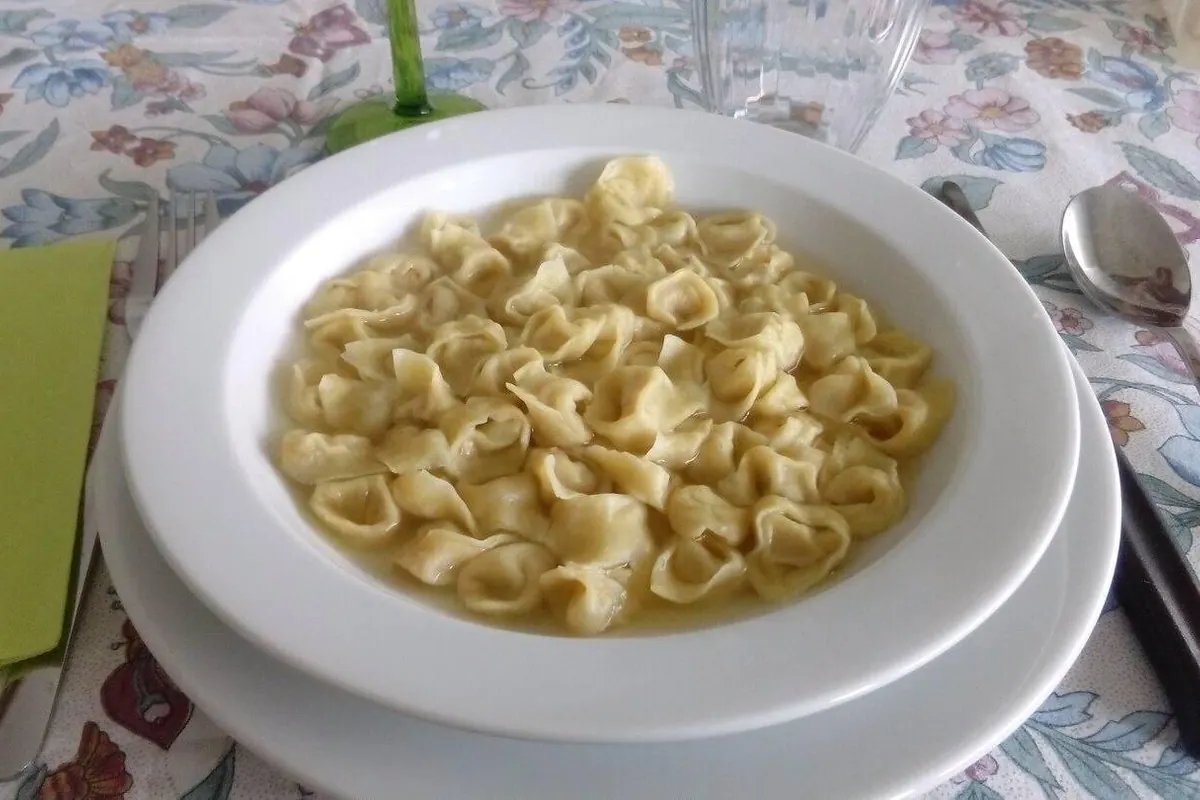
For tortellini in brodo, cook them straight in a good chicken or beef broth. The broth turns slightly cloudy from the starch, which is how it should look. Serve in warm bowls with grated Parmesan.
How to Store and Freeze Tortellini
Fresh tortellini do not keep long at room temperature, because the filling is moist. Plan to cook or freeze them within a few hours of shaping.
Short-term storage
Leave shaped tortellini on a floured tray, uncovered, for up to 1 hour before cooking. For longer, cover the tray and refrigerate it for up to 1 day, then cook them straight from the fridge.
Freezing
Freeze tortellini on a floured tray in a single layer until solid, about 1 hour. Then move them into a freezer bag and use them within 2 months. Do not thaw them before cooking, or they turn sticky and soft.
Best Sauces for Tortellini
Tortellini have a rich filling, so they need only a simple sauce.
Butter and sage
Melt butter until it foams and turns light golden, add a few sage leaves and toss with the tortellini and Parmesan. It is the simplest and one of the best ways to serve them.
Panna, or cream
Tortellini alla panna are tossed in warm cream reduced with butter and Parmesan, much like the sauce in our fettuccine Alfredo. Add peas and ham for a classic trattoria version.
Light tomato or ragu
A light tomato sauce or a spoon of slow-cooked ragu also works, especially with ricotta fillings. Keep the sauce thin, so it coats the tortellini rather than smothering them. For more sauce ideas, see our creamy pasta sauce with five variations.
Troubleshooting Homemade Tortellini
| Problem | Likely cause | Fix |
|---|---|---|
| Tortellini burst while cooking | Too much filling or air pockets | Use 1/2 teaspoon and press out the air when folding |
| Edges will not seal | Dough dried out | Work in small batches; mist dry dough with water |
| Tough, chewy pasta | Dough rolled too thick | Roll to about 1 mm, especially at the folded ring |
| Soggy bottoms | Wet filling or tray not floured | Drain the ricotta well; dust the tray with flour or semolina |
| Stuck together in the freezer | Frozen in a pile | Freeze in one layer before bagging |
The thick folded ring
The pinched corners make a double layer of dough. If that part tastes chewy after cooking, roll the sheet a little thinner next time. Very thin dough also makes the tortellini lighter and more elegant. If you enjoy hand-shaped pasta, our homemade gnocchi is a quicker project for a weeknight.
Homemade Tortellini FAQs
What flour is best for homemade tortellini?
Italian 00 flour makes the smoothest, silkiest dough, and all-purpose flour works well too. Use about 100 g of flour per large egg. A small amount of semolina adds bite, but too much makes the dough hard to roll thin.
How thin should tortellini dough be?
Roll it to about 1 mm, thin enough that you can see the shadow of your hand through the sheet. On most pasta machines that is one of the last two or three settings. Thicker dough makes the folded ring chewy.
How do I stop tortellini from opening when cooking?
Use only about 1/2 teaspoon of filling, press out all the air around it and seal the edges firmly. Cook them at a gentle boil, not a hard rolling boil, which can knock them open.
Can I make tortellini ahead of time?
Yes. Freeze them in a single layer on a floured tray, then bag them and use within 2 months. Cook straight from frozen, adding 1 to 2 minutes. You can also refrigerate shaped tortellini on a covered tray for up to 1 day.
How long do I cook fresh tortellini?
Fresh tortellini cook in 2 to 4 minutes in gently boiling salted water. They are ready when they float and the folded edge is tender. Taste one to be sure before draining the rest.
What is the traditional way to serve tortellini?
In Bologna, tortellini are traditionally served in brodo, cooked and served in a rich capon, chicken or beef broth. Butter and sage, and cream with Parmesan, are also popular ways to serve them.
Final Thoughts
The rule to remember
Homemade tortellini reward patience more than skill. Make a smooth dough and let it rest, keep the filling thick, and roll the sheets thin. Use a small spoon of filling, press out the air and pinch the corners firmly. Cook them gently, and serve them simply with butter and sage or in a good broth, so the handmade pasta can shine.
The recipe
Homemade Tortellini with Ricotta and Parmesan
Fresh egg pasta tortellini filled with ricotta, Parmigiano Reggiano, mortadella, lemon zest and nutmeg. Makes about 90 to 100 small tortellini, enough for 5 servings.
Ingredients
Instructions
- Make the dough: mound the flour on a board, make a deep well and add the eggs. Beat them with a fork, drawing in flour from the inner wall, until a shaggy dough forms. Knead for 8 to 10 minutes until smooth and springy. Wrap and rest at room temperature for 30 minutes.
- Make the filling: mix the drained ricotta, Parmesan, mortadella, egg yolk, nutmeg, lemon zest, salt and pepper until smooth and thick. Chill until needed. It should hold its shape on a spoon.
- Cut the dough into 4 pieces and keep 3 wrapped. Roll one piece through a pasta machine, folding and rolling twice on the widest setting, then thin it setting by setting until about 1 mm thick, or thin enough to see the shadow of your hand through it.
- Cut the sheet into 2-inch (5 cm) squares. Place 1/2 teaspoon of filling in the center of each. Work in small batches and keep the rest of the dough covered so it does not dry out.
- Fold each square corner to corner into a triangle, pressing out air around the filling and sealing the edges firmly. Lightly mist with water if the dough feels dry.
- Wrap the triangle around your fingertip with the long folded edge facing out, bring the two bottom corners together and pinch them to seal. Fold the top point back slightly. Place on a floured tray and repeat with the remaining dough.
- Cook in a large pot of gently boiling salted water for 2 to 4 minutes, until they float and the folded edge is tender. Lift out with a slotted spoon and serve with butter and sage, cream or in hot broth.
Notes
Drain the ricotta in a fine sieve for at least 30 minutes, or overnight in the fridge, so the filling is not wet. To freeze, set the shaped tortellini on a floured tray in one layer, freeze until solid, then move them to a bag and use within 2 months. Cook from frozen, adding 1 to 2 minutes. Leftover dough scraps can be cut into small noodles for soup. Nutrition is approximate for the tortellini only, without sauce: about 470 calories, 20 g fat, 47 g carbohydrates, 2 g fiber and 25 g protein per serving.